By continuing, you agree to LoansJagat's Credit Report Terms of Use, Terms and Conditions, Privacy Policy, and authorize contact via Call, SMS, Email, or WhatsApp
Disclaimer: The information published on LoansJagat is intended for general informational and educational purposes only and should not be considered financial, legal, or investment advice. Interest rates, loan terms, statistics, and other data may change over time and may vary by lender or source. Please verify the latest information and consult a qualified financial advisor or the respective Bank/NBFC before making any financial decisions.
Apply for Loans Fast and Hassle-Free
Subscribe Now
About the author

LoansJagat Team
‘Simplify Finance for Everyone.’ This is the common goal of our team, as we try to explain any topic with relatable examples. From personal to business finance, managing EMIs to becoming debt-free, we do extensive research on each and every parameter, so you don’t have to. Scroll up and have a look at what 15+ years of experience in the BFSI sector looks like.
Related Blog Post
Simplify All Your Loans Into One Affordable EMI

Customers Served

Debt Consolidated

1200+ Reviews

Locations in India
Club all Loans & Credit Card Bills into Single EMI

Quick Apply Loan
Consolidate your debts into one easy EMI.

Takes less than 2 minutes. No paperwork.

10 Lakhs+
Trusted Customers

2000 Cr+
Loans Disbursed

4.7/5
Google Reviews

50+
Banks & NBFCs Offers
Other services mentioned in this article
Key Insights
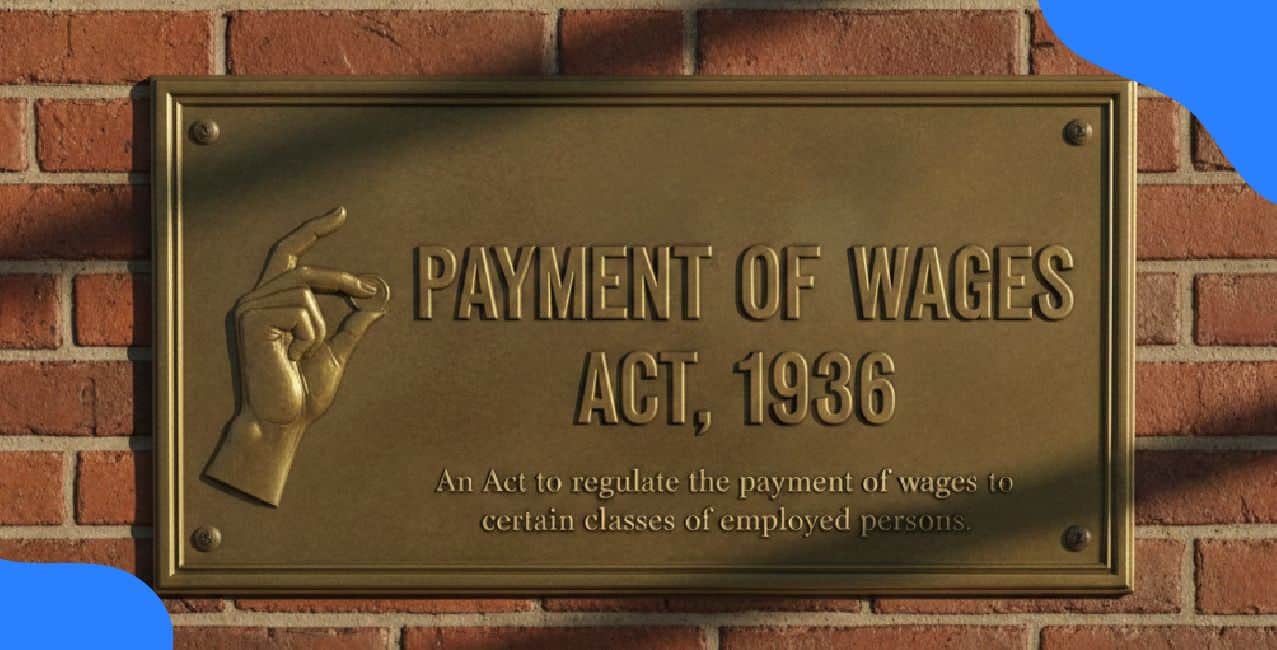
The Payment of Wages Act 1991 makes sure workers get paid on time. The first version, passed in 1936, stopped employers from making unauthorised deduction under payment of wages act 1936. In India, the main law is the Payment of Wages Act 1948. Some places, like the South Carolina Payment of wages act, have their own local wage laws.
Employers need to pay salaries on time and avoid making unauthorised deductions to follow the Payment and Wages Act. If you want more details, you can use resources like the Payment of Wages Act 1936, Ipleaders, or the Payment of Wages Act 1936 UPSC materials, which are useful, especially after the Payment of Wages Act amendment 2022.
The Payment and Wages Act helps protect employees by making sure they get paid on time and by preventing unfair deductions. Similar to the Minimum Wages Act 1948, which sets a minimum wage, this law supports fair wages. It is important to understand the Payment of Wages Act Amendment 2022 to stay respectful.
A factory manager follows the Payment and Wages Act to set up monthly salary payments (Minimum Wages Act 1948). They review the Payment of Wages Act 1936 Ipleaders and summaries about the Payment of Wages Act 1936 UPSC and its payment of Wages Act Amendment 2022 to make sure all workers are paid on time and according to the law.
Read More - What Is an Arrear
The Payment of Wages Act helps make sure workers are paid on time, receive their full wages, and are protected from unfair deductions by employers.
The law is designed to prevent illegal deductions, make sure workers get paid on time, and protect them from exploitation.
Now, you know about the main highlights of the Payment of Wages Act, do you know? Why was this payment of Wages Act introduced?
The Act was made to stop industrial exploitation and to make sure workers get paid on time and receive fair wages.
Why have wage payments and fines in Indian industries become such a big issue?
Back in 1926, the Government of India started digging into delays in wage payments and unfair fines for industrial workers. Their findings showed real problems, so they handed everything over to the Royal Commission on Labour in 1929. The Commission went deeper, gathered more evidence, and shared its recommendations.
Fast forward to 1933, the government tried to fix things with a new Bill, but it never made it past the Delhi session. Now, the latest Bill keeps the same core ideas but has been updated based on all the feedback from before.
Bonus Tip: Do you know? Count as wages things like free housing, light, water, medical help, or any other perks the State Government says to leave out are not included.
The Payment of Wages Act is an important law that helps workers by ensuring they receive their full wages on time.
Here are the key features and the importance of the Payment of Wages Act:
Also Read - What is Payroll?
*T&C Apply
The Act helps protect fair wages by assuring that workers receive their pay on time and are treated with respect.
The Payment of Wages Act is a key law that ensures workers get their pay on time and in full. It protects them from unfair wage cuts, helps keep their finances secure, and supports fair and peaceful workplaces.
What legal options do you have in India if your employer is not paying your salary?
If your employer in India has not paid your salary, you have a few ways to respond. You can send a formal legal notice, file a complaint with the Labour Commissioner, or start a summary suit under the Code of Civil Procedure, 1908. You can also take legal action under the Payment of Wages Act, 1936, the Industrial Disputes Act, 1947, or begin liquidation proceedings through the NCLT if the company is insolvent.
What are the proper legal remedies in India for the recovery of unpaid salary and expenses?
In India, how you can recover unpaid salary and expenses depends on your job role and salary level. The law offers different options, such as conciliation or going to court, and you have three years to file a recovery suit.
What are the offences and penalties under the Payment of Wages Act, 1936?
The Payment of Wages Act, 1936, sets penalties for unauthorised deductions, late payments, and breaking the rules. Fines usually range from ₹200 to ₹7,500 for each offence, and up to ₹22,500 for repeat offences. Employers who do not pay wages on time may be fined ₹750 per day. There are also heavy fines for blocking inspectors.
Is there any act on Minimum wages in India?
The main law is the Minimum Wages Act, 1948. It lets both the Central and State governments set, review, and enforce minimum wages for skilled and unskilled workers in certain jobs. The purpose is to prevent exploitation and ensure workers have a basic standard of living.
Is the minimum wage calculated in 26 days or 30 days?
The period used to calculate minimum wage depends on the state. Still, it cannot be longer than one month, which means 30 or 31 days.