By continuing, you agree to LoansJagat's Credit Report Terms of Use, Terms and Conditions, Privacy Policy, and authorize contact via Call, SMS, Email, or WhatsApp
Disclaimer: The information published on LoansJagat is intended for general informational and educational purposes only and should not be considered financial, legal, or investment advice. Interest rates, loan terms, statistics, and other data may change over time and may vary by lender or source. Please verify the latest information and consult a qualified financial advisor or the respective Bank/NBFC before making any financial decisions.
Apply for Loans Fast and Hassle-Free
Subscribe Now
About the author

LoansJagat Team
‘Simplify Finance for Everyone.’ This is the common goal of our team, as we try to explain any topic with relatable examples. From personal to business finance, managing EMIs to becoming debt-free, we do extensive research on each and every parameter, so you don’t have to. Scroll up and have a look at what 15+ years of experience in the BFSI sector looks like.
Related Blog Post
Simplify All Your Loans Into One Affordable EMI

Customers Served

Debt Consolidated

1200+ Reviews

Locations in India
Club all Loans & Credit Card Bills into Single EMI

Quick Apply Loan
Consolidate your debts into one easy EMI.

Takes less than 2 minutes. No paperwork.

10 Lakhs+
Trusted Customers

2000 Cr+
Loans Disbursed

4.7/5
Google Reviews

20+
Banks & NBFCs Offers
Other services mentioned in this article
Key Takeaways
“Home is important, but managing your money wisely matters too”. I moved to Dubai two years ago for work opportunities. My salary comes in dirhams, but my family stays back. Property rent keeps coming from Mumbai every single month. Which bank account should I use for these transactions?
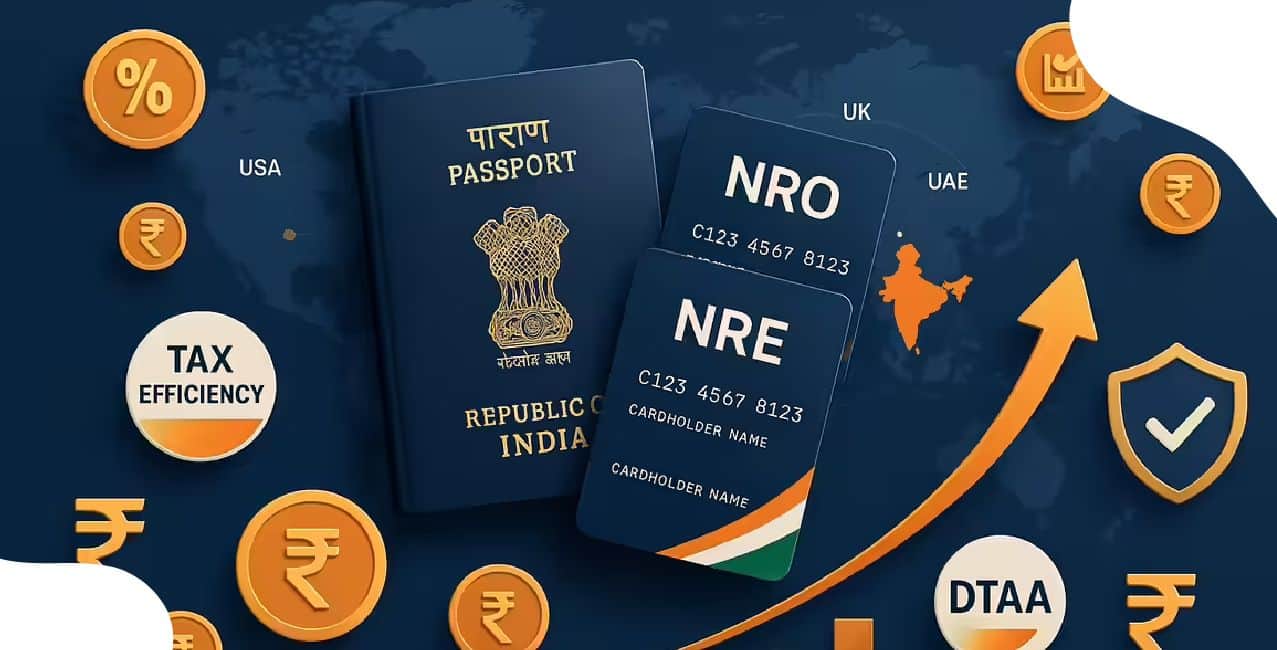
An NRI account works like a special financial bridge. It connects your foreign earnings to your Indian roots securely. The Reserve Bank of India creates these accounts specifically. They help non-resident Indians manage money across two countries easily.
I earn my software engineer salary in Singapore dollars. My parents receive rental income from our Pune flat monthly. I opened an NRE account for my Singapore salary. My rental income goes into an NRO account separately. This setup helps me manage both income sources efficiently.
The Reserve Bank of India (RBI) allows NRIs to open certain accounts under strict regulations. According to the RBI’s Accounts in India by Non-residents FAQs, the major account types are: NRE, NRO, and FCNR (B).
Here is a table summarising their key characteristics:
Read More – Demat Account for NRI
This comparison helps you make an informed banking choice. Each account serves a different purpose for your finances.
The Best NRI Account in India depends on your personal financial situation, your goals, and how you plan to use the money. Let’s examine each type, its strengths, and possible limitations.
1. NRE Account: Best for Foreign Income and Repatriation
Foreign earnings deserve smart management back in India. An NRE account offers excellent benefits for overseas income.
These benefits make NRE accounts popular among working NRIs. Tax-free returns and easy repatriation attract many account holders.
Limitations:
2. NRO Account: Best for Indian Income
Indian earnings need a special account for proper management. The NRO account handles all your India-sourced income perfectly.
NRO accounts serve Indian income management needs perfectly well. Current income moves freely while capital has reasonable limits.
Limitations:
*T&C Apply
3. FCNR (B) Account: Best for Preserving Foreign Currency
Currency fluctuations worry many NRIs working abroad constantly. An FCNR account eliminates rupee conversion risks completely.
FCNR accounts protect your money from currency fluctuations effectively. Tax-free returns in foreign currency provide dual benefits here.
Limitations:
FEMA and RBI rules demand strict compliance from everyone. Breaking regulations can lead to serious penalties and troubles.
It is important to understand these risks to protect you from compliance issues. Proper planning and documentation ensure smooth NRI banking operations.
“Smart banking choices secure your financial future abroad,” they say. The right NRI account protects your hard-earned money effectively. NRE suits foreign income, NRO handles Indian earnings perfectly. FCNR preserves your foreign currency without conversion risks today. Consult your bank to open the ideal account now.
Also Read – Bank of Baroda Demat Account
Bonus Tip: The RBI recently made new rules to allow special INR accounts for non-residents. It has made it easier for NRIs to hold and invest in Indian currency. Use this change: keep an NRE or NRO account active and consider converting to a rupee account (SNRR) to make cross-border savings and investments simpler and more flexible.
Q: Can I hold multiple NRI accounts simultaneously?
Joint accounts offer flexibility for managing different income sources. Yes, you can maintain NRE, NRO, and FCNR accounts together. Each account serves a unique purpose for your finances. Many NRIs hold multiple accounts for better money management.
Q: What is the cheapest NRI demat account available?
Cost-effectiveness matters when you invest your hard-earned money abroad. Zerodha offers transparent fee structures with no hidden charges. Upstox provides budget-friendly options that balance cost and functionality. Both platforms deliver user-friendly interfaces for seamless investment experiences.
Q: Can an NRI open a demat account easily?
Regulatory compliance ensures safe and secure investment opportunities always. You need a PAN card and a valid Indian passport. An active NRE, NRO, or FCNR bank account is mandatory. Overseas residence proof from the Indian Embassy becomes necessary too. KYC must follow SEBI guidelines with proper documentation completed.
Q: Which bank offers the best NRI account services?
Customer experiences reveal clear winners in NRI banking today. IDFC First Bank provides smooth account opening with WhatsApp support. ICICI Bank offers seamless integration with 20 years of proven financial services. HDFC Bank delivers reliable, extensive branch networks and digital features. Axis Bank supports UPI for overseas numbers quite effectively.
Q: Do NRI accounts require minimum balance maintenance always?
Balance requirements vary significantly across different banks and accounts. ICICI may ask for lower AMB for face-to-face accounts. Online accounts normally need ₹2,00,000 minimum balance maintained regularly. IDFC First Bank attracts customers with competitive interest rates. Check specific bank policies before opening your NRI account.