By continuing, you agree to LoansJagat's Credit Report Terms of Use, Terms and Conditions, Privacy Policy, and authorize contact via Call, SMS, Email, or WhatsApp
Disclaimer: The information published on LoansJagat is intended for general informational and educational purposes only and should not be considered financial, legal, or investment advice. Interest rates, loan terms, statistics, and other data may change over time and may vary by lender or source. Please verify the latest information and consult a qualified financial advisor or the respective Bank/NBFC before making any financial decisions.
Subscribe Now
About the author

‘Simplify Finance for Everyone.’ This is the common goal of our team, as we try to explain any topic with relatable examples. From personal to business finance, managing EMIs to becoming debt-free, we do extensive research on each and every parameter, so you don’t have to. Scroll up and have a look at what 15+ years of experience in the BFSI sector looks like.
Related Blog Post
Simplify All Your Loans Into One Affordable EMI

Customers Served

Debt Consolidated

1200+ Reviews

Locations in India
Club all Loans & Credit Card Bills into Single EMI

Quick Apply Loan
Consolidate your debts into one easy EMI.

Takes less than 2 minutes. No paperwork.

10 Lakhs+
Trusted Customers

2000 Cr+
Loans Disbursed

4.7/5
Google Reviews

50+
Banks & NBFCs Offers
Other services mentioned in this article
Rubi had opened her first savings account in New Delhi. With much anticipation, she opened her welcome package and found her chequebook and passbook. She wanted to deposit ₹10,000 but had to refrain from doing so when the cashier requested her IFSC number.
Confused, Rubi went home to try to solve the problem. She learnt that bank branches are identified for NEFT, RTGS, and IMPS payments using the Indian Financial System identifier (IFSC), an 11-digit alphanumeric identifier named "HDFC0000035". The last six characters indicate the branch, the fifth is always "0," and the first four represent the bank's identification.
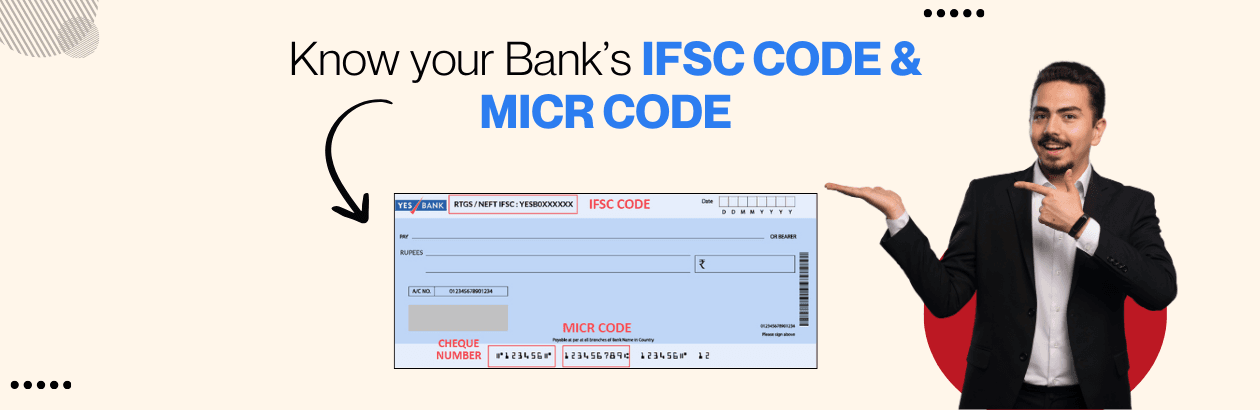
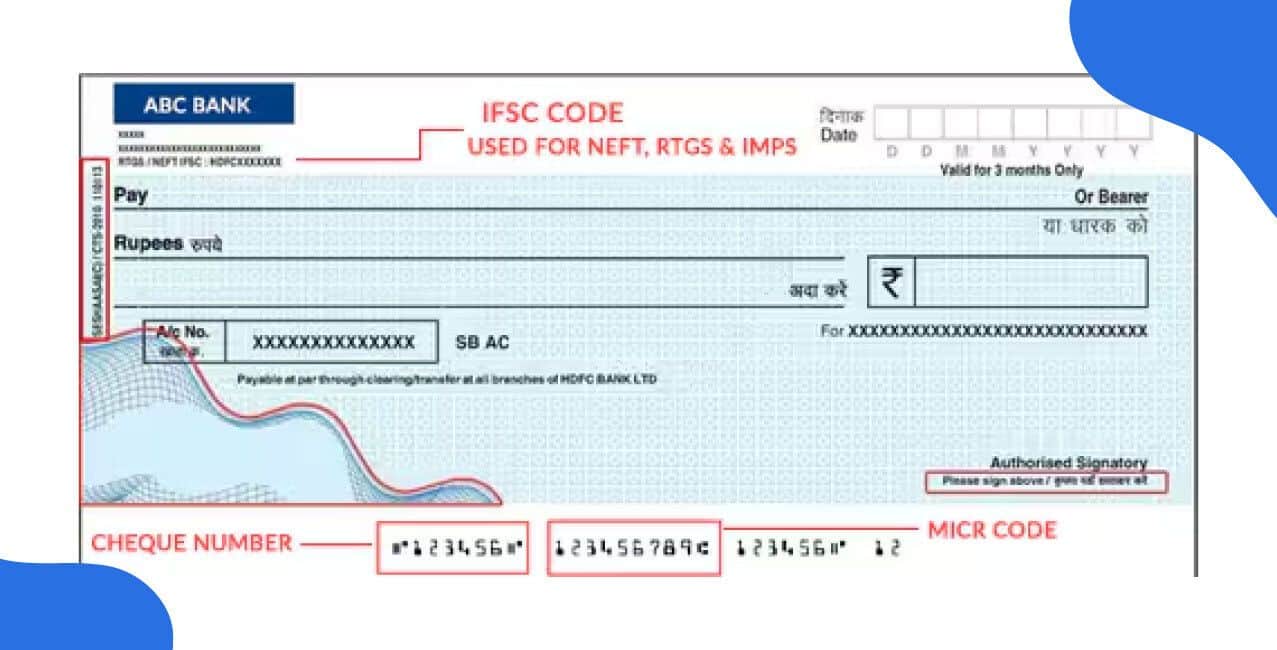
The code has been written on the top of her passbook and on the leaf of her cheque.
The Indian Financial System Code (IFSC) is a unique 11-character alphanumeric identifier assigned to each branch of a bank in India. It is essential for electronic funds transfer systems like NEFT, RTGS, and IMPS.
The structure of an IFSC code is as follows:
For example, in the IFSC code ICIC0000206:
This structure ensures that each branch has a unique identifier, facilitating accurate and secure electronic transactions.
The IFSC code is crucial for:
Incorrect IFSC codes can lead to failed transactions or funds being credited to the wrong account, underscoring the importance of accuracy.
You can find the IFSC code:
Always ensure you use the correct IFSC code to avoid errors in electronic transactions.
For example:
The Indian Financial System Code (IFSC), according to the Reserve Bank of India (RBI), is an 11-character alphanumeric code that is used to uniquely identify each bank branch taking part in the many electronic payment systems in India, including RTGS, IMPS, and NEFT. In order to ensure that money is transmitted to the right person in a secure and accurate manner, this code is essential for message routing in financial transactions.
*T&C Apply
Understanding how to look for an IFSC code is crucial for secure and effective online banking. Always check the code before completing any electronic transaction, whether you're using the RBI portal, the bank's official website, a chequebook, or a passbook. Your money will arrive at the appropriate branch safely and promptly if you have the correct IFSC number.
Faqs
Q. What is an IFSC code?
An IFSC code is an 11-character code that uniquely identifies a bank branch for electronic transactions.
Q. Where can I find my IFSC code?
You can find it on your cheque book, passbook, or the bank’s official website.
Q. Can I check the IFSC code online?
Yes, through the RBI website or your bank’s branch locator tool.
Q. Is it safe to use third-party websites for IFSC lookup?
It’s recommended to use only official or RBI-listed sources to ensure accuracy.