By continuing, you agree to LoansJagat's Credit Report Terms of Use, Terms and Conditions, Privacy Policy, and authorize contact via Call, SMS, Email, or WhatsApp
Disclaimer: The information published on LoansJagat is intended for general informational and educational purposes only and should not be considered financial, legal, or investment advice. Interest rates, loan terms, statistics, and other data may change over time and may vary by lender or source. Please verify the latest information and consult a qualified financial advisor or the respective Bank/NBFC before making any financial decisions.
Apply for Loans Fast and Hassle-Free
Subscribe Now
About the author

LoansJagat Team
‘Simplify Finance for Everyone.’ This is the common goal of our team, as we try to explain any topic with relatable examples. From personal to business finance, managing EMIs to becoming debt-free, we do extensive research on each and every parameter, so you don’t have to. Scroll up and have a look at what 15+ years of experience in the BFSI sector looks like.
Related Blog Post
Simplify All Your Loans Into One Affordable EMI

Customers Served

Debt Consolidated

1200+ Reviews

Locations in India
Club all Loans & Credit Card Bills into Single EMI

Quick Apply Loan
Consolidate your debts into one easy EMI.

Takes less than 2 minutes. No paperwork.

10 Lakhs+
Trusted Customers

2000 Cr+
Loans Disbursed

4.7/5
Google Reviews

50+
Banks & NBFCs Offers
Other services mentioned in this article
In 2023, a 35-year-old Kanpur investor, Manish, put in ₹50,000 in two leather firms — one dealing in footwear and the other in accessories. By mid-2024, the leather footwear stock appreciated by 28%, and the value of the accessories company appreciated by 21%.
Even during a jittery market, these stocks did not fluctuate due to sustained demand and export growth. This experience made Manish realise the unseen strength, fashion, utility, and guaranteed returns of the Indian leather sector all blended together in one.
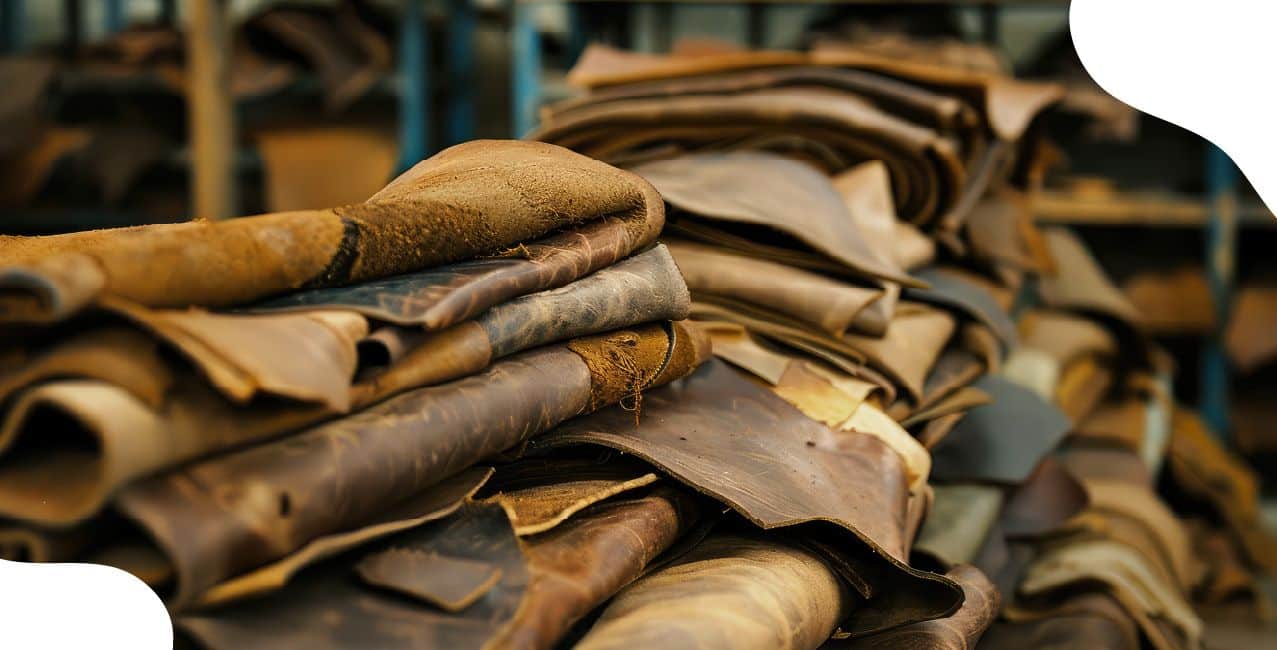
The leather business is an important contributor to the production of domestic consumption commodities, ranging from footwear, leather wallets, and handbags, to auto upholstery and industrial equipment. India is a leading world producer of leather products and exports leather products to the USA, Germany, the UK, and Italy.
The Indian leather industry still has long-term prospects based on its stable demand, wide product usage, and international export markets. Let's dissect the reasons why leather stocks are a favourite among investors, supported by real-life numerical examples to better understand things.
1. Stable Demand
India produces more than 2 billion pairs of shoes every year, meeting both domestic and foreign requirements.
Example: In 2022, Aditi, a Bengaluru-based retail investor, bought ₹25,000 worth of shares in Bata India Ltd. Her investment appreciated by 19% in the following 12 months, mainly because of consistent consumer demand during festival periods and the growth of the company into new retail outlets.
2. Export Growth
India is the second-largest exporter of leather apparel and the third-largest exporter of saddlery and harnesses in the world.
Example: In FY 2023, Indian leather exports totalled over ₹34,000 crore. Export-oriented company Mirza International saw its stock rise from ₹45 to ₹61 in nine months—a 35% increase—on the back of robust global orders and positive foreign exchange rates.
3. Luxury and Fashion Appeal
Leather remains a high-end material in the fashion world, applied to everything from bags and belts to high-end shoes and jackets.
Example: Rahul, a Delhi-based investor and fashion lover, invested ₹15,000 in a niche leather company famous for its high-end handbags. Due to intense digital marketing and new retail partnerships, the share price of the company appreciated by 25% in six months.
4. Diverse Applications
Fashion is not the exclusive domain of leather. Leather has applications in auto interiors, furnishings, military gear, gloves, and industrial use.
Example: In early 2024, a firm called Auto Leather Co. secured a large order to provide leather seats for an overseas electric car brand. Due to this, their share price rose from ₹82 to ₹101 in 45 days, providing a 23% return to early investors such as Preeti, who had been monitoring the auto accessory industry.
5. Government Support
The leather industry is subsidised by the Indian government under initiatives such as the Indian Footwear and Leather Development Programme (IFLDP), for which a budgetary outlay of ₹1,700 crore has been allocated.
Example: An Agra-based medium-sized leather products company was subsidised under this program in 2023, doubling its capacity. The profits of the company increased by 40% over a single quarter, and its stock value increased by 17% over the same time.
6. Brand Strength and Customer Stickiness
Solid leather brands behave consistently, even in volatile markets, thanks to high customer faith and regular revenues.
Example: After the COVID-19 slowdown, Relaxo Footwear, a favourite for tough, value-priced leather sandals, rebuilt its share value from ₹800 to ₹1,050 within a year—a 31% rise—blessed with consistent rural off-take and low-cost operations.
Key Factors Affecting Leather Stocks in India
Before putting your hard-earned money into leather stocks, it’s important to understand the factors that can influence their performance. Just like how a small scratch can affect the shine of a leather bag, even small market events can impact these stocks. Let’s break it down in a very simple way — and yes, we’ll add some real-world-style examples too.
1. Demand for Leather Goods (Local & Global)
The leather sector in India thrives on both domestic and international demand for footwear, bags, belts, wallets, and fashion accessories. If the global fashion industry is booming, leather stocks can ride that wave.
Numerical Example:
In 2023, India exported leather goods worth over ₹35,000 crores. If exports grow just 10% yearly, that’s an additional ₹3,500 crores of opportunity for listed companies like Superhouse or Bhartiya International.
The cost of raw hides and chemicals used in tanning impacts profit margins. If these costs shoot up, leather companies may struggle to maintain profits unless they pass the cost to consumers.
Numerical Example:
If leather prices rise from ₹70/kg to ₹90/kg (a 28% increase), a company making 10 lakh leather shoes a year could face an added cost of ₹2 crore, directly eating into profits unless managed smartly.
The Indian government often provides subsidies and duty drawbacks for leather exporters. Changes in these policies can either boost or slow down business.
Numerical Example:
In 2022-23, duty drawback incentives added nearly ₹200 crore to exporters’ income. Removal of this can dent net profit by 5–7% for companies relying heavily on overseas sales.
The leather industry is labour-intensive. A large part of operations, especially in tanneries and stitching units, depends on skilled workers. Wage hikes, strikes, or labour shortages can affect output.
Numerical Example:
If a company has 2,000 workers and labour cost goes up by just ₹500/month per worker, that’s ₹1 crore additional cost annually — a big number for mid-sized companies.
Eco-conscious buyers now prefer sustainable and cruelty-free products. If a leather company fails to meet international standards, it could lose clients or face penalties abroad.
Numerical Example:
A European buyer rejected ₹50 lakh worth of goods in 2023 because the leather wasn’t certified as “chrome-free.” This shows how missing out on green compliance can hurt business.
Leather goods are fashion-driven. Seasonal launches or global trends can influence demand. Companies that adapt quickly tend to perform better.
Numerical Example:
Campus Activewear saw a 20% sales spike in the winter months due to high demand for leather shoes and boots. Such patterns can help predict short-term investment opportunities.
With the rise of synthetic and vegan leather, traditional leather companies face new competition. Companies must innovate or diversify to stay relevant.
Numerical Example:
In 2024, synthetic leather sales grew 15%, while real leather grew only 4%. Investors must watch how listed leather firms adapt to this change in consumer preference.
At the end of the day, solid financials matter. Check a leather company’s profit trends, debt levels, P/E ratios, and return on equity before investing.
Numerical Example:
Mirza International had a P/E of 10 while Metro Brands had 90. While Metro is a premium player, you might get more value in Mirza if you’re looking for growth at a reasonable price.
9. Brand Value & Market Reach
Brands like Metro, Red Tape (Mirza International), and Campus have strong customer recall. Companies with retail stores, e-commerce tie-ups, and global distribution have more growth potential.
Numerical Example:
Metro Brands operates 700+ stores across India. Compare this to a regional player with just 30 outlets — brand presence can directly reflect in consistent quarterly sales.
*T&C Apply
Leather stocks can be relatively stable, but small caps in this space often see sudden ups and downs due to low liquidity. Be mindful of price swings if you’re planning short-term trades.
Numerical Example:
In the last 6 months, Bhartiya International moved between ₹380 to ₹470 — almost 25% volatility. If you're a new investor, that kind of movement might feel like a roller coaster.
That’s where the future of leather stocks gets interesting — Indian leather companies are no longer just suppliers. They’re evolving into brands.
Let’s break this down and see why the leather sector is likely to see steady to strong growth in the coming years, especially from an investor’s point of view.
India's middle-class population is increasing fast. People today want quality products — be it stylish leather shoes, elegant bags, or durable belts.
Example:
A company like Metro Brands is expanding rapidly in Tier-2 and Tier-3 cities, where demand for branded leather goods has risen by 20% over the last 3 years. This kind of consistent domestic demand means leather companies can focus on volume growth, and in turn, increase their revenues steadily.
Under initiatives like Make in India and the Indian Footwear and Leather Development Programme (IFLDP), the government is offering subsidies and financial assistance to leather manufacturers for upgrading technology and boosting exports.
Example:
A mid-sized leather export company in Tamil Nadu received a ₹3 crore subsidy under IFLDP to modernise its plant in 2023, resulting in a 25% increase in production capacity and better profit margins.
This push is slowly making Indian companies globally competitive, which is a great sign for long-term investors.
Gone are the days when Indian leather companies were just OEMs (Original Equipment Manufacturers) for foreign brands. Now, companies are focusing on their own retail presence and building strong customer loyalty.
Example:
Campus Activewear, although known more for sports shoes, has carved out a large retail base using effective branding. Now, imagine a company like Mirza International (Red Tape) using similar strategies across its leather product lines. That’s a solid growth opportunity.
While leather continues to be in demand, companies are also exploring eco-friendly tanning techniques and hybrid materials to cater to the sustainability-conscious crowd.
Example:
A Noida-based leather brand has started using vegetable-tanned leather — a chemical-free, biodegradable option. As per its sales report, nearly 15% of its 2024 sales came from these “green” leather products, up from just 5% the previous year.
Investors looking for long-term value will appreciate these companies adapting to global trends without losing core strength.
Indian leather companies have a cost advantage, skilled workforce, and design capabilities. Countries like the US, UK, and Germany already import a lot of Indian leather products.
Example:
Superhouse Ltd, which once supplied mainly to Indian wholesalers, now exports to over 35 countries. In FY 2024, its export revenue made up nearly 70% of its total income.
If companies continue expanding like this, investors could benefit from diversified income streams and reduced domestic risk.
With platforms like Amazon, Myntra, and Flipkart offering logistics and visibility, small and mid-sized leather companies can directly reach customers, cutting out the middlemen.
Example:
Bhartiya International launched its own leather accessory brand online and saw year-on-year D2C sales grow by 60%. This not only boosted margins but also improved customer engagement — a key metric for modern businesses.
If you're someone who values stable growth, long-term demand, and brand-driven industries, leather stocks might just fit into your portfolio.
Let’s take the example of Neha, a 33-year-old marketing manager in Pune. She’s not a daily trader, but someone who wants her savings to grow steadily. While researching sectors that combine lifestyle trends with manufacturing, she stumbled upon leather stocks like Metro Brands and Mirza International. Why? Because people will always buy shoes, bags, belts, and wallets — they’re essentials. And with India's growing population and fashion awareness, leather demand is only expected to rise.
He’s new to investing. One day, after buying a leather jacket online from an Indian brand, he got curious about leather companies on the stock market. He Googled a bit and found names like Campus Activewear and Superhouse Ltd. So, how did he invest?
Arjun opened a Demat and Trading Account with a popular platform like Zerodha (you can choose any broker — Groww, Upstox, Angel One, etc.).
This account allows you to buy, hold, and sell shares digitally.
Tip: You need a PAN card, Aadhaar card, bank account details, and a selfie. Most platforms let you complete the KYC process online in 15–30 minutes.
He transferred ₹5,000 from his savings account to the broker's wallet.
Arjun searched for companies like Mirza International, Metro Brands, and Superhouse Ltd. He checked their 1-year returns, volume, and future growth potential using tools inside the app.
He bought 10 shares of Mirza International at ₹40 each. That’s ₹400 total (plus a minor brokerage fee).
He set alerts and regularly checked news updates on leather exports, festivals (when demand peaks), and quarterly results.
Let’s be honest — leather stocks aren’t the most hyped-up shares you’ll see on social media or WhatsApp investor groups. They don’t always give you overnight riches, but what they do offer is something equally important — consistency, reliability, and long-term demand.
Take the example of Rakesh, a 40-year-old schoolteacher from Lucknow. He’s not into risky stocks or F&O trading. Instead, he wanted to invest in companies that make everyday products — like shoes, wallets, bags — stuff people will always buy. That’s when he started buying shares in Metro Brands and Campus Activewear slowly over time. Three years down the line, his leather stock portfolio has not only given decent returns but also helped him beat inflation. That’s the beauty of investing in a sector tied to real-world demand.
Yes — if you believe in practical businesses, and long-term growth, and want to diversify your portfolio. The leather industry in India is growing, exports are rising, and Indian brands are getting international recognition.
However, like every sector, leather stocks too have ups and downs. Price of raw materials, export policies, global fashion trends — these things impact returns. That’s why it’s always better to invest gradually and keep an eye on company updates.
Q1. Are leather stocks profitable in the long term?
Yes, they can be — due to steady demand and brand loyalty.
Q2. Can beginners invest in leather stocks?
Absolutely! Just open a Demat account and start small.
Q3. Do leather stocks give dividends?
Some do — like Metro Brands and Mirza International.
Q4. Are leather stocks seasonal?
A bit, especially during festive and wedding seasons, demand peaks then.
Q5. Is Campus Activewear a leather stock?
Yes, it falls under the footwear and leather-related segments.
Q6. Do leather stocks depend on exports?
Partially yes — many Indian companies earn from global markets.
Q7. Are leather stocks safe?
No stock is 100% safe, but leather stocks offer stable, real-world demand.
Q8. How do I invest in leather stocks?
Open a Demat account, search for companies, and start investing.