By continuing, you agree to LoansJagat's Credit Report Terms of Use, Terms and Conditions, Privacy Policy, and authorize contact via Call, SMS, Email, or WhatsApp
Disclaimer: The information published on LoansJagat is intended for general informational and educational purposes only and should not be considered financial, legal, or investment advice. Interest rates, loan terms, statistics, and other data may change over time and may vary by lender or source. Please verify the latest information and consult a qualified financial advisor or the respective Bank/NBFC before making any financial decisions.
Apply for Loans Fast and Hassle-Free
Subscribe Now
About the author

LoansJagat Team
‘Simplify Finance for Everyone.’ This is the common goal of our team, as we try to explain any topic with relatable examples. From personal to business finance, managing EMIs to becoming debt-free, we do extensive research on each and every parameter, so you don’t have to. Scroll up and have a look at what 15+ years of experience in the BFSI sector looks like.
Related Blog Post
Simplify All Your Loans Into One Affordable EMI

Customers Served

Debt Consolidated

1200+ Reviews

Locations in India
Club all Loans & Credit Card Bills into Single EMI

Quick Apply Loan
Consolidate your debts into one easy EMI.

Takes less than 2 minutes. No paperwork.

10 Lakhs+
Trusted Customers

2000 Cr+
Loans Disbursed

4.7/5
Google Reviews

50+
Banks & NBFCs Offers
Other services mentioned in this article
Key Highlights
Bonus Point: The Kerala State Consumer Commission clarified that education is not a “service” under the Consumer Protection Act, meaning students cannot seek remedies for educational disputes through consumer forums.
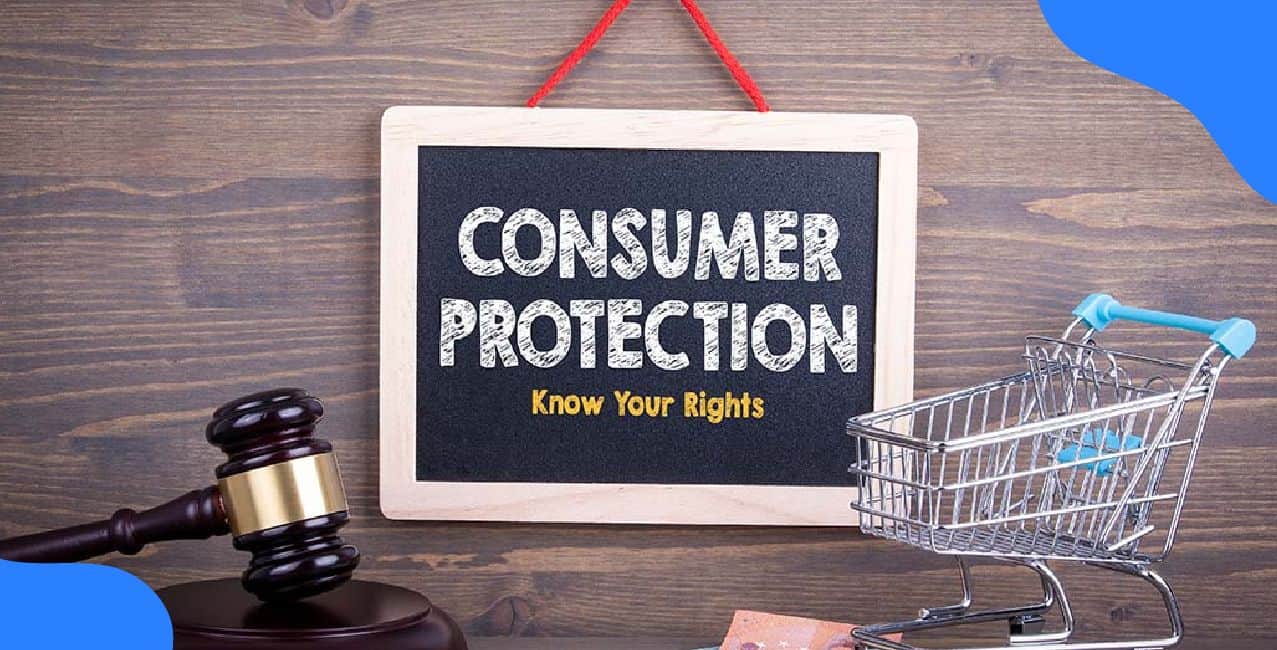
The Consumer Protection Act safeguards buyers from unfair trade practices and defective goods or services. It empowers consumers with clear rights, faster grievance redressal, and stronger accountability for sellers, manufacturers, and service providers in an increasingly complex marketplace.
The Consumer Protection Act is a law designed to protect consumers from exploitation, fraud, and unfair practices. Think of it as a safety net under a tightrope, allowing trade to move freely while ensuring consumers don’t fall when something goes wrong. It balances business freedom with consumer trust.
A consumer receives a defective product through an online platform. Instead of chasing the seller across cities, the Act allows filing a complaint from home and ensures the seller takes responsibility or faces legal consequences.
The Consumer Protection Act has recently gained renewed significance through key Supreme Court observations that strengthen consumer rights, accountability, and the effectiveness of consumer-focused laws.
The Supreme Court has clarified that an interim moratorium under Section 96 of the Insolvency and Bankruptcy Code (IBC) does not shield individuals or personal guarantors from penalties imposed under consumer protection laws. The Court held that such penalties are regulatory and punitive in nature, not “debts” under the IBC.
Therefore, proceedings and enforcement actions by consumer forums can continue despite insolvency applications. The ruling ensures that insolvency law cannot be misused to escape accountability for consumer rights violations and reinforces that consumer protection penalties remain enforceable even during ongoing insolvency proceedings.
The Supreme Court has underlined the urgent need for regular performance audits of laws while hearing a case on the Consumer Protection Act. It directed the Central Consumer Protection Council and Authority to review how effectively the law is functioning in practice. The Court observed that laws are often enacted and implemented but rarely assessed for real-world impact, relevance, or gaps over time.
Such reviews would help the government measure outcomes, identify weaknesses, and update legislation to match changing social and economic realities. While debates may continue on institutional roles, the directive highlights a crucial step toward more efficient, responsive, and purpose-driven governance.
Consumer protection has evolved over centuries, shaped by social, economic, and legal developments. From early moral and religious principles to structured legal frameworks, societies have consistently sought to safeguard buyers from unfair trade practices.
In India, consumer protection grew from ancient ethical codes to medieval market controls, later formalised through British-era laws, and finally strengthened after Independence through constitutional governance. This evolution reflects a continuous effort to balance trade freedom with consumer welfare.
The table below traces the historical evolution of consumer protection, showing how societies across different periods worked to safeguard buyers from unfair trade practices.
Together, these developments highlight that consumer protection has steadily evolved from moral principles into structured legal rights focused on fairness, safety, and accountability.
This progression shows how consumer protection matured from a moral duty to enforceable legal rights.
The following points highlight how the Consumer Protection Act has strengthened consumer rights by making grievance redressal easier and discouraging unnecessary delays in the justice process.
Under the earlier Consumer Protection Act, a consumer had to file a complaint only where the transaction took place. This often meant travelling to another city, spending time and money just to seek justice. Now, as Chennai-based advocate Vasu Venkat explains, a consumer can file a complaint from the place where they live or work to gain. This small change makes access to justice far more practical.
The law also discourages casual appeals. Earlier, companies could appeal without a serious financial commitment, delaying relief. Now, the opposite party must deposit
*T&C Apply
The table below highlights how the new Consumer Protection Act has simplified complaint filing and reduced unnecessary appeals compared to the earlier law.
These changes make consumer justice more accessible while discouraging delay tactics, ensuring faster and more responsible dispute resolution.
This ensures faster, fairer consumer justice.
The Consumer Protection Act reflects a strong shift toward consumer-centric justice by making grievance redressal simpler, faster, and more accountable. Through judicial clarity, easier access to forums, and stricter appeal rules, the law ensures that consumer rights are protected without unnecessary delays. Its evolution and recent Supreme Court observations reinforce that consumer welfare remains central to fair trade, effective governance, and public trust in the legal system.
Q. Can a consumer file a complaint from their place of residence under the Consumer Protection Act?
Yes, consumers can now file complaints from where they live or work, not just where the transaction occurred.
Q. Does the Consumer Protection Act work in India, and is it easy to file a complaint?
Yes, consumer forums at district, state, and national levels function effectively with a simple complaint process and relatively faster resolution.
Q. Have people actually filed complaints in consumer courts, and what response do they get?
Yes, complaints are filed, but outcomes can involve delays, adjournments, and unclear orders, similar to regular courts.
Q. Can a consumer seek a refund for a holiday membership bought under pressure and misrepresentation?
Yes, a complaint can be filed under the Consumer Protection Act for unfair trade practices, misrepresentation, and undue influence, even if the contract claims non-refundability.
Q. What should a consumer do after filing a grievance on the National Consumer Helpline?
If the issue remains unresolved, the next step is to file a formal complaint before the appropriate Consumer Commission using the helpline reference and evidence.