By continuing, you agree to LoansJagat's Credit Report Terms of Use, Terms and Conditions, Privacy Policy, and authorize contact via Call, SMS, Email, or WhatsApp
Disclaimer: The information published on LoansJagat is intended for general informational and educational purposes only and should not be considered financial, legal, or investment advice. Interest rates, loan terms, statistics, and other data may change over time and may vary by lender or source. Please verify the latest information and consult a qualified financial advisor or the respective Bank/NBFC before making any financial decisions.
Subscribe Now
About the author

‘Simplify Finance for Everyone.’ This is the common goal of our team, as we try to explain any topic with relatable examples. From personal to business finance, managing EMIs to becoming debt-free, we do extensive research on each and every parameter, so you don’t have to. Scroll up and have a look at what 15+ years of experience in the BFSI sector looks like.
Related News
Simplify All Your Loans Into One Affordable EMI

Customers Served

Debt Consolidated

1200+ Reviews

Locations in India
Club all Loans & Credit Card Bills into Single EMI

Quick Apply Loan
Consolidate your debts into one easy EMI.

Takes less than 2 minutes. No paperwork.

10 Lakhs+
Trusted Customers

2000 Cr+
Loans Disbursed

4.7/5
Google Reviews

50+
Banks & NBFCs Offers
Other services mentioned in this article
Central bank warns of slowing momentum as inflation cools and investment stays muted
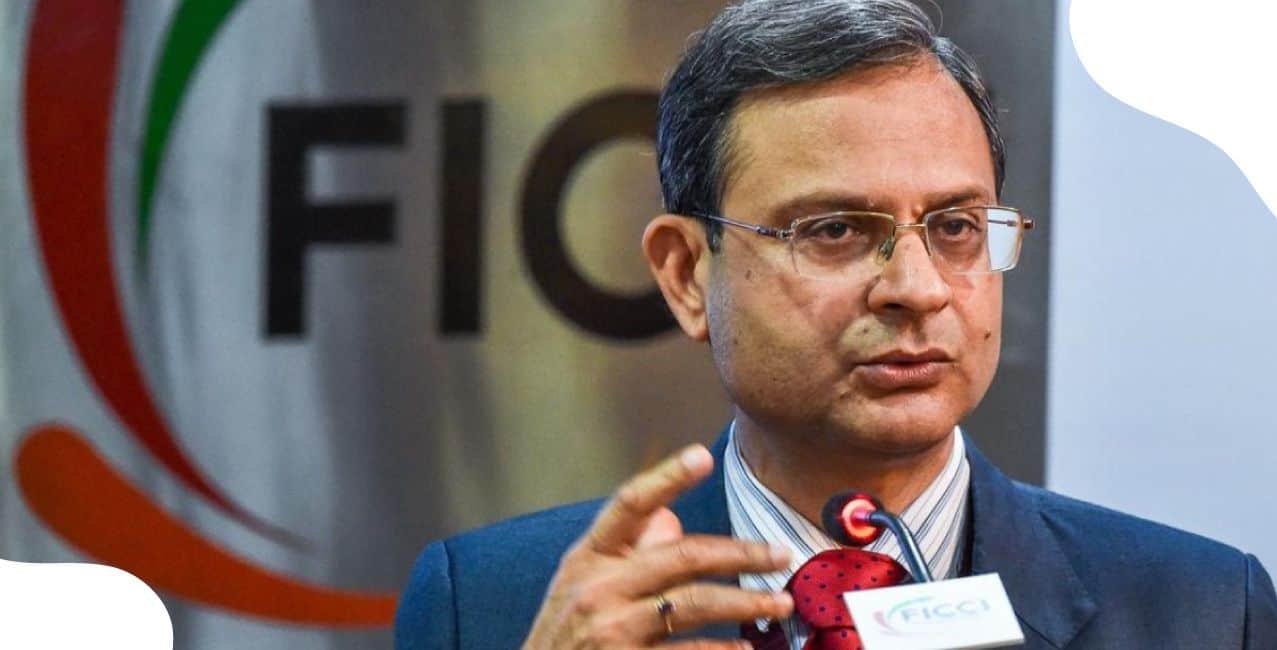
Can a growing economy slow down even when inflation is falling? The Reserve Bank of India (RBI) seems to think so. In October 2025, RBI Governor Sanjay Malhotra stated that India’s growth outlook is softer and below expectations, even though the inflation rate hit a new low.
His comments came during the release of the Monetary Policy Committee (MPC) minutes dated October 15, 2025, which reviewed the state of India’s economy in the second half of the financial year.
The RBI growth outlook softer than expected analysis points to mixed signals. The October 2025 MPC report revised India’s real GDP growth forecast for FY 2025‑26 to 6.8 percent, slightly higher than the earlier 6.5 percent estimate.
Read More – US Tariffs Not a Big Worry for India’s Growth, Says RBI Governor
Inflation, however, was trimmed to 2.6 percent, down from 3.1 percent, after consumer prices fell steadily through the September quarter.
According to official data from the National Statistical Office (NSO), retail inflation slipped to 1.54 percent in September 2025, the lowest in eight years. Yet, the RBI governor cautioned that while the economy looks steady today, the coming months could bring uneven performance, especially in private investment and exports.
Below is a snapshot of India’s revised projections for FY 2025‑26:
The RBI kept its repo rate unchanged at 6.5 percent, arguing that previous cuts need more time to reflect in lending and borrowing activity. Governor Malhotra said the focus must stay on “steady policy transmission” before new moves are considered.
The RBI statement on India’s economic slowdown defines “soft growth” as a period when the economy expands, but slower than the potential rate. The October 2025 minutes highlight that high-frequency indicators, such as goods transport, power demand, and GST collections—remain healthy, yet the momentum is not broad-based.
Private investment, one of the key drivers of sustained expansion, has shown little recovery. The RBI Governor Sanjay Malhotra economic outlook 2025 also mentioned that the earlier rate cuts are still filtering through the system. Businesses continue to face higher borrowing costs, and fresh capacity creation has slowed.
To understand the internal differences, sectoral data paints a clearer picture.
The service sector continues to support the economy, while manufacturing and farming remain under stress. The report underlines that India’s expansion, though steady, is losing depth as structural challenges re‑emerge.
The India GDP growth below expectations report connects today’s concerns with earlier trends. In 2023‑24, growth targets were also missed due to uneven exports and high global energy prices. The Ministry of Finance’s Mid‑Year Review 2024 had flagged similar worries about weak private investment and trade headwinds.
This pattern shows how fragile India’s recovery cycles can be when global markets shift. As reported earlier in our coverage — “India’s Growth Numbers Adjusted Amid Trade Slump” — past slowdowns began in export‑linked sectors before spreading to domestic demand.
The recent numbers echo that experience, though inflation today is far lower, creating a very different policy dilemma for the central bank.
Unlike in 2020, the RBI in 2025 has chosen restraint. The focus is on letting prior measures settle before making fresh moves. The logic is simple: premature rate cuts may weaken the rupee and fuel future inflation if global prices rise again.
The Sanjay Malhotra comments on growth forecast during the October 2025 press briefing drew attention to external challenges. He noted that tariff uncertainty in the United States and slower Chinese demand have affected India’s export prospects.
As per the Directorate General of Foreign Trade (DGFT), India’s merchandise exports fell 2.3 percent in Q2 FY 2025‑26 to USD 96.1 billion, compared with USD 98.3 billion a year earlier. Crude oil prices climbed above USD 85 per barrel, adding cost pressure, while forex reserves slipped to USD 595 billion, as reported in the RBI Bulletin October 2025.
These numbers explain why policymakers remain cautious despite the comfort of low inflation.
*T&C Apply
Latest Value
Governor Malhotra said India’s “near‑term resilience” is intact, but long‑term stability depends on how these external pressures evolve.
This cautious approach has a history. In 2019, even when inflation was low, the RBI delayed cutting rates because of global trade worries. By contrast, during the 2020 COVID crisis, the RBI moved fast, cutting rates by 115 basis points to keep credit flowing.
The 2025 stance sits between those two extremes. The difference is in timing. Instead of reacting early, the RBI now prefers to watch liquidity and private credit before making a move. The government supports this cautious tone, saying fiscal support via infrastructure investment remains strong.
Also Read – Is India Prepared for Economic Recession: Spiked Gold Price Give Hints
As LoansJagat notes in “Will RBI Slash Rates in December 2025? Here’s What It Could Mean for Debt Market Investors”, India’s central bank often waits and weighs multiple factors before deciding on rate cuts.
The RBI Governor Sanjay Malhotra economic outlook 2025 paints a mixed picture. The RBI believes India will stay one of the world’s fastest‑growing large economies, yet not without risks. With inflation contained, the immediate threat is not price instability but weak demand and uneven recovery.
The governor’s comment that the growth outlook is softer and below expectations reflects this balancing act. The central bank aims to maintain monetary stability while waiting for investment and trade to strengthen.
For now, the message is steady and clear. India’s growth story continues, but at a slower rhythm. The next few quarters will decide if this pause leads to renewed momentum or another round of policy support.









.png&w=3840&q=75)



