HomeLearning CenterWhat Is Default – Consequences And Impact On Borrowers
Blog Banner

Author

LoansJagat Team

Read Time

6 Min

17 Nov 2025

What Is Default – Consequences And Impact On Borrowers

blog

Key Takeaways
 

  • Loan default occurs when a borrower fails to repay borrowed money on time, whether it's a secured or unsecured loan.
     
  • Defaults lead to a major drop in credit score, making it harder to get approved for future loans or credit cards.
     
  • Secured loans may result in asset seizure, while unsecured loans can lead to legal notices and account blocks.
     
  • Borrowers can avoid default by taking early action like restructuring loans, consolidating debt, or communicating with lenders.
     
  • Recovery is possible through debt settlement, repayment plans, or loan modification with lender support.
     

BONUS: YOUR CREDIT CARD ACCOUNT WILL FIRST BECOME DELINQUENT IF YOU FAIL TO MAKE A PAYMENT FOR 30 DAYS. IF YOU CONTINUE TO REMAIN DELINQUENT FOR SIX MONTHS. YOUR ACCOUNT WILL THEN ENTER INTO DEFAULT.

A default happens when someone who has taken a loan is not able to pay it back on time. This can be for any kind of loan, like a home loan, credit card bill, or personal loan.

Ravi, a 32-year-old software engineer in Bengaluru, took a personal loan of ₹50,000 from a digital lending app in January 2023. He had to pay ₹3,000 every month. But after losing his job in April, Ravi missed three payments in a row. In June, his loan account was marked as "in default." His credit score dropped, and he was not able to get a new credit card or loan after that.

This blog explains what a default is, the types of defaults, and how they affect people and businesses in the fintech world. It also shows how you can avoid a default and what to do if it happens.

What Is a Default?

A default occurs when an individual, business, or even a government fails to repay borrowed money on time. It can happen with any type of loan—home, vehicle, personal, or even short-term credit like Buy Now, Pay Later (BNPL). Defaulting damages creditworthiness and makes it more difficult to access new loans in the future.

Example: Priya borrowed ₹30,000 through a BNPL app, with repayment scheduled in three monthly instalments. After she missed two payments, the lender reported her as a defaulter. As a result, she now struggles to qualify for new loans from digital platforms or banks.

Types of Debt and What Happens When You Default

When a borrower defaults, the consequences depend on the type of loan. Secured loans involve assets such as homes or vehicles, which the bank may repossess. Unsecured loans, such as credit cards, have no asset backing; instead, defaults harm credit scores and may lead to legal action.
 

Type of Loan

Is It Secured?

What Happens If You Default?

Home Loan

Yes

House may be repossessed

Credit Card

No

Credit score declines

Personal Loan

No

Legal notices, score damage

Vehicle Loan

Yes

Vehicle may be repossessed


The table shows that secured loans expose borrowers to loss of assets, while unsecured loans mainly affect credit health and legal standing.

Secured vs Unsecured Debt

Loans fall into two broad categories: secured and unsecured. Secured loans require collateral, such as a car or home, which the lender can seize in case of non-payment. Unsecured loans do not require collateral, but the consequences include credit score damage and legal notices.

Example: Aman purchased a motorbike with a ₹70,000 loan. After missing payments for four months, the lender repossessed the bike because the loan was secured.
 

Type of Loan

Secured?

Risk to Borrower

Action Taken by Lender

Bike Loan

Yes

Bike can be repossessed

Repossession

Education Loan

No

Credit damage

Legal notice

BNPL Loan

No

App restrictions, credit decline

Account block


Borrowers with secured loans risk losing valuable assets, while unsecured loan borrowers face reputational and legal consequences.

Types of Defaults

Defaults are not limited to loans; they also arise in agreements between two parties. When one or both sides fail to meet their obligations, it is classified as a default. There are three main categories.
 

  • Mora Solvendi (Debtor’s Default): Occurs when the person responsible for paying money does not do so on time.
    Example: Sarah owed her supplier ₹15,00,000 for raw materials but failed to pay by the due date.
     
  • Mora Accipiendi (Creditor’s Default): Happens when the creditor refuses to accept payment or delivery, despite the debtor being ready.
    Example: Sarah’s supplier attempted to deliver goods, but she declined to accept them.
     
  • Compensatio Morae (Mutual Default): Arises when both debtor and creditor fail to meet their obligations.
    Example: Sarah did not pay ₹15,00,000, and the supplier also failed to deliver the raw materials.
     

These categories illustrate that defaults can occur from either side of a financial agreement and sometimes from both simultaneously.

General Implications of Default

A loan default brings financial, legal, and personal consequences. The most immediate effect is a sharp decline in credit score, making it difficult to borrow in the future. Banks may also initiate legal proceedings or seize collateral. Beyond money, defaults create stress and reduce trust between borrowers and lenders.

Example: Anna, living in Mumbai, had a credit card balance of ₹7,00,000. After losing her job, she failed to pay for six months. Her bank declared her a defaulter, which caused her credit score to drop by 150 points. She also received legal notices, and the bank warned that her jewellery, pledged as security, could be taken.

Consequences of Default

The impact of default is felt in multiple ways—credit score, legal obligations, and asset ownership. Each consequence makes it harder for borrowers to recover financially.
 

Consequence

Description

Example Case Study

Credit Score Damage

Default leads to a major credit drop

Anna’s score dropped by 150 points

Legal Action

Lenders may take court action

Anna received a lawyer’s letter

Asset Seizure

Lenders repossess collateral like jewellery

Bank threatened to seize jewellery


The table highlights how default harms reputation, invites legal disputes, and puts personal assets at risk.

How to Avoid Defaulting?

Avoiding default requires early action and strong financial planning. Borrowers should communicate with lenders, restructure debt if necessary, and prioritise repayments.
 

  • Talk to Your Lender: Request extensions or smaller instalments before missing payments.
     
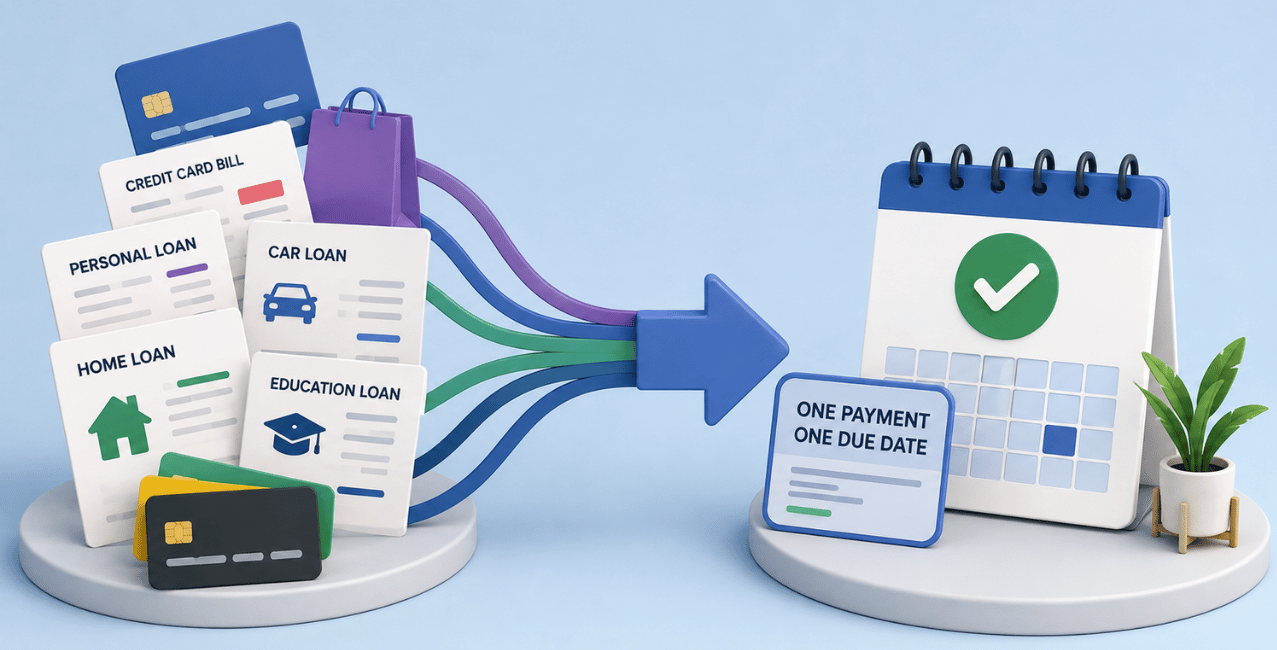
  • Debt Consolidation: Merge multiple loans into one, often at a lower monthly instalment.
     
  • Refinancing the Loan: Negotiate lower interest rates or longer repayment terms.
     

Example: Ben, a shop owner in Pune, owed three lenders ₹15,000 per month. When business slowed, he consolidated his loans into a single one. His new repayment was ₹10,000 per month with an extended timeline, helping him avoid default.

Taking action before missing payments can reduce stress, protect credit scores, and preserve long-term financial health.

Recovery Options After Default

Default does not always mean the end. Borrowers still have opportunities to negotiate with lenders and reduce their burden.
 

  • Loan Modification: Adjust the repayment schedule, interest rate, or loan amount.
     
  • Debt Settlement: Negotiate to repay less than the total due, acceptable when lenders fear non-recovery.
     
  • Debt Management Plan: Work with a financial advisor to design a step-by-step repayment structure.
     

Example: Lisa, a graduate in Delhi, had a student loan of ₹4,00,000. After defaulting, she worked with a financial counsellor. The bank agreed to a settlement of ₹2,80,000, repayable in smaller instalments. This reduced her stress and gave her a path to financial recovery.

While default damages credit, structured recovery measures can help borrowers regain stability and rebuild their financial reputation.

Impact of Loan Default on Credit Score in India

A credit score reflects your financial trustworthiness. In India, timely repayment of loans plays a big role in maintaining a good score. When someone defaults on a loan, it can lead to serious damage to their credit profile, affecting future borrowing capacity: 
 

  • Drop in Credit Score: A single missed EMI can reduce your credit score by 50–100 points, depending on the delay and loan type.
     
  • Difficulty in Future Loans: Lenders may reject or offer higher interest rates on future credit applications.
     
  • Low Creditworthiness: A poor score (below 650) signals risk to banks and lowers your chances of approval.
     
  • Negative Credit Report: Defaults stay on your CIBIL report for up to 7 years, affecting long-term borrowing.
     
  • Co-borrower Impact: If you default on a joint loan, the co-applicant’s score is also affected.
     

Defaulting on a loan doesn’t just reduce your credit score, it impacts your financial future. Recovering from a poor credit score takes time, effort, and disciplined repayment habits.

Legal Consequences of Loan Default in India

Loan default in India can lead to more than just credit issues. Depending on the loan type and severity, banks can take legal steps to recover their money. Understanding these consequences helps borrowers stay informed and prepared: 
 

  • Recovery Notices: Banks send legal demand notices under the SARFAESI Act for secured loans.
     
  • Asset Seizure: For secured loans, the bank can auction pledged assets like homes or vehicles.
     
  • Civil Lawsuits: Lenders may file civil cases for loan recovery through Debt Recovery Tribunals (DRTs).
     
  • Criminal Action: Fraudulent defaults (with false documents or intent) can lead to criminal proceedings.
     
  • No Jail for Default Alone: You cannot be jailed for loan default unless there is proven fraud involved.
     

While missing one EMI might seem small, continuous loan default can lead to legal trouble, asset loss, or court action. It’s always better to communicate with the bank early and seek support before the situation worsens.

Conclusion

Defaulting on a loan can hurt your credit score and bring legal trouble. But it’s not the end. You can avoid default by acting early, talking to lenders, and using help from fintech tools. Stay alert, borrow smart, and always plan your repayments. That’s the best way to stay safe with money.

FAQs
 

1. How long does a loan default stay on my credit report in India?
A loan default stays on your CIBIL or credit report for up to 7 years, affecting your ability to get new loans or credit cards during that time.

2. Can I fix a default on my loan record?
Yes, you can negotiate with your lender, settle the overdue amount, or ask for a revised repayment plan to recover your credit health.

3. Will a loan default affect my chances of getting a job or house loan?
Yes. Some employers and landlords check credit history. A default can raise concerns and reduce your chances of approval or trust.

4. Can I be sent to jail for not repaying my loan in India?
No, you cannot be jailed for defaulting on a loan, but legal and civil recovery actions like court notices and property seizure may follow.

5. What happens to the co-borrower if one person defaults on a joint loan?
If the primary borrower defaults, the co-borrower is also held responsible, and their credit score and borrowing ability will be affected too.
 

Other Related Pages

What is Hedging in Trading

What is Accrued Interest

What is Acquisition

What is Cash Basis Accounting

What is Cash Conversion Cycle

What is Commercial Paper

What is Convertible Preferred Stock

What is Core Inflation

What is Debt

What is the Debt-to-Equity Ratio

What is Decentralised Finance

What is Default

What is Double Taxation

What is Dow Jones Industrial Average


Apply for Loans Fast and Hassle-Free

About the Author

logo

LoansJagat Team

‘Simplify Finance for Everyone.’ This is the common goal of our team, as we try to explain any topic with relatable examples. From personal to business finance, managing EMIs to becoming debt-free, we do extensive research on each and every parameter, so you don’t have to. Scroll up and have a look at what 15+ years of experience in the BFSI sector looks like.

coin

Quick Apply Loan

tick
100% Digital Process
tick
Loan Upto 50 Lacs
tick
Best Deal Guaranteed

Subscribe Now