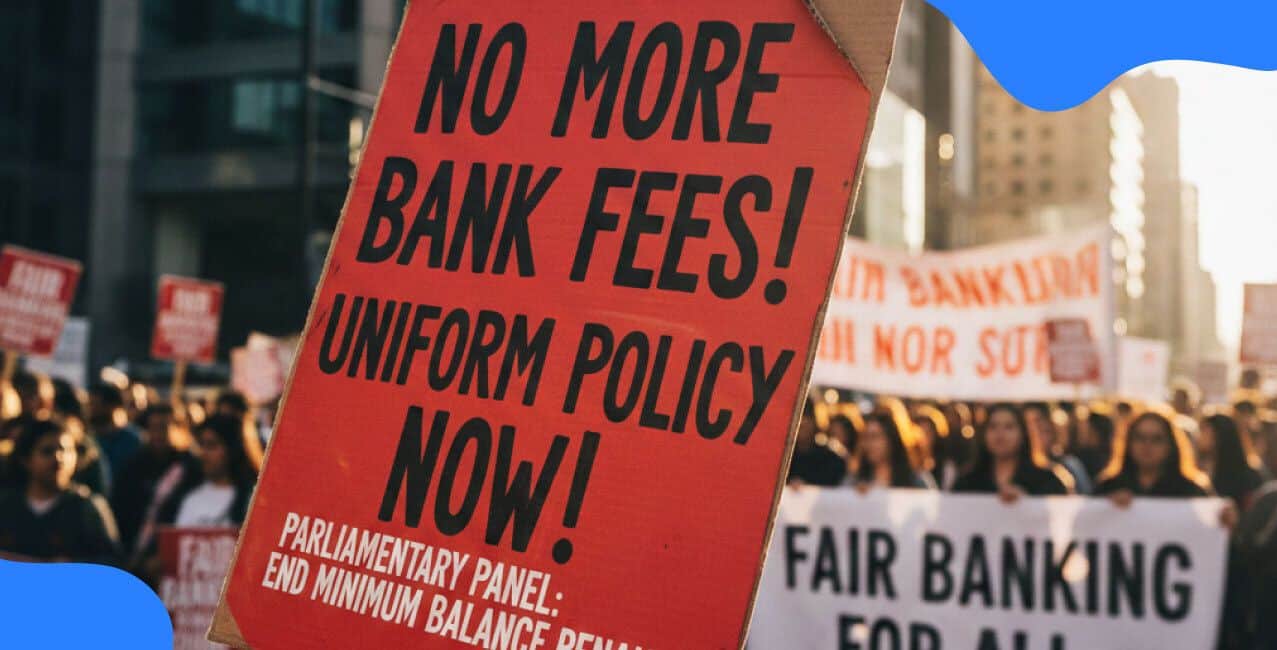
By continuing, you agree to LoansJagat's Credit Report Terms of Use, Terms and Conditions, Privacy Policy, and authorize contact via Call, SMS, Email, or WhatsApp
Disclaimer: The information published on LoansJagat is intended for general informational and educational purposes only and should not be considered financial, legal, or investment advice. Interest rates, loan terms, statistics, and other data may change over time and may vary by lender or source. Please verify the latest information and consult a qualified financial advisor or the respective Bank/NBFC before making any financial decisions.
Subscribe Now
About the author

LoansJagat Team
‘Simplify Finance for Everyone.’ This is the common goal of our team, as we try to explain any topic with relatable examples. From personal to business finance, managing EMIs to becoming debt-free, we do extensive research on each and every parameter, so you don’t have to. Scroll up and have a look at what 15+ years of experience in the BFSI sector looks like.
Related Blog Post
Simplify All Your Loans Into One Affordable EMI

Customers Served

Debt Consolidated

1200+ Reviews

Locations in India
Club all Loans & Credit Card Bills into Single EMI

Quick Apply Loan
Consolidate your debts into one easy EMI.

Takes less than 2 minutes. No paperwork.

10 Lakhs+
Trusted Customers

2000 Cr+
Loans Disbursed

4.7/5
Google Reviews

50+
Banks & NBFCs Offers
Other services mentioned in this article
Indian banks collected thousands of crores by charging customers who fell short of minimum balance rules. Now, a Lok Sabha petitions panel wants the penalties scrapped.
Penal charges for non-maintenance of minimum balance in savings accounts are back under scrutiny after a Lok Sabha committee flagged them as disproportionately harsh for small depositors. The concern is sharper when the account holder is living on variable cash flows and the bank deducts charges repeatedly, sometimes leaving little room for recovery.
The Committee on Petitions has asked the government and regulators to push banks towards a no-penalty approach for regular savings accounts, with better disclosures and faster complaint redressal.
A key trigger is the scale of money banks are earning through these charges. A parliamentary report tabled in the Lok Sabha, cited by ThePrint (published 12 February 2026), said banks earned ₹4,817.96 crore in FY 2024-25 from minimum balance penalties, with private banks contributing the larger portion.
The committee’s view is that such charges can be far higher than the interest earned on small balances, adding financial stress for vulnerable customers.
Before the committee’s recommendations, the FY25 numbers already showed why customers complain.
Read More - BOB Minimum Balance
These are not small leakages, and they have now moved to the centre of a parliamentary push.
The Committee on Petitions’ recommendations, reported by Business Standard (updated 12 February 2026), argue for a uniform approach where banks stop charging penalties for shortfalls in minimum balance for savings accounts.
It also suggests shifting to incentives such as reward points, fee waivers and interest-rate benefits to encourage customers to keep higher balances without using penal deductions.
The panel has also flagged transparency gaps. It has suggested sharper disclosures of fees and minimum-balance conditions at account opening and in branch and digital channels, so customers know what they are signing up for. On grievance handling, it has recommended a tighter timeline, ideally resolving complaints in 3 working days and not later than 7 working days, with easier options like SMS and phone support for customers who struggle with digital systems.
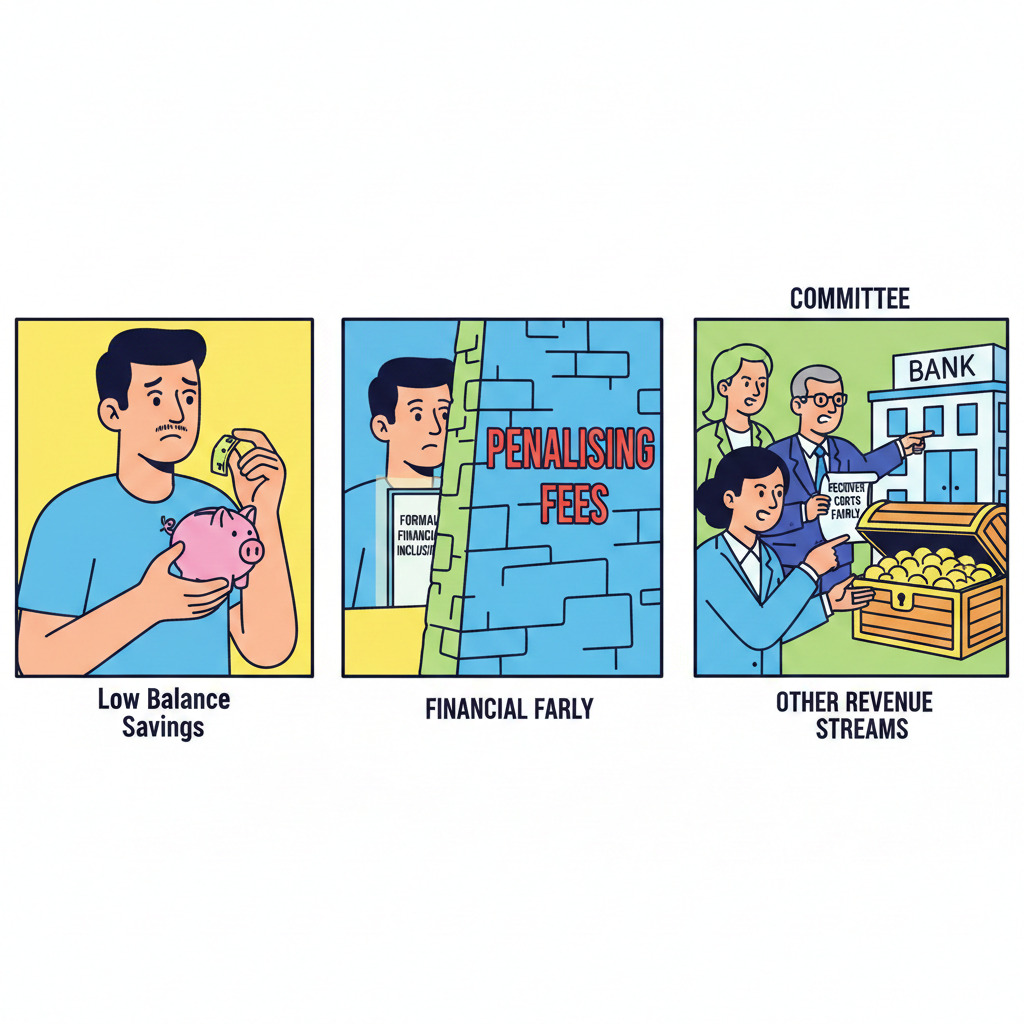
The committee’s argument is that banks can recover costs in other ways, and should not balance their books by repeatedly penalising low-balance customers, especially when savings accounts are the first rung for formal financial inclusion. A similar summary of the panel’s thrust was also reported by BusinessWorld (18 February 2026).
The latest push comes on top of a longer trail of data. Deccan Herald (published 16 February 2026, last updated 16 February 2026) reported that public sector banks collected ₹8,621.12 crore as penalties for not maintaining minimum balance over FY 2020-21 to FY 2024-25. The report also cited state-wise collections, with Uttar Pradesh at ₹1,233.97 crore and Maharashtra at ₹1,088.18 crore among the highest.
The Wire (published 17 February 2026) also reported the ₹8,621.12 crore PSU-bank collection figure and noted the panel urging banks to do away with the practice.
At the same time, banks have been taking different paths. Some PSBs have removed minimum-balance penalties for large sets of savings accounts, while at least one major private bank faced backlash after increasing thresholds and later revised them down.
Here is a quick timeline of key changes that shaped public attention.
*T&C Apply
Canara Bank coverage
This mix of high penalty collections and uneven bank policies is what has made the committee’s call politically and financially relevant.
The committee’s stance, cited by ThePrint (12 February 2026), is that penalties are often disproportionately high and cause undue stress, especially for economically weaker customers.
The Department of Financial Services, as quoted in the same ThePrint report, has argued that charges help banks cover operational and service costs, and customers can choose suitable account variants, including zero-balance style accounts where applicable.
By July 2025, coverage expanded to show multiple PSBs removing Average Monthly Balance penalties for savings accounts. LoansJagat reported that since June 2025, several major PSBs including Canara Bank, Bank of Baroda, Indian Bank, PNB and Bank of India had removed such penalties for many savings account variants, adding momentum to the debate.
Also Read - Federal Bank Minimum Balance
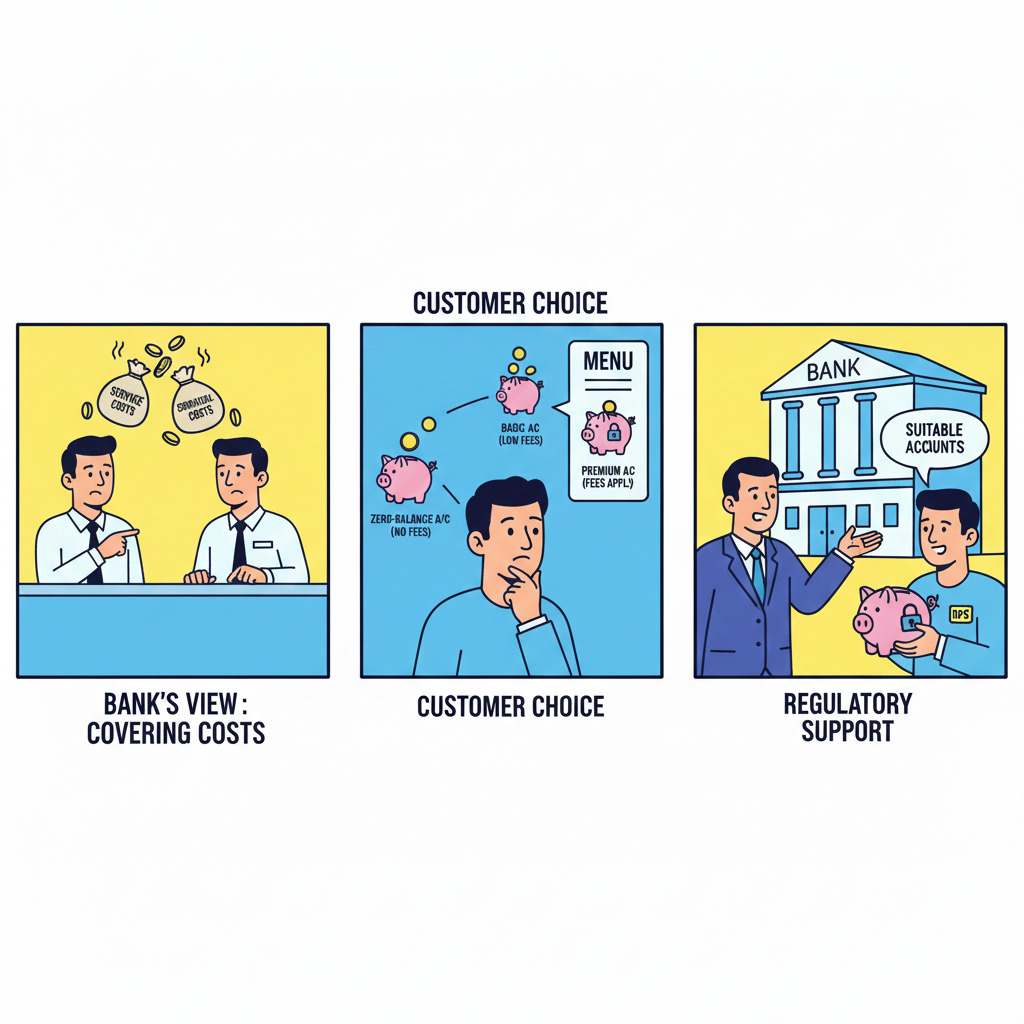
From the banking side, Canara Bank positioned its waiver as a customer-friendly move when it removed charges from 1 June 2025, signalling that large lenders can run savings products without relying on minimum-balance penalties.
The Lok Sabha panel’s recommendation raises pressure on banks to stop using minimum-balance penalties as a routine revenue line. The next signal to watch is whether DFS and banks convert the suggestion into uniform action across the sector.









.png&w=3840&q=75)



