By continuing, you agree to LoansJagat's Credit Report Terms of Use, Terms and Conditions, Privacy Policy, and authorize contact via Call, SMS, Email, or WhatsApp
Disclaimer: The information published on LoansJagat is intended for general informational and educational purposes only and should not be considered financial, legal, or investment advice. Interest rates, loan terms, statistics, and other data may change over time and may vary by lender or source. Please verify the latest information and consult a qualified financial advisor or the respective Bank/NBFC before making any financial decisions.
Apply for Loans Fast and Hassle-Free
Subscribe Now
About the author

LoansJagat Team
‘Simplify Finance for Everyone.’ This is the common goal of our team, as we try to explain any topic with relatable examples. From personal to business finance, managing EMIs to becoming debt-free, we do extensive research on each and every parameter, so you don’t have to. Scroll up and have a look at what 15+ years of experience in the BFSI sector looks like.
Related Blog Post
Simplify All Your Loans Into One Affordable EMI

Customers Served

Debt Consolidated

1200+ Reviews

Locations in India
Club all Loans & Credit Card Bills into Single EMI

Quick Apply Loan
Consolidate your debts into one easy EMI.

Takes less than 2 minutes. No paperwork.

10 Lakhs+
Trusted Customers

2000 Cr+
Loans Disbursed

4.7/5
Google Reviews

50+
Banks & NBFCs Offers
Other services mentioned in this article
Key Takeaways:
Bonus Point: NRIs cannot submit Form 15G or 15H to avoid TDS on Indian income. They can reduce tax by claiming DTAA benefits or filing returns in India.
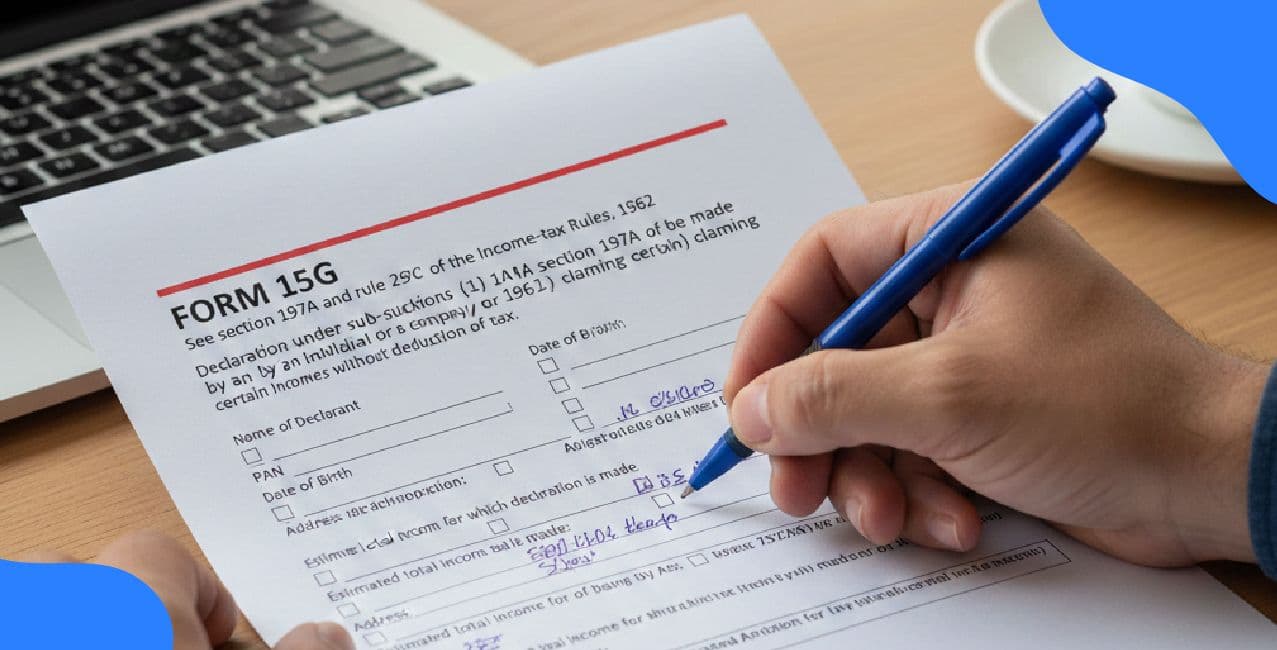
Form 15G in PF helps you stop unnecessary tax deduction on your EPF withdrawal. If you’re withdrawing PF early and your income is not taxable, this form ensures you receive your money fully instead of waiting for a refund later.
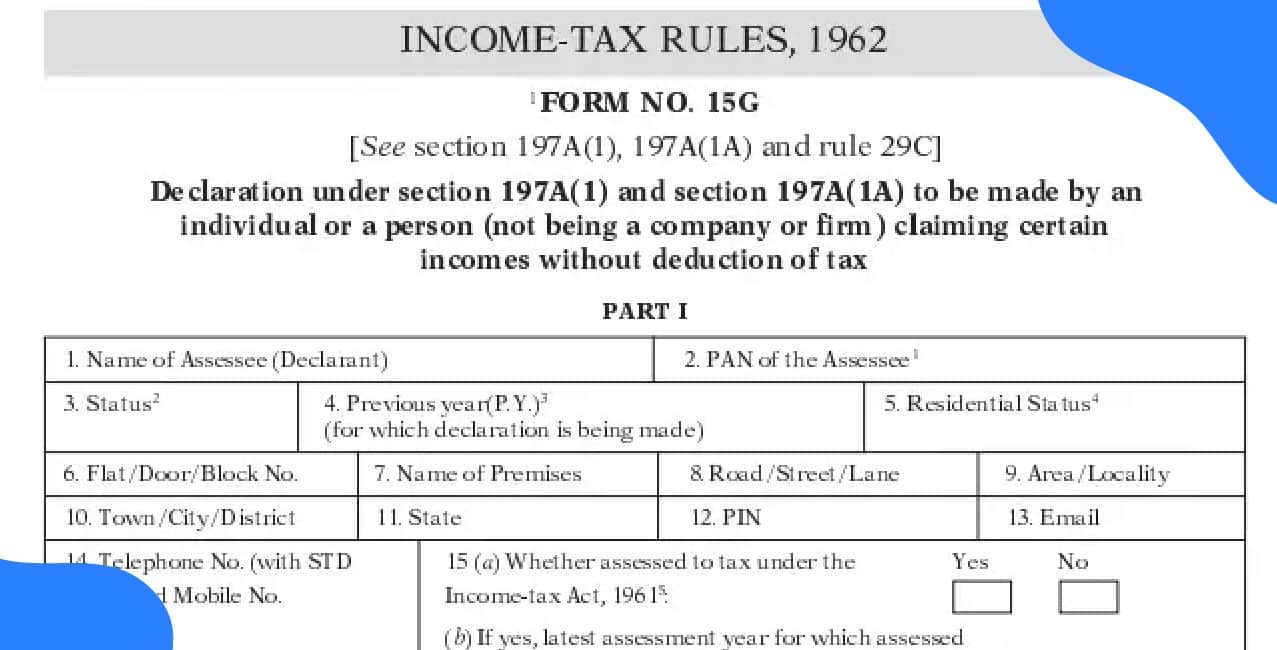
Form 15G is a self-declaration that tells EPFO your income is below the taxable limit. Think of it like showing a “no tax needed” pass. It prevents tax from being cut before the money reaches you.
Let’s say Rohit, aged 29, worked for 3 years and withdrew ₹1,00,000 from EPF. Normally, TDS applies. But since his yearly income is below the tax limit, he submits Form 15G and receives the full amount without any tax deduction.
Form 15G is a self-declaration for resident individuals below 60 years and HUFs in India. It tells banks or companies that your total income is below the taxable limit. Early submission ensures no TDS is deducted on interest or other income, helping you avoid refunds later.
Form 15G is a self-declaration form used by PF members below 60 years to avoid TDS on EPF withdrawals. It is mainly useful when you withdraw PF early, and your total income is not taxable.
Form 15G helps eligible PF members receive their withdrawal amount without tax deduction when their income is not taxable.
TDS on PF withdrawal can feel confusing, but a simple example makes it easy to understand. It mainly depends on how long you worked and how much PF you withdraw.
Example: Rohit worked for 3 years and withdrew ₹1,00,000 from his PF. Since he did not complete 5 years, the TDS rules apply.
The table below clearly explains how TDS on PF withdrawal works in different situations, using Rohit’s example for easy understanding.
This shows that completing 5 years of service or submitting PAN and Form 15G on time can help you avoid heavy TDS on PF withdrawals.
If you complete 5 years, PF is tax-free. If not, submitting PAN and Form 15G can help you avoid or reduce TDS.
Form 15G for PF withdrawal can be submitted only by eligible members who meet specific income, age, and service conditions set by the income tax rules.
If all these conditions are satisfied, submitting Form 15G helps you receive your PF withdrawal without TDS and avoid claiming a refund later.
Here is a comparison table explaining the difference between Form 15G and Form 15H in India:
*T&C Apply
Form 15G is meant for non-senior citizens, while Form 15H is specially designed for senior citizens to prevent unnecessary TDS on their income.
Form 15G is a useful form for PF members who are withdrawing their EPF early and do not fall under the tax bracket. If you meet the age, income, and service conditions, submitting Form 15G helps you receive your PF money without TDS and avoids the trouble of filing for a tax refund later.
Q1. Can I submit Form 15G for PF withdrawal?
Yes, if you are below 60 years, a resident Indian, your service is under 5 years, withdrawal exceeds ₹50,000, and your total income is below the taxable limit.
Q2. Do I need to submit Form 15G if my PF balance is ₹41,000 and my service is 1.5 years?
No, since the withdrawal is below ₹50,000, TDS does not apply, so submitting Form 15G is not required.
Q3. What is the process of Form 15G for PF withdrawal?
If you are not a taxpayer, submit Form 15G declaring income below the taxable limits officially. Otherwise, EPFO deducts TDS, which gets adjusted later while filing income tax returns each year.
Q4. What should I do if EPFO insists on Form 15G, but I’m okay with TDS?
You should not submit Form 15G if you have taxable income; instead, resubmit Form 19 without 15G or contact EPFO to process the withdrawal with 10% TDS deducted.
Q5. How should I fill Form 15G if I work abroad and have filed past ITRs?
Declare only your estimated taxable income in India for the relevant previous financial year. Ensure it stays below the exemption limit, since Form 15G applies only when income isn’t taxable.





.png&w=3840&q=75)
.png&w=3840&q=75)