By continuing, you agree to LoansJagat's Credit Report Terms of Use, Terms and Conditions, Privacy Policy, and authorize contact via Call, SMS, Email, or WhatsApp
Disclaimer: The information published on LoansJagat is intended for general informational and educational purposes only and should not be considered financial, legal, or investment advice. Interest rates, loan terms, statistics, and other data may change over time and may vary by lender or source. Please verify the latest information and consult a qualified financial advisor or the respective Bank/NBFC before making any financial decisions.
Subscribe Now
About the author

‘Simplify Finance for Everyone.’ This is the common goal of our team, as we try to explain any topic with relatable examples. From personal to business finance, managing EMIs to becoming debt-free, we do extensive research on each and every parameter, so you don’t have to. Scroll up and have a look at what 15+ years of experience in the BFSI sector looks like.
Related News
Simplify All Your Loans Into One Affordable EMI

Customers Served

Debt Consolidated

1200+ Reviews

Locations in India
Club all Loans & Credit Card Bills into Single EMI

Quick Apply Loan
Consolidate your debts into one easy EMI.

Takes less than 2 minutes. No paperwork.

10 Lakhs+
Trusted Customers

2000 Cr+
Loans Disbursed

4.7/5
Google Reviews

50+
Banks & NBFCs Offers
Other services mentioned in this article
The Indian fertiliser industry, crucial for the country’s agricultural yield and food security, is entering a new chapter of strategic expansion. A landmark development in this arena is the execution by Coal India Limited (CIL) of a Sponsor Support Undertaking (SSU) for its joint-venture partner Talcher Fertilizers Limited (TFL).
This commitment is made in connection with a massive ₹12,250 crore rupee term loan facility for TFL’s coal-gasification-based fertiliser plant at Talcher, Odisha. While the support does not render CIL financially liable as a guarantor, the strategic implications for the fertiliser sector and India’s self-sufficiency agenda are profound.
This article examines the key contours of the SSU, the background of the TFL project, the implications for the fertiliser sector, and what challenges and opportunities lie ahead.
On 18 October 2025, Coal India Limited formally filed a disclosure under the Securities and Exchange Board of India (SEBI)’s Listing Obligations and Disclosure Requirements (LODR) Regulations. It announced that as one of the promoters of Talcher Fertilizers Limited, it had executed the Sponsor Support Undertaking which is a pre-condition for the lenders to disburse the nearly ₹12,250 crore term loan.
Read More - Don’t Take a Personal Loan In 2025? This Is What Is Wrong with the Market
In essence, while CIL is aligning with the project as a promoter and lends its weight via the SSU, it treads carefully to delineate its exposure. For stakeholders, this means increased visibility of the project and stronger backing, yet with structured risk boundaries.
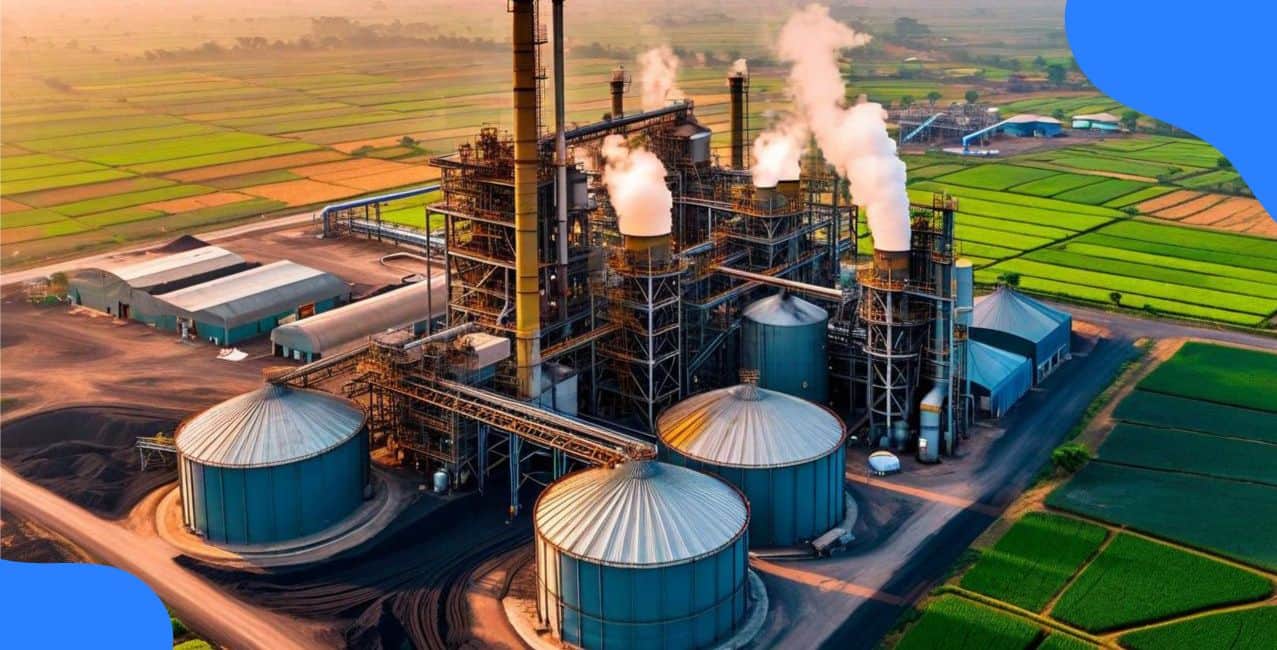
TFL is a joint venture incorporated on 13 November 2015. Its promoter mix includes Coal India Limited (CIL), GAIL (India) Limited (GAIL), Rashtriya Chemicals & Fertilizers Ltd. (RCF) and FCIL (with a minority stake). The strategic objective is to set up a fertiliser plant based on coal gasification technology at the Talcher site in Odisha, the site of the former FCIL unit.
Key project features:
Below is a table summarising the major specifications of the TFL project:
This table captures the scale and strategic design of the TFL initiative.
In conclusion of this section: the project is ambitious, technologically advanced for India’s fertiliser sector, and positioned to reduce dependence on imported natural gas or urea. However, it carries execution risks given cost and time overruns.
The execution of the SSU by CIL is meaningful not just for this single project, but for the broader fertiliser ecosystem in India. Several factors underscore this:
Thus, the SSU is more than a legal formality, it signals promoter seriousness, enhances credibility of the debt funding, and underpins the strategic importance of the TFL project in India’s fertiliser roadmap.
Despite the strategic promise, the TFL project also faces significant risks, which are worth analysing in detail, particularly given the magnitude of investment and the complexity of the technology.
*T&C Apply
This table outlines the principal execution and financial risks alongside current mitigation efforts.
In summary: while the fundamentals of the project are robust, strong promoter profile, strategic importance, policy tailwinds, the magnitude of cost and schedule risk cannot be under-estimated. Stakeholders will need to monitor progress closely, including debt tie-ups, equity infusion, contractor performance, and feedstock supply stability.
The significance of the TFL project, backed by the SSU from CIL and other promoters, extends into multiple domains:
Thus, the implications go well beyond one plant, this is a strategic node in India’s industrial, agricultural, energy and climate policy tapestry.
The execution of the Sponsor Support Undertaking by Coal India Limited for Talcher Fertilizers Limited’s ₹12,250 crore loan facility marks a major step in India’s fertiliser and industrial strategy. While CIL has taken on a supportive role rather than outright guarantee, its participation enhances the credibility of the project. The TFL coal-gasification-based fertiliser plant is poised to deliver significant benefits: boost domestic urea capacity, leverage indigenous coal, reduce import dependency, and pioneer technologically advanced processes in the fertiliser domain.
Also Read – Indians Want More Loans but Because They Don’t Have Enough Savings?
That said, the road ahead is non-trivial. Cost escalations, delayed commissioning, technological and regulatory risks remain material. Execution discipline, consistent equity infusion, seamless feedstock supply, and supportive policy implementation will be decisive. If successful, however, TFL could not only transform fertiliser production but also herald a new era of strategic industrial infrastructure tied to India’s self-reliance and low-carbon transition goals.









.png&w=3840&q=75)



