By continuing, you agree to LoansJagat's Credit Report Terms of Use, Terms and Conditions, Privacy Policy, and authorize contact via Call, SMS, Email, or WhatsApp
Disclaimer: The information published on LoansJagat is intended for general informational and educational purposes only and should not be considered financial, legal, or investment advice. Interest rates, loan terms, statistics, and other data may change over time and may vary by lender or source. Please verify the latest information and consult a qualified financial advisor or the respective Bank/NBFC before making any financial decisions.
Subscribe Now
About the author

‘Simplify Finance for Everyone.’ This is the common goal of our team, as we try to explain any topic with relatable examples. From personal to business finance, managing EMIs to becoming debt-free, we do extensive research on each and every parameter, so you don’t have to. Scroll up and have a look at what 15+ years of experience in the BFSI sector looks like.
Related News
Simplify All Your Loans Into One Affordable EMI

Customers Served

Debt Consolidated

1200+ Reviews

Locations in India
Club all Loans & Credit Card Bills into Single EMI

Quick Apply Loan
Consolidate your debts into one easy EMI.

Takes less than 2 minutes. No paperwork.

10 Lakhs+
Trusted Customers

2000 Cr+
Loans Disbursed

4.7/5
Google Reviews

50+
Banks & NBFCs Offers
Other services mentioned in this article
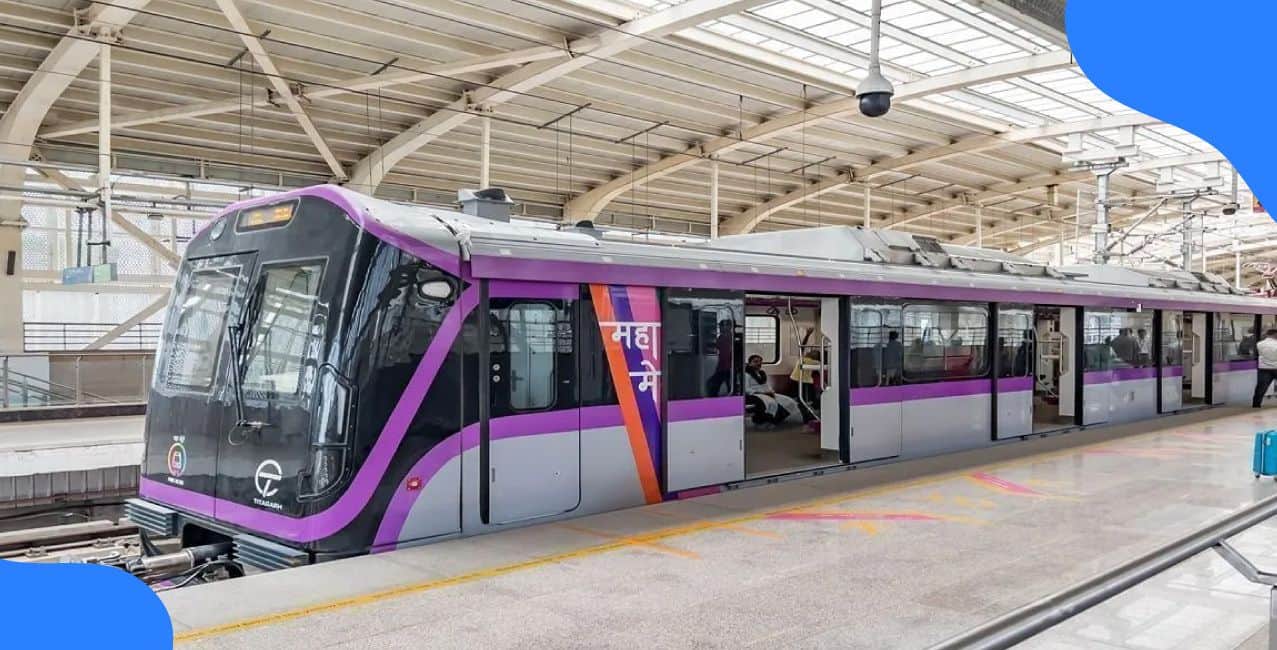
The Pune Metro project recently secured a fresh round of international financing when the European Investment Bank (EIB) approved a top-up loan of €49.5 million. This infusion comes as part of a broader effort to complete Phase 1A and Phase 1B of the metro network, improve passenger amenities, and ensure the project adheres to environmental and financial benchmarks. The new funding plays a critical role in bridging cost escalations and delays, at a time when India’s urban infrastructure is under pressure to deliver.
In this article, we explore the background of the Pune Metro, the reasons for the funding gap, what the EIB top-up loan entails, how it fits into the overall financing architecture, its anticipated impact on operations and urban mobility, and what challenges remain ahead.
Pune Metro is one of India’s rapidly developing urban rail projects, intended to ease traffic congestion, reduce pollution, and provide a modern public transport mode for a fast-growing metropolitan region.
Originally envisaged in multiple phases, Phase 1A (Vanaz–Ruby Hall Clinic) and Phase 1B (Vanaz–Mundhwa) aim to establish a spine through the city and its suburbs. The cost of the project has seen escalations over time, owing to inflation, land acquisition delays, construction slowdowns, and COVID-19-related disruptions.
The European Investment Bank had earlier committed financing to the project. However, as costs rose and timelines extended, an additional funding gap emerged. The EIB’s decision to approve a “top-up” loan was a response to that shortfall, allowing the Pune Metro Authority to continue construction and procurement without significantly altering scope or quality.
As of the latest approval, the EIB is providing an extra €49.5 million (roughly equivalent to several hundred crore Indian rupees depending on the euro-rupee rate at the time). This is in addition to earlier tranches of financing from the same lender.
Beyond EIB’s contribution, the financing structure for Pune Metro includes contributions from the central and state governments, local municipal agencies, as well as other multilateral or bilateral lenders. Delays have necessitated re-planning cashflows and renegotiating terms with contractors, governments, and lenders alike.
To understand the significance of the new loan, it helps to look at its terms, allocation, and projected uses. Below is a summary of how the additional funds are intended to be used:
(Note: figures are illustrative. Actual allocations may vary once final project budgets are ratified.)
Before the table above, it’s helpful to note that the additional loan was structured to smooth over cost overruns identified in the budget audit of the Metro project. It allows the project to adhere to key quality and safety standards without having to scale back on critical features such as sustainability or accessibility.
After allocating resources among core construction, systems, finishing, and buffer margins, the table underscores that a non-trivial portion is dedicated to contingencies. This demonstrates that the lenders expect residual risk in inflation, delays or regulatory changes. The fact that roughly 13 % of the top-up is earmarked for contingencies/oversight suggests prudent planning and some cushion for the unknown.
This targeted distribution helps ensure continuity of work even when contractors face bottlenecks due to supply chains, labour shortages or design modifications. It also signals the lender’s confidence in the project team’s ability to deliver, while maintaining accountability via reserved oversight funding.
The infusion of the top-up funding is likely to influence both the timing of completion and the forecast usage of the Pune Metro.
Firstly, the additional finance is expected to reduce delays associated with paused procurement or partial stoppage of activity due to funding shortfalls. Contractors can be paid on schedule; materials ordered in bulk; and quality assurance processes remain uninterrupted. This may help close the gap caused by pandemic-era disruptions and inflationary pressures.
Second, with uninterrupted progress and better funding buffers, the metro is more likely to launch some segments earlier than otherwise projected. For commuters, that could translate into earlier availability of metro service on critical corridors, reducing traffic congestion sooner, and reducing pollutant emissions by shifting commuters away from private vehicles or congested buses.
Third, ridership projections may benefit indirectly. When stations are completed fully, with accessibility features, escalators, signal-system accuracy, and reliability, passengers’ confidence grows. Early adopters are more likely to use the system if it is perceived as safe and comfortable. That, in turn, justifies farebox assumptions used in long-term financial viability modelling.
Read More - Emirates NBD Plans ₹15,000 Crore Takeover for Majority Stake in RBL Bank
A secondary impact lies in maintenance and operational cost expectations: when systems are built to higher standards (as guided by EIB funding terms around sustainability, environmental compliance, and safety), the operating life-cycle costs may reduce marginally. That can improve the runway for financial breakeven or subsidy support by state/central governments.
While the EIB top-up loan helps, several challenges remain:
*T&C Apply
Because of these risks, project management needs to remain proactive, maintain buffer coordination with government agencies, and keep communication with stakeholders.
To appreciate the significance of the EIB’s top-up, it’s useful to compare it with similar international-financing interventions in Indian metro systems.
In such cases, additional funding (or “top-up” arrangements) have become a fairly common mechanism to manage escalations in cost, especially following delays, inflation, or regulatory shifts. Pune Metro’s €49.5 million parallels such trends — reinforcing that urban rail projects rarely proceed exactly as budgeted, and that adaptive financing is key to resilience.
This comparative lens helps show that while Pune Metro’s situation is not unique, its ability to secure fresh finance without renegotiating major scope reductions is evidence of its relatively strong institutional framework. But the magnitude and visibility of the project also raise the stakes for timely delivery.
The approval of a €49.5 million top-up loan by the European Investment Bank marks a significant milestone for Pune Metro. It addresses a critical funding gap, provides a buffer against future cost escalations, and allows the project to maintain its commitment to quality, sustainability, and accessibility standards.
Yet finance alone does not guarantee success. The real test lies in execution — timely civil completion, smooth systems integration, operational readiness, and achieving ridership and revenue targets. If Pune Metro can translate this infusion into on-ground delivery with minimal delays, it will strengthen the case for future international investment in India’s urban-transit infrastructure. Otherwise, scope creep, delays, or compliance lapses may erode both public trust and financial sustainability.
Looking ahead, the Pune Metro experience may serve as a case study, both in how city authorities and lenders navigate cost escalations, and in how adaptive financing can keep large-scale infrastructure on track amid shifting economic and regulatory terrain.









.png&w=3840&q=75)



