By continuing, you agree to LoansJagat's Credit Report Terms of Use, Terms and Conditions, Privacy Policy, and authorize contact via Call, SMS, Email, or WhatsApp
Disclaimer: The information published on LoansJagat is intended for general informational and educational purposes only and should not be considered financial, legal, or investment advice. Interest rates, loan terms, statistics, and other data may change over time and may vary by lender or source. Please verify the latest information and consult a qualified financial advisor or the respective Bank/NBFC before making any financial decisions.
Apply for Loans Fast and Hassle-Free
Subscribe Now
About the author

LoansJagat Team
‘Simplify Finance for Everyone.’ This is the common goal of our team, as we try to explain any topic with relatable examples. From personal to business finance, managing EMIs to becoming debt-free, we do extensive research on each and every parameter, so you don’t have to. Scroll up and have a look at what 15+ years of experience in the BFSI sector looks like.
Related Blog Post
Simplify All Your Loans Into One Affordable EMI

Customers Served

Debt Consolidated

1200+ Reviews

Locations in India
Club all Loans & Credit Card Bills into Single EMI

Quick Apply Loan
Consolidate your debts into one easy EMI.

Takes less than 2 minutes. No paperwork.

10 Lakhs+
Trusted Customers

2000 Cr+
Loans Disbursed

4.7/5
Google Reviews

50+
Banks & NBFCs Offers
Other services mentioned in this article
Asset values are the combination of liabilities and equities. If we calculate the net value of a company’s assets by subtracting its liabilities, we will get the Book Value. It shows the company’s worth if it sold all its assets and paid off all its debts.
For example, if XYZ Ltd. owns assets worth ₹50,00,00,000 and has liabilities of ₹20,00,00,000, its book value is ₹30,00,00,000. If the company has 3,00,00,000 shares, the book value per share (BVPS) will be:
Even though the balance sheet showed ₹50,00,00,000 worth of assets, the net value that the company holds is no more than ₹30,00,00,000. Investors and lenders will acknowledge the book value and compare it with the market price of its shares. Let’s know more about book value and its use in stock valuation on this blog.
Book Value tells us what goes to shareholders if all assets are sold and liabilities are cleared. It can be calculated in different ways depending on the situation. Let’s discuss it in this section.
The basic formula for book value is given by:
Book Value = Total Assets − Total Liabilities
This shows the company’s net worth from an accounting perspective.
For example, A company has ₹500,00,00,000 in total assets and ₹320,00,00,000 in total liabilities.
So, ₹500,00,00,000 − ₹320,00,00,000 = ₹180,00,00,000 (Book Value).
Read More - Stock Average Calculator
The company’s net worth is ₹180,00,00,000, meaning this is what shareholders own on paper.
The formula for the per-share metric is:
BVPS = Shareholders’ Equity / Total Common Shares Outstanding
This shows how much book value belongs to each share.
For example, A firm has ₹210,00,00,000 in shareholders’ equity and 2,00,00,000 common shares.
₹210,00,00,000 ÷ 2,00,00,000 shares = ₹105 per share (BVPS).
This data means that each share represents ₹105 of accounting value, which can be compared with its market price.
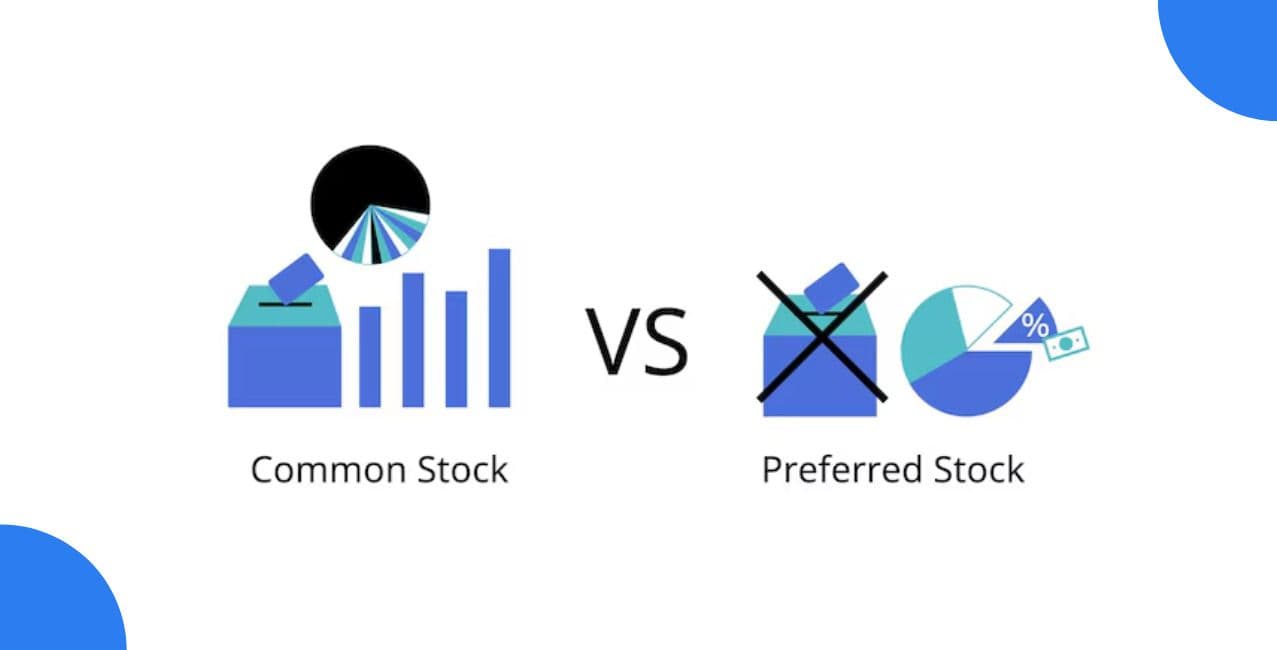
Preferred Stock Adjustment means subtracting the value of preferred stock from total equity to find how much actually belongs to common shareholders.
The formula will be: BVPS = (Shareholders’ Equity − Preferred Stock) / Total Common Shares Outstanding.
For example, the same firm from the above example had ₹10,00,00,000 in preferred stock.
BVPS = (₹210,00,00,000 − ₹10,00,00,000) ÷ 2,00,00,000 shares
= ₹200,00,00,000 ÷ 2,00,00,000 = ₹100 per share.
Common shareholders effectively own ₹100 per share after accounting for preferred stock claims.
This excludes intangible items like goodwill or patents. It shows the value of only physical and financial assets.
For example, A company has assets of ₹500,00,00,000, liabilities of ₹320,00,00,000, and intangible assets of ₹50,00,00,000.
If intangibles are excluded, shareholders would get only ₹130,00,00,000 in a liquidation scenario.
Valuation tools such as the Price-to-Book (P/B) ratio and the Graham Number help investors check if a stock is cheap or expensive compared to its book value. Generally, value investors prefer stocks with a P/B ratio below 1, as it may indicate the stock is undervalued, which also gives them a buying opportunity.
This ratio shows whether a company’s shares trade above or below their accounting value. A P/B under 1 often signals undervaluation.
Formula:
P/B = Market Price per Share / Book Value per Share
For example, A company’s market price is ₹90 per share, while its BVPS is ₹120 per share. Investors want to check if the stock is undervalued.
P/B = ₹90 ÷ ₹120 = 0.75.
Since the P/B ratio is below 1, the stock seems undervalued compared to its book value. If the value of the P/B ratio is more than one, then it would mean that the stock is overvalued.
The Graham Number shows the maximum price an investor should pay for a stock. It is calculated using a company’s earnings (EPS) and book value.
Formula:
Graham Number=(22.5×EPS×BVPS)1/2
For example, A company reports EPS of ₹20 and BVPS of ₹150. Investors use this to see if the stock is priced fairly.
Graham Number = √(22.5 × 20 × 150) = √67,500 = ₹260.
This means that if the stock trades below ₹260, it is considered a safe and fair investment.
Berkshire Hathaway is currently trading at approximately 1.6 times its book value. This means that investors pay about 60% more than the net asset value per share. This is its highest P/B level in six years. It is possible only because of consistent earnings growth and stock buybacks.
The P/B > 1 shows that investors value Berkshire’s future potential and strength more than its net asset value. This extra value shows their trust in the company’s future growth and management.
Strengths & Limitations of Book Value
*T&C Apply
Also Read - What is Face Value of Share
Book value helps find undervalued companies with lots of physical assets, like banks. But for digital businesses, it is not of much use.
Conclusion
Book value measures the company’s worth after it sells all its assets andclearsr off all its debts. It is extremely useful in firms where physical assets are used. For a firm with intangible assets, book value is not the right tool to measure the company’s worth.
Frequently Asked Questions
How is book value treated in mergers & acquisitions (purchase price allocation)?
In M&A, the acquirer revalues identifiable assets to fair value and recognises goodwill for the residual purchase price.
What’s the difference between book value and tax basis?
Book value follows accounting rules; tax basis follows tax law. Timing differences create deferred tax impacts on equity.
How does inflation affect book value?
Historical-cost book value can understate real value in inflationary periods; replacement-cost or revaluation methods provide more realistic measures.
Can lenders rely on book value for loan covenants?
Yes, lenders use book-value ratios (equity, loan-to-book), but often require market-adjusted covenants for accuracy and risk control.
How do goodwill impairments change book value?
An impairment write-down reduces carrying goodwill and shareholders’ equity, directly lowering the company’s book value.
Does asset revaluation change reported book value?
Under revaluation models (allowed in IFRS), assets are restated to fair value, increasing or decreasing book value and equity.
How do deferred tax items interact with book value?
Temporary differences between accounting and tax values create deferred tax assets/liabilities, which adjust net assets and the book value.
Other Related Pages | |||