By continuing, you agree to LoansJagat's Credit Report Terms of Use, Terms and Conditions, Privacy Policy, and authorize contact via Call, SMS, Email, or WhatsApp
Disclaimer: The information published on LoansJagat is intended for general informational and educational purposes only and should not be considered financial, legal, or investment advice. Interest rates, loan terms, statistics, and other data may change over time and may vary by lender or source. Please verify the latest information and consult a qualified financial advisor or the respective Bank/NBFC before making any financial decisions.
Apply for Loans Fast and Hassle-Free
Subscribe Now
About the author

‘Simplify Finance for Everyone.’ This is the common goal of our team, as we try to explain any topic with relatable examples. From personal to business finance, managing EMIs to becoming debt-free, we do extensive research on each and every parameter, so you don’t have to. Scroll up and have a look at what 15+ years of experience in the BFSI sector looks like.
Related Blog Post
Simplify All Your Loans Into One Affordable EMI

Customers Served

Debt Consolidated

1200+ Reviews

Locations in India
Club all Loans & Credit Card Bills into Single EMI

Quick Apply Loan
Consolidate your debts into one easy EMI.

Takes less than 2 minutes. No paperwork.

10 Lakhs+
Trusted Customers

2000 Cr+
Loans Disbursed

4.7/5
Google Reviews

50+
Banks & NBFCs Offers
Other services mentioned in this article
Mayank purchased a battery that is used as an inverter battery. He had bought this battery a third time before, and it cost him ₹10,000 (Excluding GST). He looked into the tax portion of the expense to calculate how much GST he paid.
In India, batteries fall under 28% GST (which is made of lead acid). So, he paid ₹12,800, ₹2,800 was GST (since ₹12,800 includes GST). Here’s how it breaks down:
There was a tax amount of ₹2,800 for Mayank. He understands that 28% GST (for only lead acid batteries) is a cost added to the final price. If taxes on batteries were lower, their prices would drop.
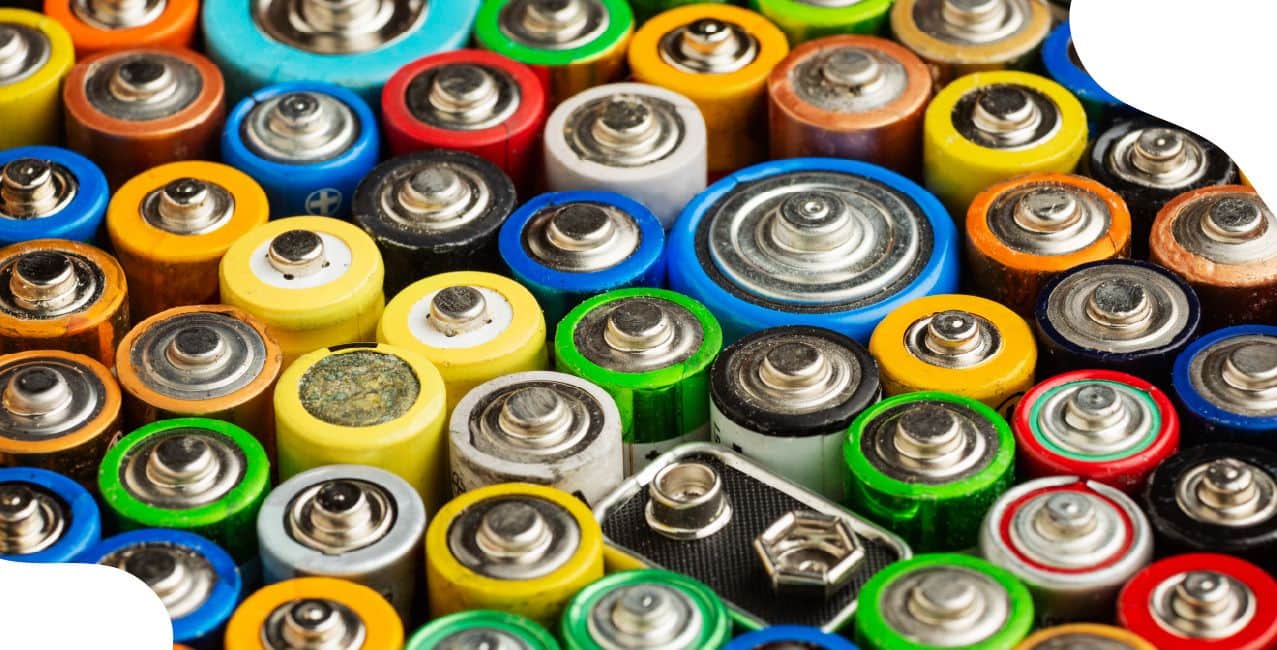
Mayank had to get a replacement battery for his home inverter. He wondered why every battery is subject to a different GST. His friend told him that whether GST is payable for a battery depends on its type and purpose. Here’s a simple breakdown of GST rates for different batteries:
Mayank was surprised when his inverter battery had the same rate of 28% GST as his car battery. He recognises that GST for batteries depends on what the battery will be used for.
Mayank was buying a new inverter battery for his home and noticed a strange number called "HSN Code" on the bill. His seller explained that this code helps classify products for GST. Mayank researched different battery types and their HSN codes.
Here’s a simple breakdown of HSN codes for common batteries and their GST rates:
Mayank learned that HSN codes help the government apply the correct GST rate. Now, he checks the code before buying to avoid confusion.
Mayank runs a small electronics repair shop and often gets confused about which GST rate applies to the different batteries he sells. To make it easier, he made this simple reference table:
Home inverters, UPS
*T&C Apply
Inverter Batteries
Now, Mayank displays the information printed on this table where customers get their bills. When a customer wants to understand why batteries have different prices, he can describe the GST differences. By utilising market research, he no longer makes billing mistakes and can confidently respond to customer questions.
Mayank is the owner of a battery shop and notes how the introduction of GST affected the business. Here are the points that he observed:
A price increase was necessary for Mayank because of GST, but overall, his business ran better after that. People purchase car batteries at a higher price, but solar ones are cheaper, and Mayank finds it more convenient to bill since tax rates do not vary.
Recently, Mayank, who has a battery shop, found out about what Input Tax Credit (ITC) means. This is the way it assists his business:
It’s thanks to ITC that Mayank pays less tax and can set reasonable prices for batteries.
1. What is the GST rate on car batteries?
Car batteries attract 28% GST because they are considered automobile parts. This is higher than other batteries, making them more expensive for buyers.
2. What GST rate applies to inverter batteries?
Inverter batteries for homes or offices have 28% GST. This rate applies to most lead-acid batteries used in UPS systems.
3. Is GST different for solar batteries?
Yes, solar batteries have a lower 5% GST to encourage renewable energy use. This makes them more affordable compared to regular inverter batteries.
4. Do mobile phone batteries have GST?
Yes, mobile batteries have 18% GST, just like other lithium-ion or lithium-polymer batteries used in electronics.
5. Can I claim an Input Tax Credit (ITC) on battery purchases?
Yes, if you are a registered business (like a shop or distributor), you can claim ITC on GST paid for batteries you resell or use for business purposes.
6. Why do car batteries have a higher GST than inverter batteries?
The government classifies car batteries as automobile parts, which generally have the same tax (28% GST), if we talk about Cars and Inverter batteries.
7. Are there any GST exemptions for batteries?
No, all batteries attract GST, but rates vary. Small dry-cell batteries (like AA/AAA) have 18% GST, while solar batteries get a lower 5% rate.
8. How does GST affect battery prices for customers?
GST increases the final price, but rates differ.
9. Do I need an HSN code for battery billing?
Yes, sellers must mention the HSN code (like 8507 for lead-acid batteries) on invoices to ensure the correct GST application.
10. What happens if a seller charges the wrong GST on batteries?
Charging incorrect GST is illegal. Buyers can report such sellers, and penalties may apply. Always check your bill for the GST rate.
Other Related Pages | |||