By continuing, you agree to LoansJagat's Credit Report Terms of Use, Terms and Conditions, Privacy Policy, and authorize contact via Call, SMS, Email, or WhatsApp
Disclaimer: The information published on LoansJagat is intended for general informational and educational purposes only and should not be considered financial, legal, or investment advice. Interest rates, loan terms, statistics, and other data may change over time and may vary by lender or source. Please verify the latest information and consult a qualified financial advisor or the respective Bank/NBFC before making any financial decisions.
Apply for Loans Fast and Hassle-Free
Subscribe Now
About the author

‘Simplify Finance for Everyone.’ This is the common goal of our team, as we try to explain any topic with relatable examples. From personal to business finance, managing EMIs to becoming debt-free, we do extensive research on each and every parameter, so you don’t have to. Scroll up and have a look at what 15+ years of experience in the BFSI sector looks like.
Related Blog Post
Simplify All Your Loans Into One Affordable EMI

Customers Served

Debt Consolidated

1200+ Reviews

Locations in India
Club all Loans & Credit Card Bills into Single EMI

Quick Apply Loan
Consolidate your debts into one easy EMI.

Takes less than 2 minutes. No paperwork.

10 Lakhs+
Trusted Customers

2000 Cr+
Loans Disbursed

4.7/5
Google Reviews

50+
Banks & NBFCs Offers
Other services mentioned in this article
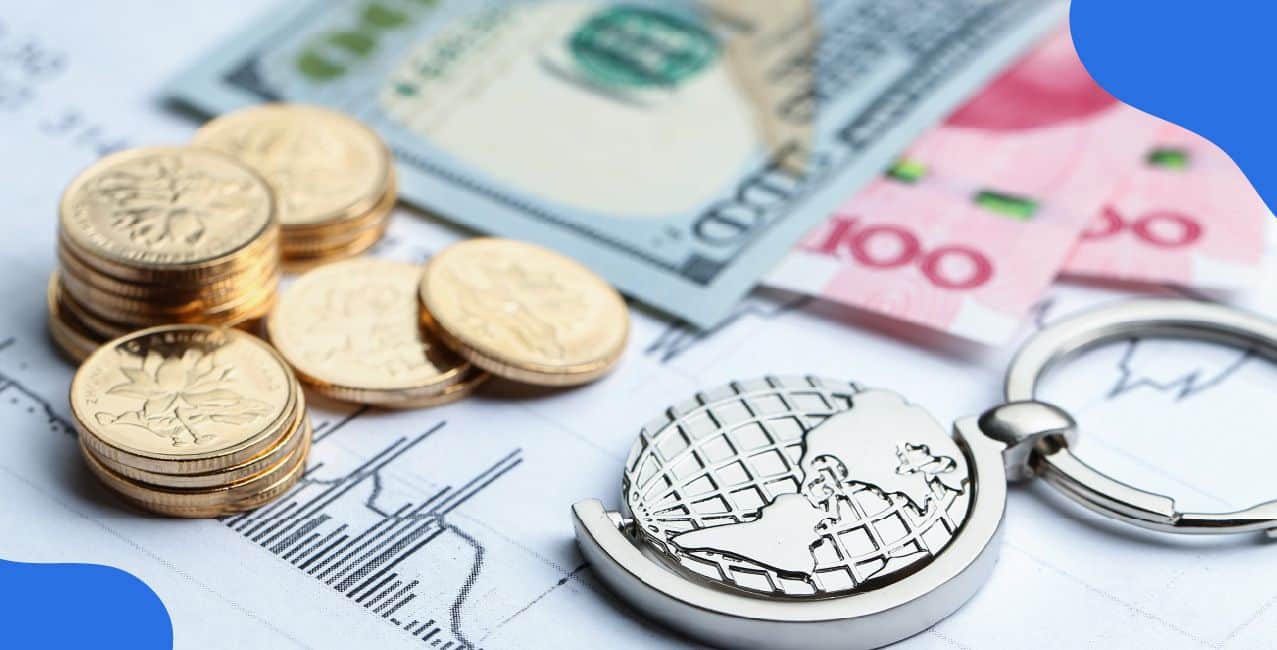
Let’s say Rahul, a young entrepreneur from Delhi, is flying to the U.S. for a business expo. He heads to a currency exchange booth to convert ₹1,00,000 into U.S. dollars.
Here’s how it goes:
Rahul’s final cost? ₹1,03,000 for $1,180.72.
A simple exchange turned into a smart financial lesson, isn’t it interesting? Always look beyond the exchange rate—fees and GST matter too!
Let’s say Rahul, a businessman from Delhi, plans a trip to the USA. He visits a currency exchange booth to convert ₹1,00,000 into US dollars. The exchange rate is ₹83 per USD. After conversion:
Read More - Impact of GST on Small Businesses
₹1,00,000 ÷ 83 = $1,204.82
But the service charges a 2% fee. So:
Fee = ₹1,00,000 × 2% = ₹2,000
Amount exchanged = ₹98,000
$ Received = ₹98,000 ÷ 83 = $1,180.72
Rahul notices that even a small change in rates or fees impacts how much he receives—an important lesson in currency exchange.
Key Points:
This slab-based GST ensures proportional taxation on currency exchange services, keeping the tax burden fair across transaction sizes.
How To Calculate Foreign Exchange Transactions?
When converting foreign currency into Indian Rupees (INR), it’s essential to understand the total financial outlay involved. This includes not just the exchange rate, but also mark-up fees and Goods and Services Tax (GST). Here's a step-by-step guide to help you calculate the true cost of a foreign currency exchange.
Example: If you’re converting $100 and the exchange rate is ₹83.50/$, then:
₹83.50 × 100 = ₹8,350
Example: For a 3% mark-up on ₹8,350: ₹8,350 × 3% = ₹250.50
Step 3: Calculate GST on the Conversion
As per Indian GST regulations, foreign currency exchanges are taxable. The applicable GST is based on slabs:
*T&C Apply
Example:
For ₹8,350 (which falls under the first slab), GST = 1% of ₹8,350 = ₹83.50
However, since the minimum GST is ₹250, the amount payable is ₹250.
Step 4: Determine the Total Cost
Add all components:
Example Summary:
Even small mark-ups or tax variations can significantly impact your total cost in foreign exchange transactions. Always check the applicable fees and GST slabs before converting currency, especially for large amounts or forex card transactions.
Who Pays the GST On Currency Exchange?
Let’s say Anjali, a student from Hyderabad who is travelling to Canada for her higher studies. She visits an authorised forex dealer to convert ₹2,00,000 into Canadian Dollars (CAD). The dealer offers an exchange rate of ₹60 per CAD. So, she receives:
Also Read – GST on Bank Charges
₹2,00,000 ÷ ₹60 = CAD 3,333.33
Now, here’s where GST comes into play. The actual foreign currency (CAD) is not taxable, because it's a “transaction in money.” But the service of converting INR to CAD is taxable under GST.
Since the amount exchanged is ₹2,00,000, it falls under the second slab:
GST = ₹1,000 + 0.5% of (₹2,00,000 - ₹1,00,000) = ₹1,000 + ₹500 = ₹1,500
So, Anjali pays ₹1,500 as GST on the service provided by the dealer, not on the currency itself.
Currency exchange isn’t just about changing money. You also pay extra for service charges, GST, and sometimes a small fee called markup. GST is only on the service, not the money itself, and it depends on how much you exchange. Like Rahul and Anjali, always check the full cost before you convert.
So next time you travel abroad, be smart—compare rates, calculate charges, and save your money wisely. Isn’t that smart?
FAQs:
Q1: Is GST charged on the actual foreign currency during exchange?
No, GST is charged only on the service provided, not on the currency itself.
Q2: How is GST calculated on currency exchange?
GST is calculated using a slab-based system depending on the amount exchanged.
Q3: Do forex cards also attract GST?
Yes, GST applies when loading or reloading currency on forex cards.
Q4: Who pays the GST in a currency exchange transaction?
The customer (like Rahul or Anjali) pays GST, which is collected by the forex provider.
Q5: Can markup fees and GST affect the final exchange cost?
Absolutely! Even small fees and GST can significantly impact the total cost of currency exchange.
Other Related Pages | |||