By continuing, you agree to LoansJagat's Credit Report Terms of Use, Terms and Conditions, Privacy Policy, and authorize contact via Call, SMS, Email, or WhatsApp
Disclaimer: The information published on LoansJagat is intended for general informational and educational purposes only and should not be considered financial, legal, or investment advice. Interest rates, loan terms, statistics, and other data may change over time and may vary by lender or source. Please verify the latest information and consult a qualified financial advisor or the respective Bank/NBFC before making any financial decisions.
Subscribe Now
About the author

LoansJagat Team
‘Simplify Finance for Everyone.’ This is the common goal of our team, as we try to explain any topic with relatable examples. From personal to business finance, managing EMIs to becoming debt-free, we do extensive research on each and every parameter, so you don’t have to. Scroll up and have a look at what 15+ years of experience in the BFSI sector looks like.
Related Blog Post
Simplify All Your Loans Into One Affordable EMI

Customers Served

Debt Consolidated

1200+ Reviews

Locations in India
Club all Loans & Credit Card Bills into Single EMI

Quick Apply Loan
Consolidate your debts into one easy EMI.

Takes less than 2 minutes. No paperwork.

10 Lakhs+
Trusted Customers

2000 Cr+
Loans Disbursed

4.7/5
Google Reviews

50+
Banks & NBFCs Offers
Other services mentioned in this article
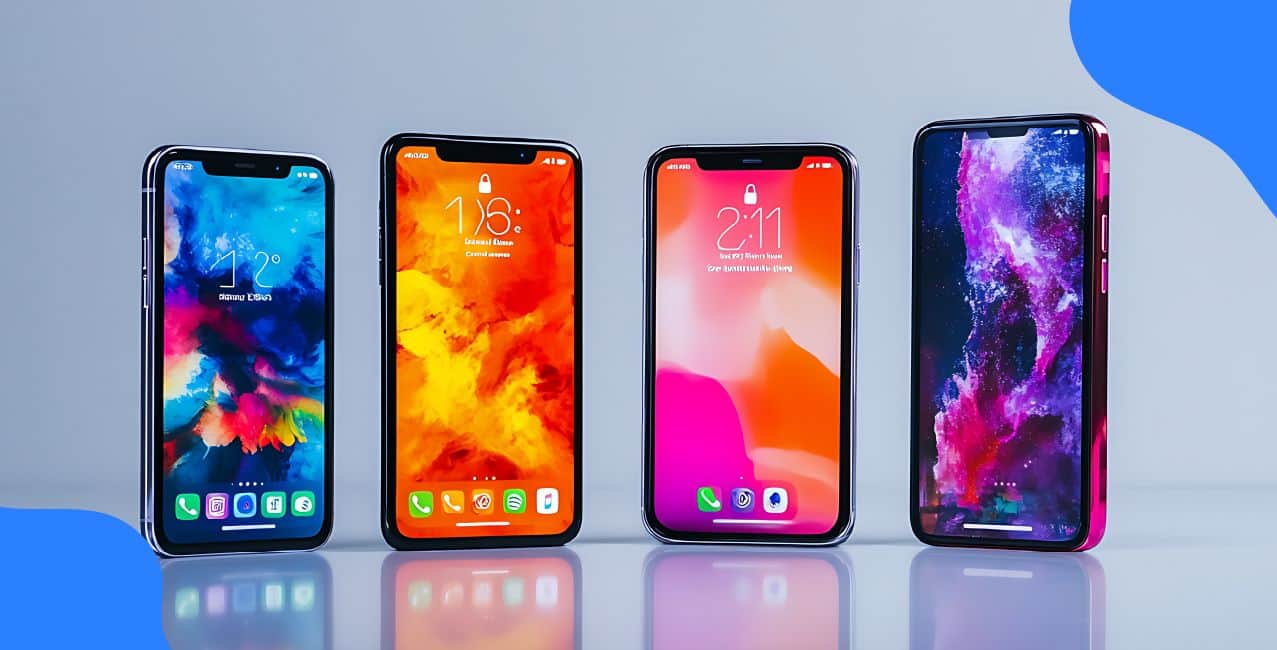
Right now, every household in India owns at least one smartphone: a 2025 survey by the Ministry of Statistics and Programme Implementation (MoSPI) found that 85.5% of Indian households reported possessing a smartphone. This implies hundreds of millions of individuals rely on smartphones often financed via loans.
A substantial portion of consumer-durable loans go toward buying phones, as buyers upgrade to newer models or splurge on premium devices. For example, as per industry data, around one in every three smartphones sold in India is now bought on credit.
At the same time, lenders and credit bureaus are reporting a worrying trend: a significant rise in EMI defaults. One recent report cites a 20% month-on-month increase in smartphone-loan defaulters after lenders stopped using remote device-locking as a deterrent.
Even though many people want the latest smartphones and are willing to commit to EMIs, more and more are failing to repay on time. That gap between desire and repayment capacity is now causing alarm for financiers.
This tension between demand and repayment stress may have serious implications for both consumers and NBFCs / banks, a story this article unpacks.
The surge in defaults on smartphone loans appears tied closely to a policy shift by the RBI. Until recently, many non-bank lenders and finance companies used a “device-locking” mechanism: when a borrower defaulted on EMIs for a smartphone bought on credit, the lender (often via an in-built/pre-installed app) could remotely lock or disable the phone. This acted as a strong deterrent, people didn’t want to lose access to their phones.
However, the RBI in 2024 intervened and asked lenders to stop using remote locking of devices as a loan-recovery or enforcement mechanism, raising concerns over consumer rights, privacy, and fairness.
Read More – Should Borrowers Trust Online Personal Loans? Learn The Hidden Dark Side of Money
Since that enforcement tool was withdrawn, repayment discipline seems to have weakened. According to a report quoted by Business Standard and Economic Times, one collections-agency (or lender monitoring firm) has observed a 20% month-on-month increase in borrowers not paying back smartphone EMIs.
Here’s a tabular snapshot of how default / delinquency rates have moved, according to recent data:
The data suggests a clear correlation between the withdrawal of remote-locking and an uptick in defaults. Where lenders previously had a powerful deterrent, borrowers may now perceive EMI repayment as more optional, leading to a deterioration in repayment behaviour.
The spike in delinquencies threatens to raise non-performing assets (NPAs) for consumer-loan portfolios, particularly small-ticket loans.
Beyond the quantitative deterioration, the change signals a structural challenge: when enforcement tools are weakened, credit discipline among lower-ticket borrowers can deteriorate quickly, a risk especially significant for NBFCs that dominate this segment.
Given the rising defaults, there is speculation the RBI may revisit its ban on remote locking of smartphones, possibly re-introducing a regulated phone-locking mechanism in early 2026.
Several media reports have cited industry sources and stakeholder discussions suggesting that the central bank is “studying the mechanism again” and may update its Fair Practices Code for lenders to allow phones to be locked, but only under stricter conditions.
Proposed safeguards under discussion reportedly include: obtaining explicit borrower consent at loan issuance, ensuring lenders cannot access personal data on the device, and limiting remote locking to a last-resort recovery tool, especially for small-ticket loans under ₹1 lakh, which have the highest delinquency rates.
Supporters argue that this would restore a “teeth” in recovery mechanisms and help stabilise the consumer-durable loan segment. However, critics, especially consumer-rights advocates, warn of privacy violations, discrimination, and digital exclusion, given how essential a phone has become for communication, livelihood, education, and financial access.
As of now (December 2025), no formal policy notification has been issued. If the RBI does re-permit device locking from January 2026, it will mark a major shift, but success will depend on how balanced and consumer-friendly the final guidelines are.
Consumer-durable loans, covering smartphones, TVs, air-conditioners, furniture, household appliances, etc., are widely used in India to spread payments over small EMI instalments, making high-cost items more affordable.
According to a recent report by a credit bureau, the total value of consumer-durable loans in FY 2025 stood at ₹1.6 lakh crore, though growth has slowed sharply: it rose just 3.3% YoY in FY25 against an 18% rise the previous year. Typically, smartphones account for around one-fourth of all consumer-durable loans.
Also Read – Why The Government Blocked 87 Digital Loan Apps in December 2025
Here is a rough breakdown of major consumer-durable loan categories and their share (based on available data and general industry estimates):
*T&C Apply
Others (washing machines, kitchen appliances etc.)
These are typical EMI-financed durable-goods values; actual distribution may vary depending on urban/rural, income class, urbanisation, etc.
Imagine a middle-class buyer in a tier-2 city, he needs a refrigerator for his family but cannot afford the full cost upfront. He takes a consumer-durable loan of ₹25,000 with monthly EMIs. Suppose he loses a job or faces financial stress and misses payments for several months. Because the equipment is essential, a default can cause multiple problems:
Thus, while EMIs make durable goods accessible, default carries real personal and financial risks, especially for lower- or middle-income borrowers for whom repayment capacity can be volatile.
India’s boom in smartphone ownership and consumer-durable financing has provided many households with affordability and access to desired goods. However, the surge in EMI defaults, especially after withdrawal of remote-locking enforcement, reveals a structural stress in the system.
A 20% month-on-month rise in smartphone loan defaults is not just a statistic: it reflects growing repayment fatigue, perhaps overstretched families, or a mismatch between aspirations and actual ability to repay.
If defaults continue rising, lenders will face mounting non-performing portfolios, which may lead to stricter credit norms, squeezing access for lower-income borrowers in the future.
The possibility that the RBI may re-allow device locking (with safeguards) from early 2026 suggests a pushback from lenders. But such a move must be balanced with respect for consumer rights, data privacy, and fair recovery practices.
For prospective borrowers, especially middle-class households, the message is clear: EMIs for consumer durables are convenient, but must be taken only if repayment capacity is reliably judged. Otherwise, the “easy EMI now, worry later” model could backfire, with loss of credit standing, loss of asset, and long-term cost.
If you like, I can project what this rising default trend might mean for NBFC-led consumer financing in FY2026, including risk of NPA jump, tightening credit, or shift in business models.
Other Related Pages | |||









.png&w=3840&q=75)



