By continuing, you agree to LoansJagat's Credit Report Terms of Use, Terms and Conditions, Privacy Policy, and authorize contact via Call, SMS, Email, or WhatsApp
Disclaimer: The information published on LoansJagat is intended for general informational and educational purposes only and should not be considered financial, legal, or investment advice. Interest rates, loan terms, statistics, and other data may change over time and may vary by lender or source. Please verify the latest information and consult a qualified financial advisor or the respective Bank/NBFC before making any financial decisions.
Apply for Loans Fast and Hassle-Free
Subscribe Now
About the author

‘Simplify Finance for Everyone.’ This is the common goal of our team, as we try to explain any topic with relatable examples. From personal to business finance, managing EMIs to becoming debt-free, we do extensive research on each and every parameter, so you don’t have to. Scroll up and have a look at what 15+ years of experience in the BFSI sector looks like.
Related Blog Post
Simplify All Your Loans Into One Affordable EMI

Customers Served

Debt Consolidated

1200+ Reviews

Locations in India
Club all Loans & Credit Card Bills into Single EMI

Quick Apply Loan
Consolidate your debts into one easy EMI.

Takes less than 2 minutes. No paperwork.

10 Lakhs+
Trusted Customers

2000 Cr+
Loans Disbursed

4.7/5
Google Reviews

50+
Banks & NBFCs Offers
Other services mentioned in this article
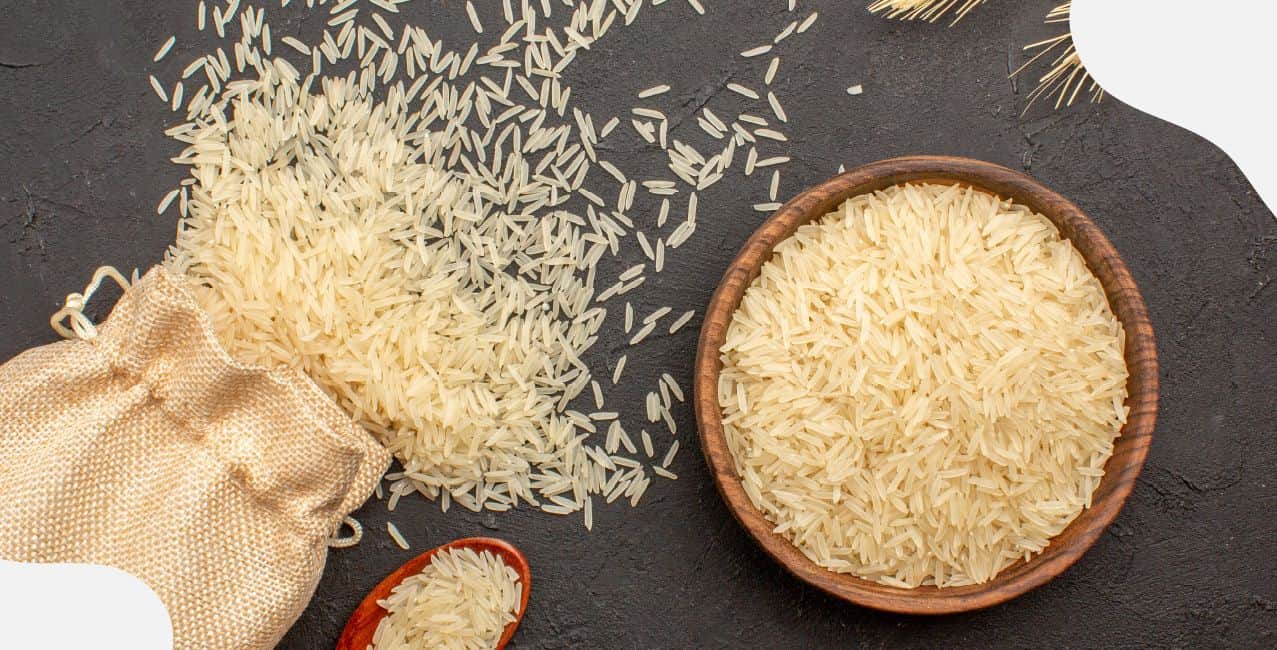
When Shweta visited her local grocery store in Lucknow, she noticed something odd. A 5 kg branded rice packet cost her ₹315, while the unbranded, loose rice she had been buying earlier cost only ₹275 for the same weight.
Curious, she asked the shopkeeper, “Why is there a price gap when it’s just rice?”
“Because one is GST-exempt, and the other has GST,” he replied.
That moment sparked her curiosity: Is rice taxable under GST? What determines the tax? Is it the brand, the packaging, or something else?
Let’s break it all down.
Rice, being a staple food in India, is generally kept under zero-rated or nil GST for most common forms. But there are exceptions based on how it is sold, packed, and branded.
According to the GST Council and CBIC notifications, here’s the current structure:
So, What is “Pre-Packaged and Labelled”?
After 18 July 2022, the GST Council clarified that GST would apply at 5% on all pre-packaged and labelled rice, even if the brand is not registered.
This means:
This aligns with the Legal Metrology Act, which defines a "pre-packaged commodity" as any product placed in a package, sealed, and intended for retail sale.
Examples:
Let’s take Shweta’s case again:
Unpackaged Rice (5 kg)
Branded, Packaged Rice (5 kg)
The 5% GST leads to a clear price difference at the retail level, even though the product is essentially the same.
Why This Structure?
The rationale is simple:
This promotes revenue collection without affecting affordability for lower-income households.
If you are a rice miller, wholesaler, or packager, you must be aware of the following:
This means:
Shweta began noticing similar pricing differences not only in rice but also in other essentials like wheat flour and pulses. Her grocer explained that ever since GST rules changed post-July 2022, packaged food products had started attracting 5% GST, shifting the burden of tax onto buyers.
But for consumers like Shweta, this minor increase in price also signals more formal packaging, better hygiene, and traceability.
*T&C Apply
Lower cost, traditional habits
In essence, GST does not make rice unaffordable; it only differentiates based on how it’s sold and distributed.
For small traders, shopkeepers, and rice millers, the rules around GST can directly affect operations, especially with respect to registration, return filing, and input claims.
As per CBIC guidelines, registration becomes mandatory if:
If you run a packaging unit or brand rice under a company name, the 5% GST you charge can be offset with ITC on:
This brings down your net GST liability, improving business efficiency.
The taxability of packaged rice is governed by:
It clearly defines taxable categories under “pre-packaged and labelled” commodities as per Section 2(l) of the Legal Metrology Act, 2009.
Shweta’s grocer shared some of his worries too. While larger brands can afford GST compliance and formal systems, small kirana stores face issues like:
To solve these, many traders use tools like:
Other Related Pages | |||