GSTR-8 Explained: Filing Requirement, Format and Eligibility Conditions
GSTR-8 Explained: Filing Requirement, Format and Eligibility Conditions
GstLast updated: 12 December 2025, 12:33 IST
Check Your Loan Eligibility Now
+91
By continuing, you agree to LoansJagat's Credit Report Terms of Use, Terms and Conditions, Privacy Policy, and authorize contact via Call, SMS, Email, or WhatsApp
Disclaimer: The information published on LoansJagat is intended for general informational and educational purposes only and should not be considered financial, legal, or investment advice. Interest rates, loan terms, statistics, and other data may change over time and may vary by lender or source. Please verify the latest information and consult a qualified financial advisor or the respective Bank/NBFC before making any financial decisions.
‘Simplify Finance for Everyone.’ This is the common goal of our team, as we try to explain any topic with relatable examples. From personal to business finance, managing EMIs to becoming debt-free, we do extensive research on each and every parameter, so you don’t have to. Scroll up and have a look at what 15+ years of experience in the BFSI sector looks like.
Diwaker runs our Business on the E-commerce platform. He always checks the GSTR-8 filed by the e-commerce platform to match his sales. Diwaker uses the Data to file his GSTR-1 (sales return) and GSTR-3B (summary return).
Example Table:
Diwaker’s Sale
Amount
TCS (1%)
Sale on Amazon
₹50,000
500
Sale on Flipkart
₹30,000
300
How to File GSTR-8 (For E-commerce Platform, Not Diwaker)
File by the 10th of next month.
Report all seller transactions and TCS collected.
Generate TCS certificates for sellers like Diwaker.
Diwaker doesn’t need to file GSTR-8, but it helps him check his taxes.
What is GSTR-8?
GSTR-8 is a monthly GST return filed by Amazon, Flipkart, Meesho and other e-commerce sites. Each such platform is responsible for deducting 1% of the seller’s TCS( Tax Collected at Source) and reporting it to the authority in GSTR-8.
Key Points:
Who files it? Only e-commerce operators, not individual sellers.
What does it include? Details of all sales made through the platform and the 1% TCS deducted.
When is it filed? By the 10th of the next month (e.g., April’s GSTR-8 is due by May 10).
Example:- Diwaker’s Handmade Bag Business:
Diwaker sells bags on Flipkart.
A customer buys a bag for ₹10,000.
Flipkart deducts 1% TCS (₹100) and pays Diwaker ₹9,900.
Flipkart files
Table: How GSTR-8 Works for Diwaker
Transaction
Amount (₹)
TCS (1%)
Diwaker Receives
Sale on Flipkart
10,000
Why GSTR-8 Matters for Diwaker?
Helps him track TCS deductions made by e-commerce platforms.
Ensures he claims the correct tax credit in his GST returns.
Avoids mismatches between his sales and GST records.
Essentially, using GSTR-8 makes all e-commerce transactions transparent for both tax officials and sellers.
Who Must File GSTR-8? (Eligibility Conditions)
GSTR-8 is a requirement for e-commerce sites where Diwaker’s goods are sold. No GSTR-8 filing is done by individual sellers.
Who Needs to File?
E-commerce operators registered under GST (like Flipkart, Amazon, and Meesho).
Platforms that collect payments from buyers and pay sellers.
Businesses are required to deduct 1% TCS (Tax Collected at Source) on seller transactions.
Who Does NOT File?
Small sellers (like Diwaker, if he sells directly without a platform).
E-commerce operators are not liable for TCS (exempt under GST rules).
Example – Diwaker’s Case:
Diwaker sells handmade bags on Flipkart.
Flipkart collects ₹10,000 from customers, deducts 1% TCS (₹100), and pays Diwaker ₹9,900.
Flipkart must file GSTR-8 to report this transaction.
Diwaker does NOT file GSTR-8 – he only checks it to claim his TCS credit.
Table: Who Files GSTR-8?
Business Type
Files GSTR-8?
Reason
Flipkart/Amazon
Yes
Deducts 1% TCS on Diwaker’s sales
Key Takeaway:
Only digital marketplaces that have collected TCS need to submit GSTR-8. Most sellers use the information from receipts, but they do not file them.
Format and Details in GSTR-8
GSTR-8 lists major information about e-commerce transactions in which TCS is deducted from Diwaker’s income.
Main Sections in GSTR-8:
Seller details (GSTIN, name).
Total sales value through the platform.
1% TCS is deducted on each transaction.
Tax is deposited with the government.
Example - Diwaker's Sales on Flipkart:
Sold 50 bags at ₹1,000 each = ₹50,000 total sales
Flipkart deducts 1% TCS = ₹500
Flipkart shows this in their GSTR-8
Table: GSTR-8 Data for Diwaker
Seller GSTIN
Total Sales (₹)
TCS (1%)
Tax Paid
22ABCD1234F1Z5
50,000
GSTR-8
, showing this transaction.
Diwaker can claim this ₹100 as credit in his own GST returns.
100
9,900
Sale on Amazon
15,000
150
14,850
Diwaker (seller)
No
Only e-commerce platforms file GSTR-8
Local shop selling offline
No
Not an e-commerce operator
No Hidden Charges
100% Digital Process
*T&C Apply
— Need money urgently?
Poonawalla Fincorp Personal Loan
Money in your account within 15 minutes
*T&C apply
Get up to
₹15 Lakhs
For salaried & self-employed
Serving 10,000+ Locations
No Hidden Charges
100% Digital Process
Apply Now→
500
500
Other Sellers
2,00,000
2,000
2,000
Why It Matters for Diwaker?
Helps him verify the correct TCS deduction
Ensures accurate tax credits in his GST returns
Avoids mismatches with his sales records
Flipkart files this monthly by the 10th of next month.
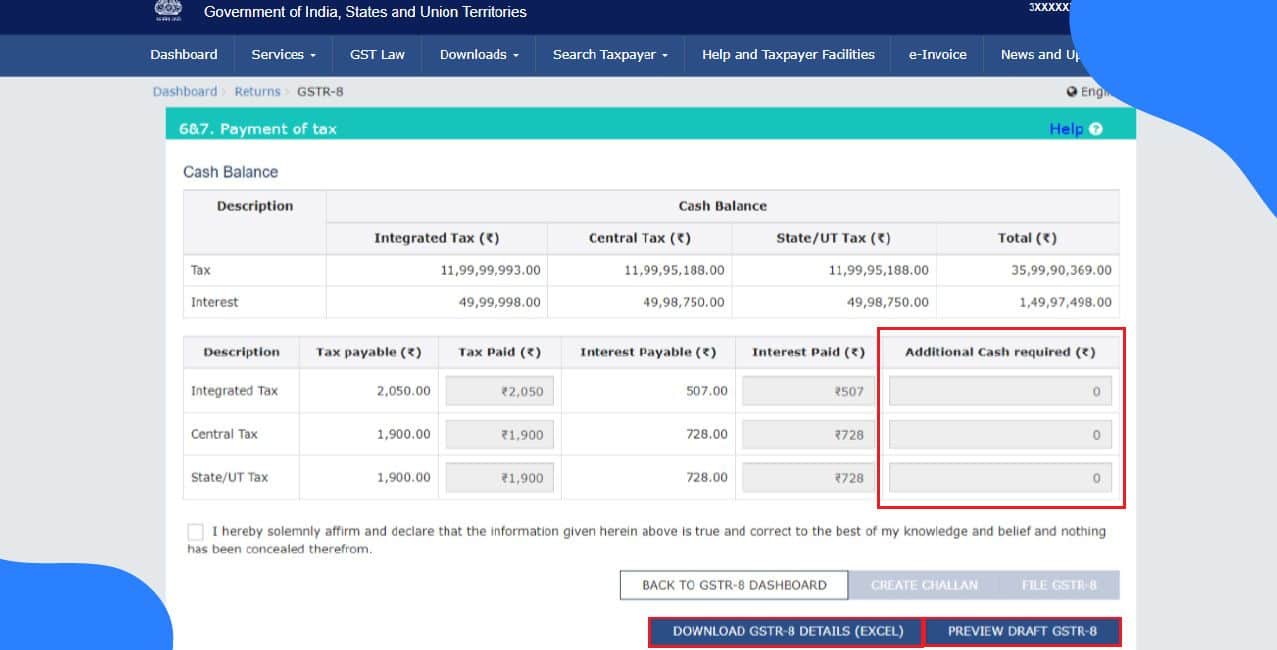
How to File GSTR-8? (Step-by-Step Process)
This is how an e-commerce platform like Flipkart files the GSTR-8 for sellers like Diwaker.
1
Log in to the GST portal using Flipkart's credentials
2
Select GSTR-8 from the returns dashboard
3
Enter details of all sales made through the platform
4
Add 1% TCS deducted from each seller (like ₹500 from Diwaker's ₹50,000 sales)
5
Verify all numbers match the platform's records
6
Submit the return and generate an acknowledgement
7
Pay the TCS amount to the government if not already been paid
8
File using DSC or EVC for final submission
Diwaker's Role:
Doesn't file GSTR-8 himself.
Checks his TCS details in GSTR-2A.
Matches Flipkart's GSTR-8 with his own sales records.
Claims the TCS credit when filing his regular GST returns.
The platform must file by the 10th of next month to avoid late fees.
How GSTR-8 Helps Sellers Like Diwaker?
GSTR-8 benefits online sellers by maintaining transparent tax records. Here's how it helps Diwaker:
Key Benefits:
TCS Tracking: Shows the exact 1% tax deducted by Flipkart.
Tax Credit: Helps claim the TCS amount in GST returns.
Record Matching: Verifies that sales reported by the platform match Diwaker's records.
Example - Diwaker's Bag Business:
Sold ₹1,00,000 worth of bags on Flipkart.
Flipkart deducted ₹1,000 TCS (1%).
GSTR-8 helps Diwaker:
Confirm the correct deduction.
Claim ₹1,000 in his GST-3 B return.
Table: GSTR-8 Benefits for Diwaker
Aspect
Without GSTR-8
With GSTR-8
TCS Visibility
Unclear deductions
Clear 1% records
Tax Credit
May miss claims
Easy to claim
Sales Reconciliation
Manual checking
Automatic matching
Why It Matters:
Prevents tax payment errors.
Saves time in return filing.
Ensures compliance with GST rules.
Diwaker uses GSTR-8 data to file accurate returns and avoid penalties.
Conclusion
Using GSTR-8, Diwaker and other sellers can make online tax filing easier. Every time Diwaker sells his handmade bags on Flipkart, he pays TCS at 1%, and Flipkart reports it in GSTR-8. This way, Diwaker can check the tax deducted easily, use the proper number when declaring GST and match his sales with the report on the platform.
Because GSTR-8 is not in place, Diwaker has to check all his transactions by hand and may make errors when filling out his tax forms. Now, all he does is check the GSTR-8 filed by Flipkart, the cheque that they have deducted ₹1,000 in TCS on the ₹1,00,000 of his sales and enter the amount when filing his GSTR-3B return.
The process keeps everything clear, is faster than other systems and helps Diwaker stay away from errors that might result in penalties. Being so useful, GSTR-8 makes it simple for small online businesses like Diwaker to comply with GST requirements.
FAQs
1. What is GSTR-8?
GSTR-8 is a monthly return filed by e-commerce platforms (like Flipkart/Amazon) to report the 1% TCS (tax) they deduct from sellers' payments.
2. Who needs to file GSTR-8?
Only e-commerce platforms file it, not individual sellers like Diwaker. If you sell through these platforms, they handle this for you.
3. When is GSTR-8 due?
By the 10th of next month (e.g., April’s return is due by May 10).
4. How does GSTR-8 help Diwaker?
It shows the exact 1% tax Flipkart deducts from its sales, so it can claim it back in its GST returns.
5. Where can Diwaker check his TCS details?
In his GSTR-2A on the GST portal, it auto-updates with data from GSTR-8.
6. What if the e-commerce platform files GSTR-8 late?
They pay ₹100/day late fee, but Diwaker can still claim TCS – it just appears later in GSTR-2A.
7. Does Diwaker need to file GSTR-8 for his sales?
No! Only the platforms file it. Diwaker only checks their report to claim his TCS.
8. What if Diwaker finds a mistake in GSTR-8?
He should contact the platform (e.g., Flipkart) to correct it, as they’re the only ones who can update GSTR-8.
9. Can Diwaker adjust TCS against his GST liability?
Yes! The 1% TCS (e.g., ₹1,000 on ₹1 lakh sales) reduces the tax he owes in his GSTR-3 B.
10. What happens if Diwaker ignores GSTR-8 data?
He might pay extra tax by forgetting to claim his TCS credit, or face mismatches in his GST returns.