By continuing, you agree to LoansJagat's Credit Report Terms of Use, Terms and Conditions, Privacy Policy, and authorize contact via Call, SMS, Email, or WhatsApp
Disclaimer: The information published on LoansJagat is intended for general informational and educational purposes only and should not be considered financial, legal, or investment advice. Interest rates, loan terms, statistics, and other data may change over time and may vary by lender or source. Please verify the latest information and consult a qualified financial advisor or the respective Bank/NBFC before making any financial decisions.
Subscribe Now
About the author

LoansJagat Team
‘Simplify Finance for Everyone.’ This is the common goal of our team, as we try to explain any topic with relatable examples. From personal to business finance, managing EMIs to becoming debt-free, we do extensive research on each and every parameter, so you don’t have to. Scroll up and have a look at what 15+ years of experience in the BFSI sector looks like.
Related Blog Post
Simplify All Your Loans Into One Affordable EMI

Customers Served

Debt Consolidated

1200+ Reviews

Locations in India
Club all Loans & Credit Card Bills into Single EMI

Quick Apply Loan
Consolidate your debts into one easy EMI.

Takes less than 2 minutes. No paperwork.

10 Lakhs+
Trusted Customers

2000 Cr+
Loans Disbursed

4.7/5
Google Reviews

50+
Banks & NBFCs Offers
Other services mentioned in this article
This article explores the recent launch of the ‘Mushroom Gram’ project in Buggawala, Haridwar, by Uttarakhand Chief Minister Pushkar Singh Dhami. It explains how this scheme, which includes substantial subsidies on farm machinery and interest-free loans for farmers, is intended to boost rural income, strengthen the agricultural economy, and offer livelihood opportunities.
We also analyse similar government initiatives, the role of agricultural subsidies in India, and how such programmes impact farmers and rural communities.
On 20 December 2025, Uttarakhand Chief Minister Pushkar Singh Dhami inaugurated the ‘Mushroom Gram’ project, developed by MB Foods in the Buggawala area of Haridwar district. The model promotes mushroom cultivation, a high-value agri enterprise requiring relatively less land, water and time, as a way for farmers, women and rural youth to earn additional income. Dhami said that this initiative will offer new self-employment opportunities and strengthen self-help groups in rural areas.
Alongside this flagship project, the state government has introduced subsidies of up to 80% on agricultural tools, interest-free loans up to ₹3 lakh, and free canal irrigation to further support farmers.
These measures form part of a broader effort to augment farmer incomes and rural economy growth, providing a multi-pronged safety net through mechanisation support, credit access and market linkage schemes.
Transition: With these policies, Uttarakhand seeks not only to expand high-income farming options like mushroom cultivation but also to retool the broader agricultural ecosystem in the state.
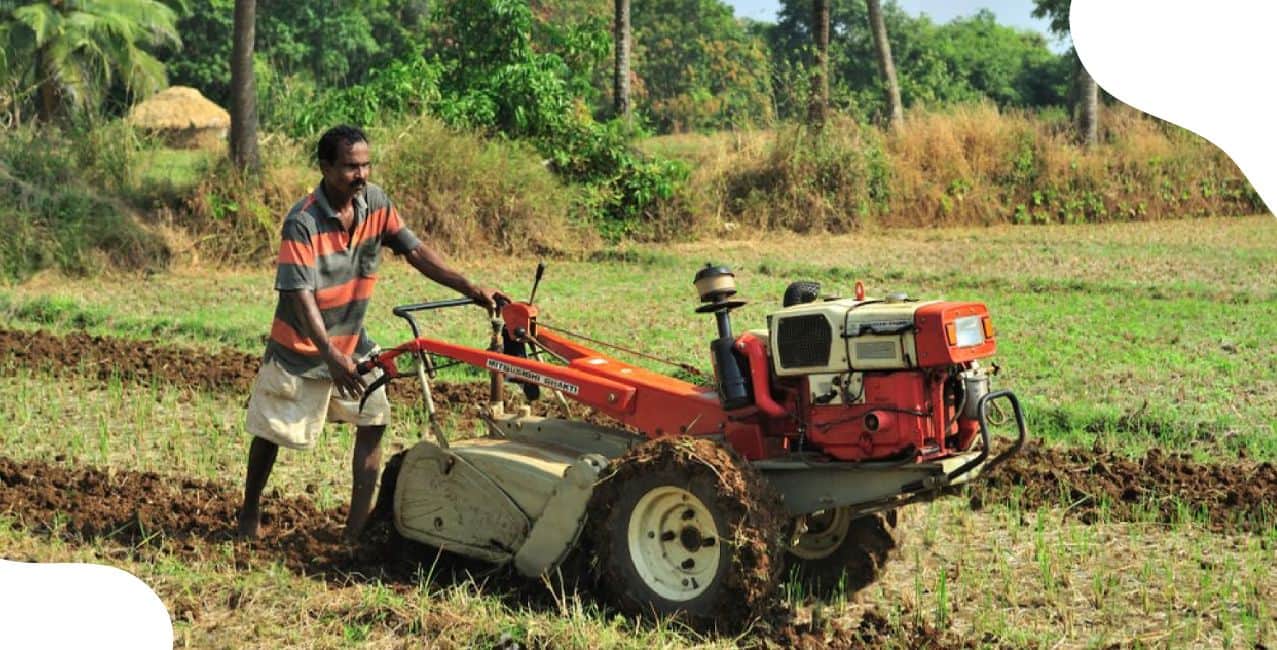
One of the core components of the state’s new farmer welfare push is impressive support for agricultural machinery: up to 80% subsidy on qualified farm tools and equipment under the Farm Machinery Bank Yojana. In addition, qualifying farmers can access interest-free loans up to ₹3 lakh, alongside free irrigation facilities from canals, a critical advantage in water-scarce farm belts.
These instruments are designed to help farmers overcome two major hurdles: upfront cost of machinery and the burden of high-interest credit. With mechanisation, farmers can save labour costs, improve efficiency, and potentially boost yields. Interest-free credit reduces dependency on informal credit sources that often charge exorbitant rates.
Below is a table capturing key elements of this support package:
The combination of high subsidy rates and interest-free loans significantly lowers the financial barrier for mechanisation and farm improvement. Free irrigation further supports cost-effective production, especially in areas without reliable rainfall. Together, these measures can catalyse productivity improvements and rural income growth.
Mushroom cultivation is increasingly recognised as a high-value, low-input agricultural enterprise, often requiring minimal land and water, yet generating marketable products within short cultivation cycles. The Mushroom Gram initiative aims to expand this model across the state, encouraging farmers not only to grow mushrooms but also to engage in processing, value addition, and market linkages.
This focus is aligned with broader trends in India where many states are promoting mushroom and allied horticulture for diversified farm income. For instance, Bihar government initiatives also offer subsidies ranging from 50% to 90% on mushroom farming inputs and structures, with a particular push toward empowering women farmers. Such robust support reflects how mushroom cultivation is viewed nationally as an accessible agri-enterprise with strong income potential.
In Uttarakhand’s context, the Mushroom Gram model also incorporates training, self-employment for youth and women, and the strengthening of self-help groups — elements that can create community-level resilience and reduce migration pressures.
The CM’s address at the inauguration emphasised that the Mushroom Gram project fits into a much larger set of agricultural and rural development programmes. These include national schemes like the Pradhan Mantri Kisan Samman Nidhi (PM-KISAN), which provides direct income support to millions of farmers, and other central initiatives such as Minimum Support Price enhancements, Pradhan Mantri Fasal Bima Yojana (crop insurance), and Soil Health Cards, all of which aim to de-risk farming and improve production decisions.
At the state level, besides subsidies and interest-free loans, Uttarakhand has rolled out sectoral policies like the Apple Policy, Kiwi Policy, State Millet Mission, Dragon Fruit Policy and the Mahak Kranti initiative, each intended to boost horticulture, diversify cropping systems, and enhance market realisation for farmers.
These schemes, when effectively implemented, can create an ecosystem where farmers aren’t just producers but entrepreneurs, accessing credit, technology, and markets more robustly.
While the subsidies and interest-free loans are promising on paper, how they are implemented will largely determine their success. Challenges often include:
*T&C Apply
Addressing these factors, through local extension services, digital platforms, and community engagement, will be critical to ensuring the policies yield their intended outcomes.
The inauguration of the Mushroom Gram project in Haridwar marks a significant step in Uttarakhand’s strategy to strengthen its agricultural economy through subsidies, interest-free credit, and agri-innovation. By pairing traditional farming with high-value enterprises like mushroom cultivation, and by lowering access barriers to machinery and credit, the state is aiming to boost rural incomes and create sustainable livelihoods.
However, the long-term impact of these measures will depend on how effectively they are communicated to farmers, how smoothly the interest-free loan programmes operate, and whether complementary support, such as market access and technical training, is provided. If implemented well, this model could inspire similar agricultural support strategies across other Indian states looking to combine economic empowerment with agrarian modernization.
Other Related Pages | |||









.png&w=3840&q=75)



