By continuing, you agree to LoansJagat's Credit Report Terms of Use, Terms and Conditions, Privacy Policy, and authorize contact via Call, SMS, Email, or WhatsApp
Disclaimer: The information published on LoansJagat is intended for general informational and educational purposes only and should not be considered financial, legal, or investment advice. Interest rates, loan terms, statistics, and other data may change over time and may vary by lender or source. Please verify the latest information and consult a qualified financial advisor or the respective Bank/NBFC before making any financial decisions.
Apply for Loans Fast and Hassle-Free
Subscribe Now
About the author

LoansJagat Team
‘Simplify Finance for Everyone.’ This is the common goal of our team, as we try to explain any topic with relatable examples. From personal to business finance, managing EMIs to becoming debt-free, we do extensive research on each and every parameter, so you don’t have to. Scroll up and have a look at what 15+ years of experience in the BFSI sector looks like.
Related Blog Post
Simplify All Your Loans Into One Affordable EMI

Customers Served

Debt Consolidated

1200+ Reviews

Locations in India
Club all Loans & Credit Card Bills into Single EMI

Quick Apply Loan
Consolidate your debts into one easy EMI.

Takes less than 2 minutes. No paperwork.

10 Lakhs+
Trusted Customers

2000 Cr+
Loans Disbursed

4.7/5
Google Reviews

50+
Banks & NBFCs Offers
Other services mentioned in this article
Key Takeaways
Bonus Point: RBI has suggested adding a name check feature in RTGS and NEFT systems. It will help people confirm the beneficiary’s name before sending money, reducing mistakes and wrong transfers to incorrect accounts.
Sending a large payment can feel stressful, especially when you need it to reach instantly and safely. The Central Bank of India RTGS form makes this process simple, clear, and smooth for anyone handling high-value transfers.
The Central Bank of India RTGS form is a document used to process Real-Time Gross Settlement transfers, where money moves immediately and securely. Think of it like an express highway for funds, no traffic, no delays, just direct and fast movement to the destination.
Last month, I had to send a high-value payment urgently, and using the Central Bank of India RTGS form made everything surprisingly easy. I filled in the details, submitted it online, and the amount reached the receiver instantly without any confusion or waiting.
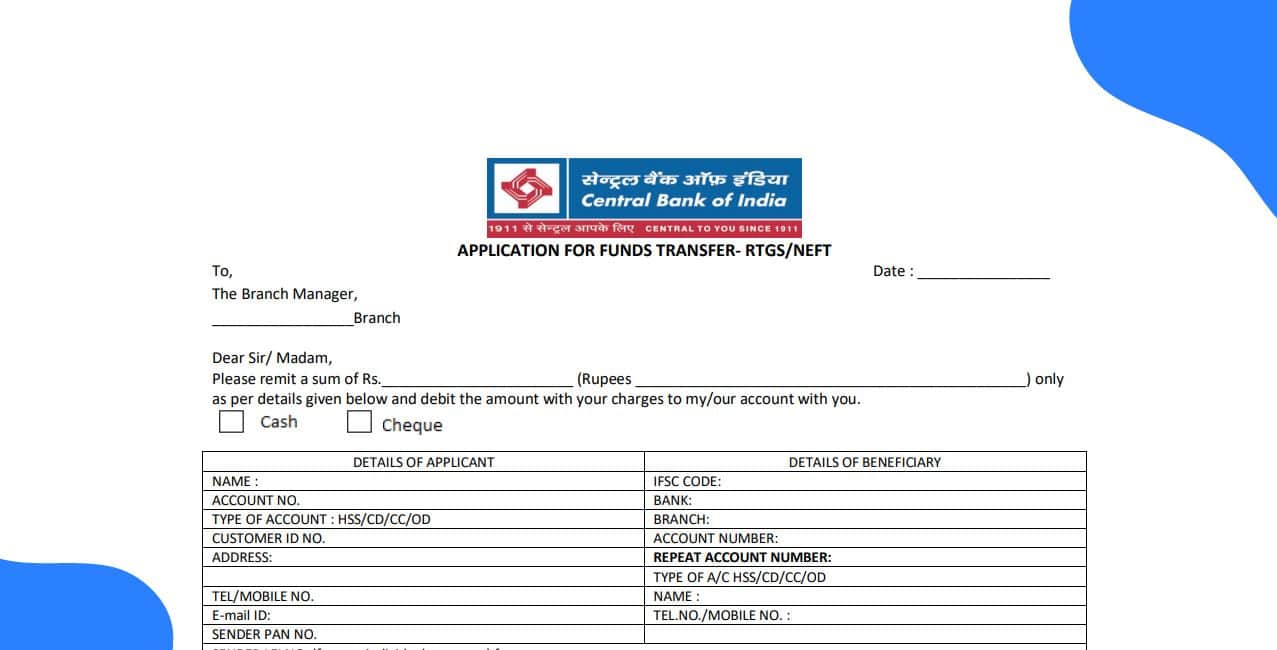
The Central Bank of India RTGS form is used for transferring funds offline through the Real-Time Gross Settlement (RTGS) system. It requires details such as the remitter’s and beneficiary’s account numbers, IFSC code, and transfer amount. Customers can easily download the RTGS form from the official Central Bank of India website or other trusted platforms providing bank forms for convenient fund transfers.
If you prefer to make an offline RTGS transaction, you can easily download the Central Bank of India RTGS form by following these simple steps:
Once downloaded, you can print the form, fill in the required details, and submit it at your nearest Central Bank of India branch to complete your RTGS transaction.
If you wish to make a high-value transfer through RTGS at the Central Bank of India, you’ll need to fill out the RTGS form carefully to ensure a smooth and error-free transaction. Follow the steps below to complete the process correctly:
Step 1: Get the form
Obtain the RTGS form from your nearest Central Bank of India branch or download it from the official website.
Step 2: Fill in your details
Step 3: Fill in the beneficiary’s details
Step 4: Specify the transfer amount
Step 5: Sign and submit the form
Step 6: Keep confirmation
Once the transaction is processed, the bank will give you a confirmation slip containing the transaction reference number. Keep this slip safely as proof of the RTGS transfer.
By following these steps carefully, you can complete your RTGS transaction securely and ensure that the funds are credited promptly to the beneficiary’s account.
When filling out the Central Bank of India RTGS form, you don’t need to attach any extra documents. However, it’s very important to enter all the required details correctly to ensure your transaction is processed smoothly and without delay.
Remitter’s Information:
Beneficiary’s Information:
Transaction Details:
Once you have entered all these details, review the form carefully, sign it, and submit it at the bank counter. This ensures the transaction is processed efficiently and credited to the correct beneficiary account.
The Central Bank of India has set specific NEFT and RTGS charges based on the mode of transaction and transfer amount. These charges vary for branch-based and digital transactions, ensuring flexibility and affordability for customers.
*T&C Apply
NEFT/RTGS Charges for Digital Mode (Net Banking/Mobile Banking, etc.) Effective from 01/07/2019
NEFT Charges for Digital Mode (Savings Bank Account Holders) – Effective from 01/01/2020
These revised charges highlight the Central Bank of India’s initiative to promote digital banking by offering zero fees for NEFT transactions made through online channels, encouraging customers to adopt convenient and cost-effective digital payment modes.
The Central Bank of India offers flexible RTGS transaction options for both online and branch customers, ensuring convenience and accessibility for all users. While online transfers operate round the clock, branch-based RTGS follows defined banking hours.
Online RTGS
Branch RTGS
By understanding these timings, customers can plan their RTGS transactions efficiently, using online platforms for instant 24/7 transfers or visiting their nearest branch during operational hours for in-person assistance.
The Central Bank of India RTGS form is a reliable option for transferring high-value funds instantly and safely. It offers flexibility through both branch and online channels, ensuring convenience for every customer. With low or zero charges for digital transactions, it encourages users to choose faster, paperless banking methods, making fund transfers easier, quicker, and more secure than ever before.
Q1: How can I do RTGS through the bank without a cheque and get the amount debited directly from my account?
You can visit your bank branch, fill out the RTGS form, authorise a debit from your account, and the bank will process the transfer without needing a cheque.
Q2: Will withdrawing around ₹20 lakh in cash for a property purchase trigger Income Tax surveillance?
Yes, large cash withdrawals can be flagged, and the IT department may seek an explanation, so keep all source and payment documents ready.
Q3: How does RTGS work in banking, and what makes it better than other fund-transfer methods?
A: RTGS settles high-value payments instantly and individually in real time, offering faster, safer, and more reliable transfers compared to delayed or batch-based payment methods.
Q4: What is the procedure of RTGS?
You fill an RTGS form, provide beneficiary details, authorise account debit, and the bank processes the high-value transfer instantly through the RTGS system.
Q5: Why does RTGS take more time sometimes?
RTGS may take longer due to bank verification, server delays, or congestion in the payment processing system.
Other Related Pages | |||