By continuing, you agree to LoansJagat's Credit Report Terms of Use, Terms and Conditions, Privacy Policy, and authorize contact via Call, SMS, Email, or WhatsApp
Disclaimer: The information published on LoansJagat is intended for general informational and educational purposes only and should not be considered financial, legal, or investment advice. Interest rates, loan terms, statistics, and other data may change over time and may vary by lender or source. Please verify the latest information and consult a qualified financial advisor or the respective Bank/NBFC before making any financial decisions.
Subscribe Now
About the author

Vaishnavi kale
Vaishnavi is a Financial Content Writer at LoansJagat. She holds a B.Sc. and an M.Sc. She has experience in writing SEO-focused content across finance, digital marketing, education, and Ayurveda. Before joining LoansJagat, she worked with digital marketing agencies serving fintech clients and quick-commerce brands like Zepto and blinkit. At LoansJagat, Vaishnavi writes on banking, loans, personal finance, and insurance. Her work involves researching financial topics, understanding user search intent, and creating content that is clear and accurate. She has experience in SEO content writing, keyword research, content optimisation, and AEO. She enjoys simplifying complex topics into practical information that readers can easily understand and use. She believes that well-researched and reliable content plays an important role in helping people make informed financial decisions.
Related Blog Post
Simplify All Your Loans Into One Affordable EMI

Customers Served

Debt Consolidated

1200+ Reviews

Locations in India
Club all Loans & Credit Card Bills into Single EMI

Quick Apply Loan
Consolidate your debts into one easy EMI.

Takes less than 2 minutes. No paperwork.

10 Lakhs+
Trusted Customers

2000 Cr+
Loans Disbursed

4.7/5
Google Reviews

50+
Banks & NBFCs Offers
Other services mentioned in this article
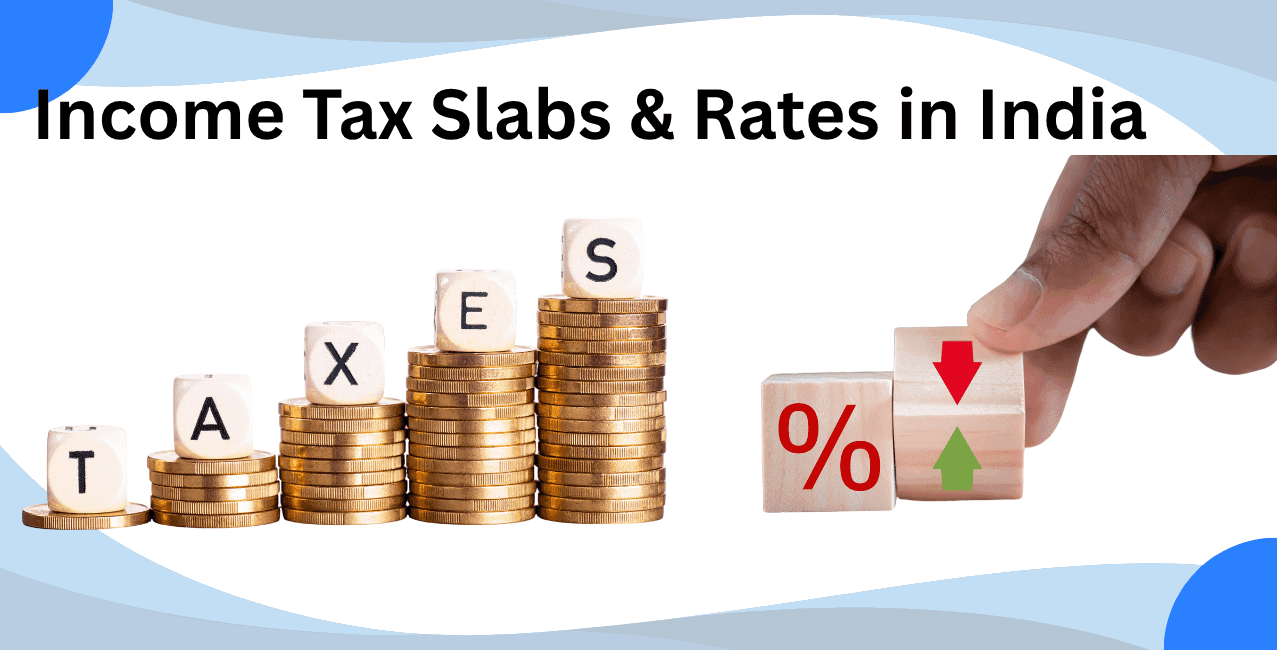
In India, the tax slab depends on which regime the taxpayer chooses: the new tax regime or the old tax regime. The new tax regime is known as the default tax regime. It is for individual taxpayers and offers lower tax rates with limited deductions. The old tax regime offers deductions and exemptions, such as Section 80C, HRA, and home loan benefits. To get full details about the current income tax slab rates, stay connected with Loansjagat.
Key takeaways
An income tax slab is a system that is used to calculate the income tax. Your income is used in this calculation. In simple words, it determines how much you need to pay based on your income. Different portions of your income are taxed at different rates. If your income increases, your tax rate is also going to increase.
If your income falls under multiple tax slabs, each portion of your income is taxed at the rate applicable to that slab. That means your entire income is not taxed at a single rate.
The new tax regime is the default tax system. Here you can get a lower tax rate, but you are not able to claim most deductions and exemptions. Deductions under Section 80C, HRA, and LTA are generally not available.
This New Tax Regime offers you lower tax rates but does not allow most exemptions and deductions.
This is suitable for you if you prefer a simple tax structure with fewer tax-saving investments. There is a different tax slab regime, which is called optional.
In this tax regime, you can claim various tax deductions and exemptions. It can reduce your taxable income. But the tax rates here are generally higher than the new tax regime.
The Old Tax Regime allows taxpayers to claim various deductions and exemptions to reduce taxable income.
Senior citizens receive a higher basic exemption limit under the Old Tax Regime.
This regime can help senior citizens lower their tax burden through deductions and exemptions.
Super senior citizens enjoy the highest basic exemption limit under the Old Tax Regime.
This slab offers additional tax relief for elderly taxpayers with eligible deductions and exemptions.
Resident individuals with taxable income up to ₹12 lakh can claim a rebate of up to ₹60,000 on slab-rate income. Special-rate income may remain taxable. That means you do not have to pay income tax. But if your taxable income is more than ₹12,00,000, then this rebate is not available. Then you need to pay tax.
Those people who come under the category of salaried individuals and pensioners can deduct ₹75,000 under the New Tax Regime. It raises the zero-tax income level to ₹12,75,000 of gross salary or pension income.
Every person can't choose the same regime because everyone's priorities are different. If you are not claiming many deductions or exemptions, you can choose the new tax Regime. And if you regularly claim deductions such as Section 80C investments, HRA, home loan benefits, or medical insurance deductions, you can go for the old tax regime.
These ITR forms are based on your income source. You need to choose the correct form.
If your salary is up to 50 lakh and you have up to two house properties, and other sources such as interest income. You can go for ITR-1 form. But your agricultural income should not exceed ₹5,000.
You need to remember that you should not file this form:
This form is for those people who have income from capital gains, multiple house properties, or other sources but do not have business income. If you are in this category, you can file ITR-2.
If you are an individual and HUFs who earns income from a business or profession. Then you need to file this form. Freelancers, consultants, or business owners can go for this form.
If you are a small business owner or professional. and opt for the presumptive taxation scheme under Sections 44AD, 44ADA, or 44AE. Then you need to file ITR-4 (Sugam).
You have two options for tax slabs in India. You can choose the new tax regime or the old tax regime. In the new tax regime, your tax rates are low, but you are not allowed to claim most of the deductions. On the other hand, in the old tax regime, you can claim various deductions, but tax rates are high.
Before filing an income tax return (ITR), you need to understand the core difference between these two regimes. First, compare both regimes and then choose one that helps you save more tax based on your income and investments. Also, select the right ITR form for yourself; it helps you stay compliant with tax regulations.
PPF (Public Provident Fund) money is tax-free. Investments, interest earned, and maturity proceeds are completely tax-free. All these fall under the EEE (Exempt-Exempt-Exempt) category.
Women in India have to pay the same tax as men in India. The tax system here is based on equality.
The new tax regime is the default regime.
The ITR form depends on your source of income, total annual income, and your residential status. You need to check the eligibility criteria for each form. If you choose the wrong form, the income tax department can treat it as defective.
No, HRA (House Rent Allowance) exemption is not available under the new tax regime.
You can transfer money to your wife legally in India. It is one of the common ways to save tax, as in India gifts from spouses are exempt from tax. That means your wife does not need to pay any tax on it. But under Section 64(1)(iv), if you transfer money to your wife and she earns from it, then that income is added to your income and taxed in your hands.
You can transfer any amount to your son; there is no limit. As your child is considered a “specified relative”, you don't have to pay any type of tax on gifts that you give. But you need to take care of some important things. You should not send ₹2,00,000 or more in physical cash because it triggers a penalty on the receiver.
Income below the exemption limit does not always remove the ITR-filing requirement. Check the mandatory conditions under Section 139.
People who earn 50 lakh per annum are not middle class. They are among the top 0.7% to 1% of all taxpayers in India.
The income tax slab is divided into two parts: a new tax regime and an old tax regime. If someone is earning 50 lakh per annum, he/she incurs about ₹12.1 lakh in tax in the new regime.