By continuing, you agree to LoansJagat's Credit Report Terms of Use, Terms and Conditions, Privacy Policy, and authorize contact via Call, SMS, Email, or WhatsApp
Disclaimer: The information published on LoansJagat is intended for general informational and educational purposes only and should not be considered financial, legal, or investment advice. Interest rates, loan terms, statistics, and other data may change over time and may vary by lender or source. Please verify the latest information and consult a qualified financial advisor or the respective Bank/NBFC before making any financial decisions.
Subscribe Now
About the author

Vaishnavi kale
Vaishnavi is a Financial Content Writer at LoansJagat. She holds a B.Sc. and an M.Sc. She has experience in writing SEO-focused content across finance, digital marketing, education, and Ayurveda. Before joining LoansJagat, she worked with digital marketing agencies serving fintech clients and quick-commerce brands like Zepto and blinkit. At LoansJagat, Vaishnavi writes on banking, loans, personal finance, and insurance. Her work involves researching financial topics, understanding user search intent, and creating content that is clear and accurate. She has experience in SEO content writing, keyword research, content optimisation, and AEO. She enjoys simplifying complex topics into practical information that readers can easily understand and use. She believes that well-researched and reliable content plays an important role in helping people make informed financial decisions.
Related Blog Post
Simplify All Your Loans Into One Affordable EMI

Customers Served

Debt Consolidated

1200+ Reviews

Locations in India
Club all Loans & Credit Card Bills into Single EMI

Quick Apply Loan
Consolidate your debts into one easy EMI.

Takes less than 2 minutes. No paperwork.

10 Lakhs+
Trusted Customers

2000 Cr+
Loans Disbursed

4.7/5
Google Reviews

50+
Banks & NBFCs Offers
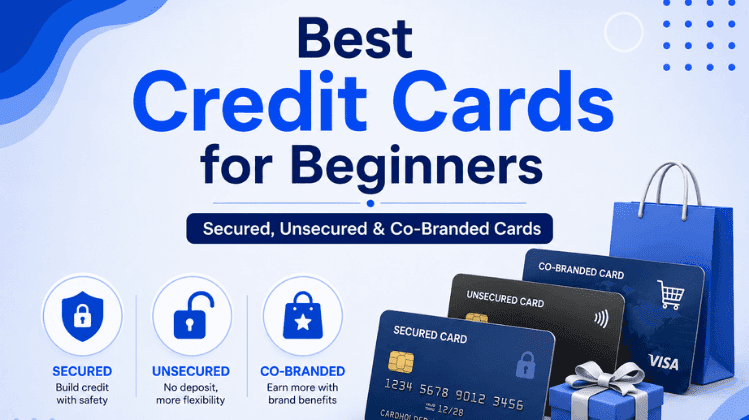
You can choose your first credit card from secured credit cards, entry-level unsecured cards, and co-branded cards. The Reserve Bank of India (RBI) regulates credit card services offered by banks and eligible financial institutions in India to protect customers and promote transparency. You can build a good credit history with a new credit card. Before choosing this card you should check fees, eligibility rules, and credit limit.
If you do not have a credit history, a secured credit card can be a useful starting option. You need to open a Fixed Deposit with the bank, which acts as security for the card. Since the FD acts as security for the card, secured credit cards are usually easier to get. You may not need regular income proof or an existing credit history. However, approval is not guaranteed. The card issuer will still check your KYC details, age, and other eligibility requirements before approving the card.
Hence, an FD-backed credit card can be a simple way to start building your credit history when you do not have an existing credit score.
If you are doing a job and have regular income, getting a credit card is easier. You can apply for an entry-level unsecured credit card through the bank's official mobile app.
You should download the official banking application of your salary or savings account bank from the Google Play Store or Apple App Store.
Hence, a person with a regular income can apply for an entry-level unsecured credit card through their bank's digital platform, subject to the bank's eligibility rules.
A co-branded credit card is offered by a bank in partnership with another company or platform. These cards can be useful for beginners who regularly spend on a particular platform or category and want to earn rewards or cashback.
You can visit the official website of the bank or its co-branded partner to check whether you are eligible.
The Reserve Bank of India (RBI) introduced various rules for credit card issuers. This is for improving transparency and protecting cardholders. Beginners should understand these rules before using a credit card.
Getting an unsecured credit card usually requires proof of income and employment. However, not having a regular income does not always stop you from getting a beginner credit card. If you do not have formal income proof, you can consider an FD-backed secured credit card or an add-on card linked to a family member’s primary credit card.
You should always pay an outstanding amount before the due date and keep your credit utilisation low. Responsible use can help you build a stronger credit history and improve your chances of getting better loans and credit cards in the future.
The minimum age is generally 18 years, but the exact age requirement can vary between banks and card products.
A secured credit card is issued against a Fixed Deposit held with the bank. The FD acts as security for the card. These cards can be useful for people who have little or no previous credit history.
When you apply for multiple credit cards, lenders do a hard inquiry. It can affect your credit score badly. If you apply for too many applications in a short time, it can make your image look more credit-seeking to lenders.
Keeping your credit utilisation below 30% is a general guideline, not an RBI-mandated limit. You can legally use up to your full credit limit. However, using a lower portion of your available limit is generally considered better for your credit profile. Regularly using a very high percentage of your credit limit may negatively affect your credit score.
Yes, depending on the bank's rules. A student may be able to get a secured credit card against an FD or an add-on card linked to a parent's primary credit card.
Paying only the minimum amount can help you avoid a late payment status for that bill, but the remaining balance can attract high interest charges. You may also lose the interest-free period on new transactions until the outstanding balance is cleared.
MITC means the most important terms and conditions. It is a document that provides you with information about the credit card. It includes all the fees and interest rates.
It is not fixed. Credit bureaus like CIBIL, Experian, CRIF, and Equifax need enough information about your credit activity and repayment history before they can calculate a score. Your bank or card issuer usually reports your account details regularly. Until the bureau gets enough information, your credit report may show “NH” (No History) or “NA” instead of a credit score.
Yes. Banks generally report payment activity on secured credit cards to credit information companies the same way they do for other credit cards. This means responsible use of a secured card can help you build a credit history.
There is no guarantee that an FD-backed credit card can be converted into a regular credit card. Some banks may offer an upgrade if you have a good repayment history. However, the bank will decide whether you qualify. In some cases, you may need to close the secured card, release the FD, and apply for a new regular credit card.
Banks cannot increase your credit limit or issue a new credit card without your clear consent. If a bank sends you an unsolicited card and charges you for it, it must reverse the charges and pay you a penalty equal to twice the billed amount.