By continuing, you agree to LoansJagat's Credit Report Terms of Use, Terms and Conditions, Privacy Policy, and authorize contact via Call, SMS, Email, or WhatsApp
Disclaimer: The information published on LoansJagat is intended for general informational and educational purposes only and should not be considered financial, legal, or investment advice. Interest rates, loan terms, statistics, and other data may change over time and may vary by lender or source. Please verify the latest information and consult a qualified financial advisor or the respective Bank/NBFC before making any financial decisions.
Subscribe Now
About the author

Darshana Patel is a finance and tech writer with a strong background in journalism, financial economics, and political science, working with Loans Jagat. She has immense experience writing content through her previous work in fintech and edtech companies. Her contribution at Loans Jagat is to simplify finance-backed content and academically powered content for the readers.
Related Blog Post
Simplify All Your Loans Into One Affordable EMI

Customers Served

Debt Consolidated

1200+ Reviews

Locations in India
Club all Loans & Credit Card Bills into Single EMI

Quick Apply Loan
Consolidate your debts into one easy EMI.

Takes less than 2 minutes. No paperwork.

10 Lakhs+
Trusted Customers

2000 Cr+
Loans Disbursed

4.7/5
Google Reviews

50+
Banks & NBFCs Offers
Other services mentioned in this article

Credit card charges are the amounts a cardholder needs to pay due to his/her activities related to the credit card. This can be in terms of interest rates, joining fees, late payment charges, etc. Multiple credit card issuers charge you on credit cards for different reasons, like joining fees, annual charges, interest rates, etc. So, the charges on a credit card are not a standard concept for all credit card issuers. Credit card issuers have different policies and charges for cardholders, as per their credit card demand and handling. In this blog, we will understand the charges associated with a credit card.
Key takeaways:
The word 'credit card charges’ itself sounds like a burden. Credit card charges are usually levied by credit card issuers on cardholders. They can be in terms of interest rates, processing fees, late payment charges, etc. Some of the charges are due to improper handling of the credit card, like late repayment, etc.
Whereas certain charges may apply to cardholders based on the credit card issuer’s policies, such as joining fees and processing fees. Managing credit cards properly can help to lower charges such as late payment charges, etc., but the user needs to be responsible.
Credit card fees are not just one. In fact, there are multiple types of credit card charges applied based on the cardholder’s activity related to the credit card and the credit card issuer’s terms and conditions.
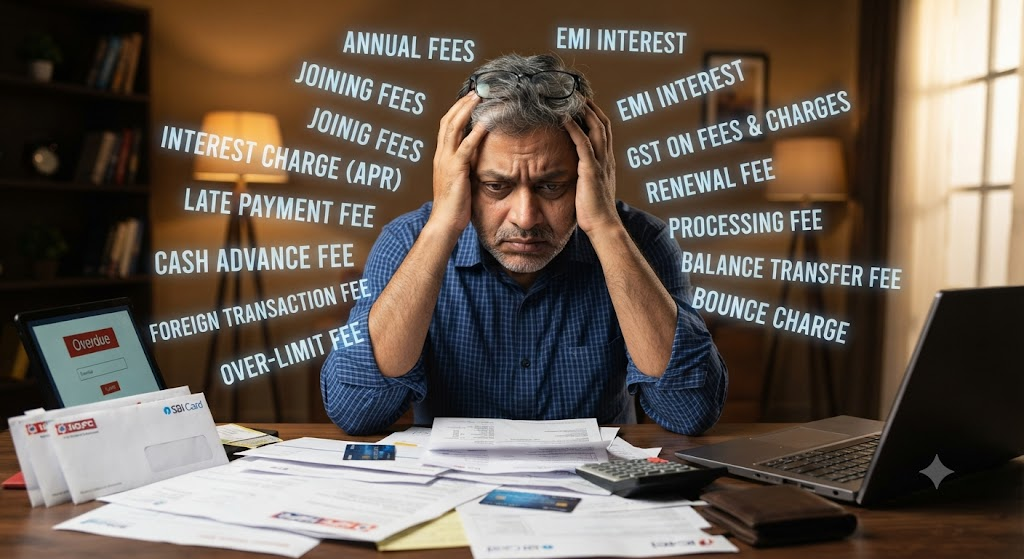
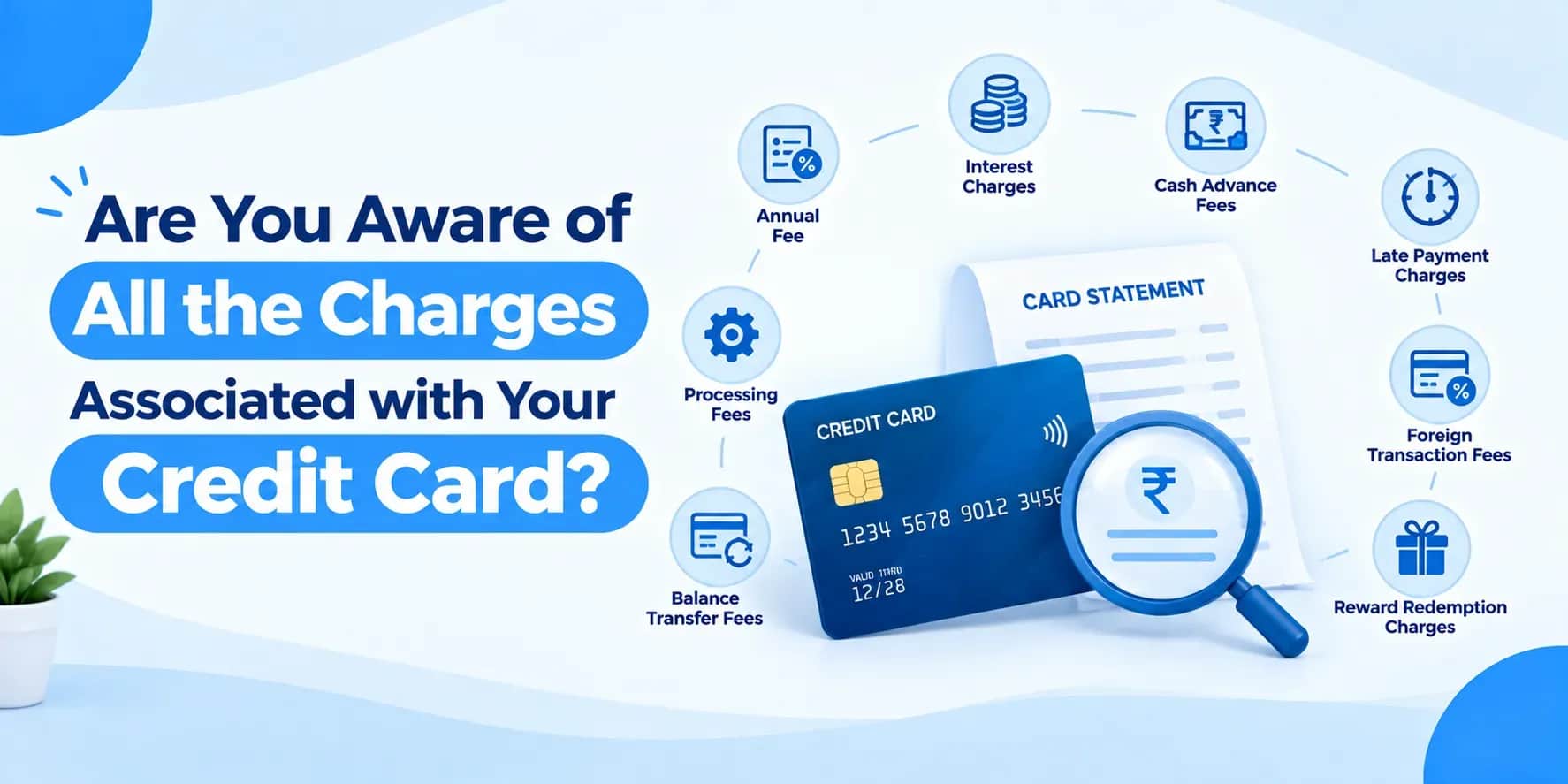
Here are the types of credit card charges you should know:
When you receive a credit card, you may need to pay a joining fee, depending on the credit card issuer’s policy. This is because some credit card issuers do not apply any joining fee for some credit cards. So, it is highly necessary to know about the joining fee from the credit card issuer. Moreover, some credit card issuers may apply annual maintenance fees on the credit card, which you need to pay annually. These depend on the credit card issuer’s terms and conditions, the type of credit card you choose, and the benefits the card provides.
Credit card interest may apply when you carry an outstanding balance instead of paying the total amount due by the payment due date. The credit card statement is generated at the end of every billing cycle, after which you need to repay the outstanding amount at the payment due date. This interest rate, or annual percentage rate, varies from one credit card issuer to another. So, it is important to know what interest rate is offered on the credit card you choose.
Situations in human life are unpredictable because nobody knows when the tables turn. Facing a financial crisis or forgetting a due date unintentionally is a part of life. Missing a credit card payment may result in late payment charges, depending on the issuer’s terms and conditions. Paying at least the minimum amount due by the due date may help avoid late-payment charges, subject to the card issuer’s terms. However, interest may still apply to the outstanding balance. So, checking the late payment charges is important because these credit card hidden charges should not be overlooked, as they can create more financial burden.
Over-limit fees may apply when a cardholder uses an over-limit facility with the credit card issuer’s explicit consent, as per the applicable terms and conditions. Sometimes it may happen that you might need more money but do not have enough with you. So, the credit card comes in defence, but it also comes with certain limits as per the credit card issuer’s assessment. But if you use the credit card more than its limit, you might need to pay the over-limit charges to the credit card issuer. Therefore, keeping track of the available credit limit can help cardholders avoid transactions that may result in over-limit charges, where applicable.
There can be situations where you need cash to use, but you might not have enough. Some credit cards provide a cash-withdrawal facility through ATMs, subject to the card issuer’s terms and applicable limits. Several credit card issuers may charge you a cash advance fee for withdrawing cash from the ATM. This cash advance fee may vary from one credit card issuer to another. Hence, this may affect your overall credit card costs.
There are several charges that are taxed as per the current GST rules. Your credit card issuer may add GST to the applicable charges you fall under for credit card-related activities. Therefore, it is important to be aware of these charges beforehand.
*T&C Apply
Card replacement fees are applied when your card is stolen, lost, or damaged, and you want another credit card. Your credit card issuer may apply credit card replacement fees to you as per their own policies. So, it is necessary to keep the amount ready for situations like credit card replacement if the credit card issuer applies any charges for it.
Travelling abroad and using a credit card for shopping or other transactions may incur foreign transaction fees on some credit cards. The fees generally depend on the credit card type and the credit card issuer’s terms and conditions. So, knowing about foreign transaction fees before travelling can help you understand the additional costs of using a credit card abroad.
Hence, these are some of the credit card charges one should be aware of while using a credit card.
It is important to keep an eye on the credit card charges before you use your credit card. These charges can be applied based on your credit card usage and the credit card issuer's terms and conditions. Knowing these charges can help you manage your credit card use and affect your credit card costs.
Every credit card issuer has different margins and policies related to the credit card charges for the cardholders.
There are multiple credit cards that do not have any joining fee. Hence, it is not compulsory and depends on the credit card issuer’s terms and conditions.
Eligibility is required to apply for and obtain a credit card, while applicable fees depend on the card’s terms and conditions.
Generally, paying for the credit card application completely depends on the credit card issuer’s terms and conditions. So, it is necessary to check whether the credit card issuer charges you for the credit card application or not.
There are several types of credit card charges supported by different credit card issuers, such as interest rates, late payment charges, GST, cash advance charges, etc.
Credit card charges can create a financial burden for cardholders, while missed or delayed repayments may negatively affect their credit reports.
In some cases, these credit card charges can make people more cautious next time to prevent a financial burden and signal to them to manage their credit cards properly.
Late payment charges are the penalties applied to the cardholder if they miss the credit card payment on time.
Yes, late payment can affect your credit report if the credit card issuer reports it to the credit bureaus.
Timely payment might save you from credit card charges because, if you pay the total amount on time, there might be no interest you need to pay, as per the credit card issuer’s terms and conditions. Moreover, you will not need to pay late payment charges.