By continuing, you agree to LoansJagat's Credit Report Terms of Use, Terms and Conditions, Privacy Policy, and authorize contact via Call, SMS, Email, or WhatsApp
Disclaimer: The information published on LoansJagat is intended for general informational and educational purposes only and should not be considered financial, legal, or investment advice. Interest rates, loan terms, statistics, and other data may change over time and may vary by lender or source. Please verify the latest information and consult a qualified financial advisor or the respective Bank/NBFC before making any financial decisions.
Subscribe Now
About the author

Darshana Patel
Darshana Patel is a finance and tech writer with a strong background in journalism, financial economics, and political science, working with Loans Jagat. She has immense experience writing content through her previous work in fintech and edtech companies. Her contribution at Loans Jagat is to simplify finance-backed content and academically powered content for the readers.
Related Blog Post
Simplify All Your Loans Into One Affordable EMI

Customers Served

Debt Consolidated

1200+ Reviews

Locations in India
Club all Loans & Credit Card Bills into Single EMI

Quick Apply Loan
Consolidate your debts into one easy EMI.

Takes less than 2 minutes. No paperwork.

10 Lakhs+
Trusted Customers

2000 Cr+
Loans Disbursed

4.7/5
Google Reviews

50+
Banks & NBFCs Offers
Other services mentioned in this article
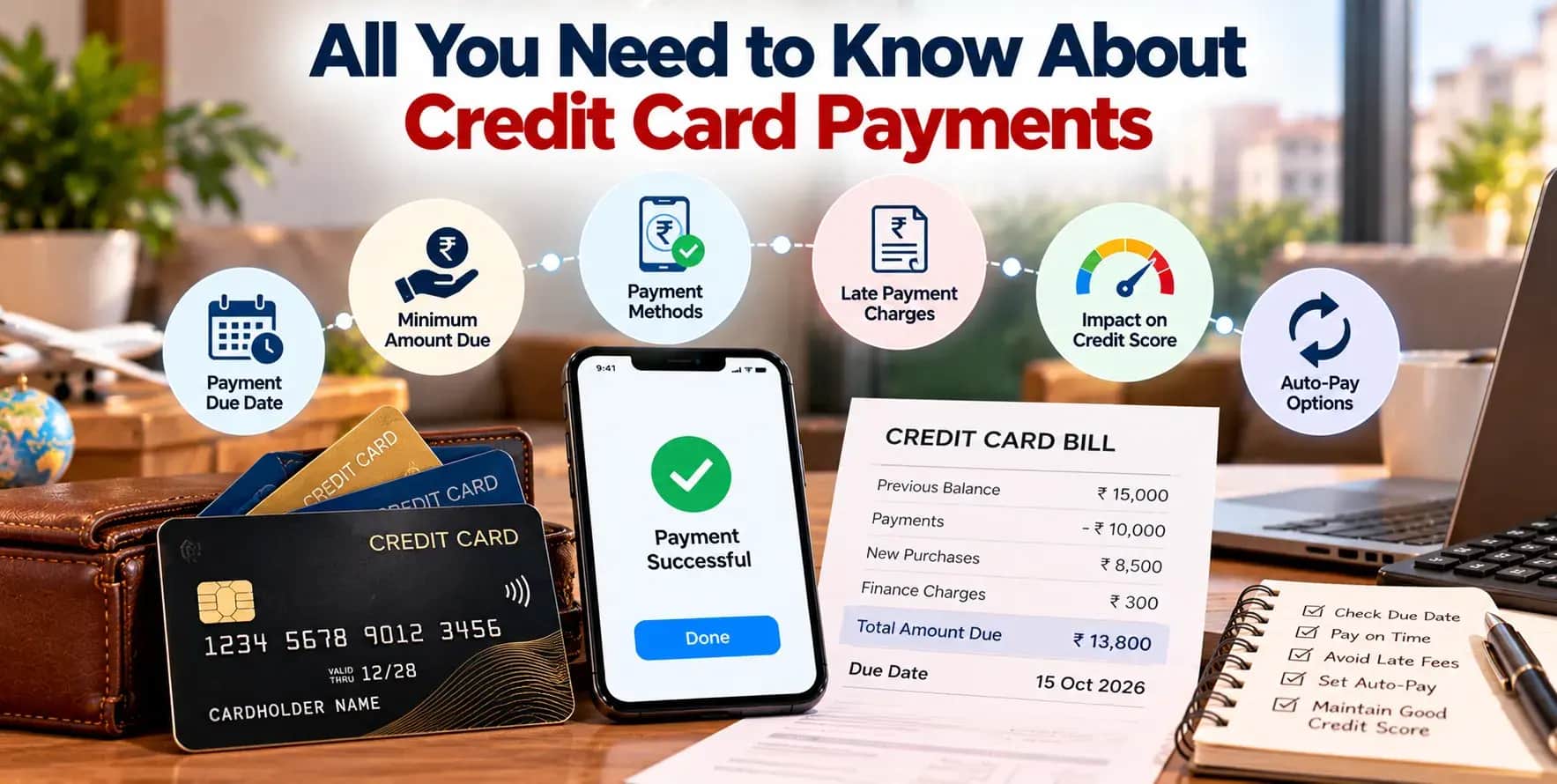
Credit cards have been a common transactional tool. People use credit cards during emergency situations, for unexpected medical bills, for shopping, etc. It would not be surprising to say that you need to repay the money charged to the credit card to the card issuer by the payment due date, or else a big slap of interest, other fees, etc., will be on your face. This is why it becomes important for us to know about credit card payments to avoid such shocks, according to the card issuer’s terms and conditions.
Key takeaways:
A credit card payment is the transfer of funds to a credit card issuer to repay a portion, or the entirety, of an outstanding balance accumulated from purchases, cash advances, fees, and interest as per the card issuer’s terms and conditions.
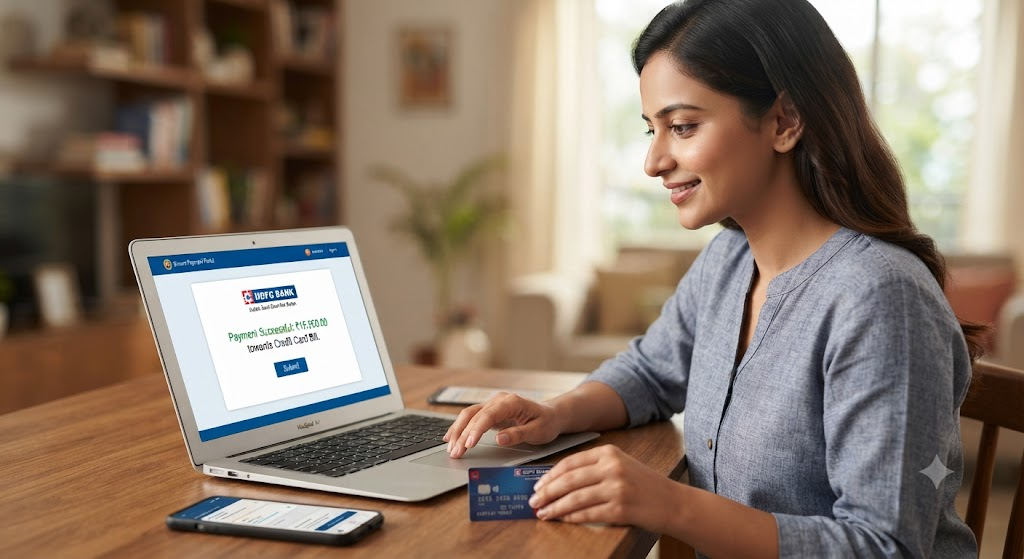
People's psychologically mistaken use of credit cards highlights the benefit of getting funds through a credit card without directly taking money out of their pockets. However, they often overlook the need to make credit card payments and put them off until later, without realising the impact of interest charges, additional fees, and their credit report, even for small payments. Hence, this is known as the “decoupling effect” of credit cards.
Hence, these are the benefits of timely credit card bill payments.
Credit card bill payment is not only limited to timely payment but also to how you make the payment, charges that apply, etc.
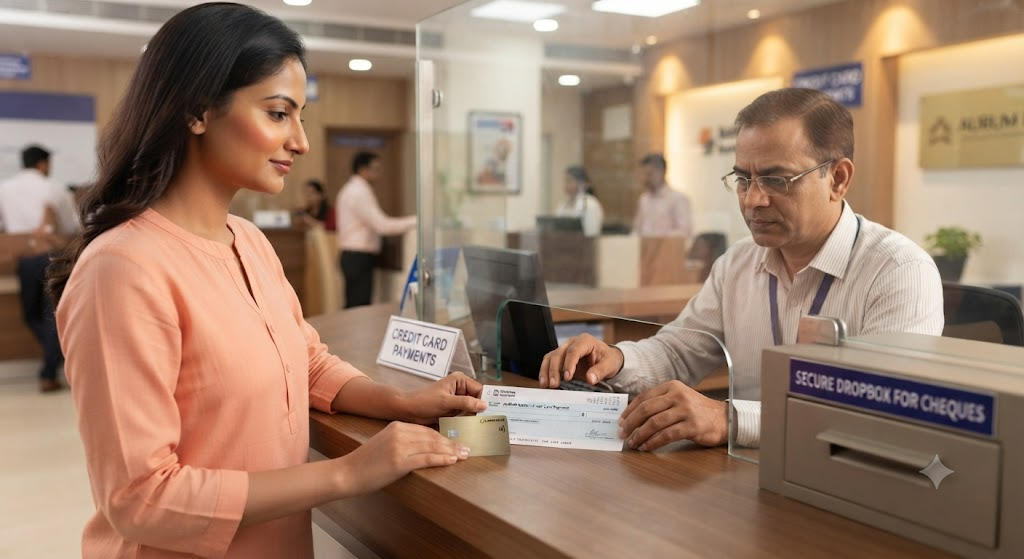
Knowing the credit card due date is the most important thing you must know. It is the final date issued by the card issuer to pay your credit card bill. This due date may vary from one card issuer to another; there is no standard due date that all credit cards may apply to. The interest-free period is separate from the payment due date and depends on the card issuer’s terms and conditions. Missing the due date of the credit card can lead to a burden of charges and interest payable. Moreover, this can harm your credit history.
There are multiple credit card bill payment methods; you can choose how to pay your credit card bills. Moreover, this may depend on the card issuer’s acceptance of the payment method you choose.
Hence, these are the credit card payment channels one can use to pay credit card bills.
c) Keep in mind how much to pay:
As a credit card user, you can choose how much of your credit card bill to pay, such as the total amount due, the minimum amount due, or an amount more than the minimum but less than the total amount due.
Paying the total amount due refers to repaying the total outstanding amount on your credit card account at the end of the billing cycle. Moreover, this may help in avoiding interest charges as per the card issuer’s terms and conditions.
*T&C Apply
Paying at least the minimum amount due by the payment due date can help avoid late-payment consequences, subject to the issuer’s terms. However, interest or finance charges may apply to the remaining outstanding balance. But one thing you need to keep in mind is that paying the portion of the total amount due can depend on the card issuer’s terms and conditions.
If you are really going through a financial crisis and cannot repay the complete amount due and want to clear debts faster. Then choosing this option can help within certain limits, where you pay more than the minimum amount due and less than the total amount due. Paying more than the minimum amount due can generally help reduce the outstanding balance faster than paying only the minimum, subject to the applicable interest and charges.
Hence, these are the three major choices one can go for when making a credit card payment.
d) Keep a close eye on your charges:
Making your payment for credit card bills on time is not a problem. In fact, missing the due date can be a problem. This is because when you miss the due date, the card issuer may apply late payment charges to you as per the company’s policies. Moreover, if you make a payment by cheque and the cheque is dishonoured, you may need to pay a cheque-return or bounce charge, which is separate from any late-payment charge.
Always remember, the policies may vary from one card issuer to another. There are other charges too that you may face, like over-limit charges if you use your credit card beyond the maximum limit. This is why paying attention to the charges is important when making a payment.
Hence, these are the important things you need to know about credit card payments.
A credit card can be a helping hand in emergency situations or when you really do not want to use money from your own pockets. But it is important to know that you have to repay the amount to the card issuer at the end of the billing cycle. Therefore, knowing about credit card payments is important, such as when to do it, how to do it, etc.
Every card issuer holds different policies, terms, and conditions. Hence, the late payment charges depend on these and are not standard for all the credit cards.
In terms of your legal and contractual agreement, it is necessary to pay the valid charges applied by your credit card card issuer. However, if you notice any incorrect or suspicious charges on your statement, you should immediately contact your bank or card issuer to dispute them and request a reversal.
It is not necessary to keep the same payment method for credit card repayment all the time. You can switch from one method to another for your credit card repayment.
For a late credit card payment, you need to pay the late payment charges, which vary from one card issuer to another.
If you pay the applicable total amount due by the payment due date, you may avoid interest on eligible purchases during the interest-free period, subject to the card issuer’s terms and conditions.
The two major benefits of making credit card payments on time are that you might not need to pay any interest, as per the card issuer’s conditions. Moreover, your credit history will build simultaneously.
A missed credit card payment may be reported to credit bureaus and negatively affect your credit history, while the card issuer may also apply late-payment charges or other applicable charges, creating financial stress.
You can pay your credit card bill through UPI, depending on the card issuer’s support for UPI bill payments and the UPI app’s availability of this facility. This is different from using an eligible credit card linked to UPI to make merchant payments.
You can repay your credit card dues through available payment channels such as UPI, internet banking, mobile banking, or other methods supported by your card issuer.
No, a credit card with no limit is not generally offered by the card issuer; setting limits is dependent on their assessment.