By continuing, you agree to LoansJagat's Credit Report Terms of Use, Terms and Conditions, Privacy Policy, and authorize contact via Call, SMS, Email, or WhatsApp
Disclaimer: The information published on LoansJagat is intended for general informational and educational purposes only and should not be considered financial, legal, or investment advice. Interest rates, loan terms, statistics, and other data may change over time and may vary by lender or source. Please verify the latest information and consult a qualified financial advisor or the respective Bank/NBFC before making any financial decisions.
Subscribe Now
About the author

Vaishnavi is a Financial Content Writer at LoansJagat. She holds a B.Sc. and an M.Sc. She has experience in writing SEO-focused content across finance, digital marketing, education, and Ayurveda. Before joining LoansJagat, she worked with digital marketing agencies serving fintech clients and quick-commerce brands like Zepto and blinkit. At LoansJagat, Vaishnavi writes on banking, loans, personal finance, and insurance. Her work involves researching financial topics, understanding user search intent, and creating content that is clear and accurate. She has experience in SEO content writing, keyword research, content optimisation, and AEO. She enjoys simplifying complex topics into practical information that readers can easily understand and use. She believes that well-researched and reliable content plays an important role in helping people make informed financial decisions.
Related Blog Post
Simplify All Your Loans Into One Affordable EMI

Customers Served

Debt Consolidated

1200+ Reviews

Locations in India
Club all Loans & Credit Card Bills into Single EMI

Quick Apply Loan
Consolidate your debts into one easy EMI.

Takes less than 2 minutes. No paperwork.

10 Lakhs+
Trusted Customers

2000 Cr+
Loans Disbursed

4.7/5
Google Reviews

50+
Banks & NBFCs Offers
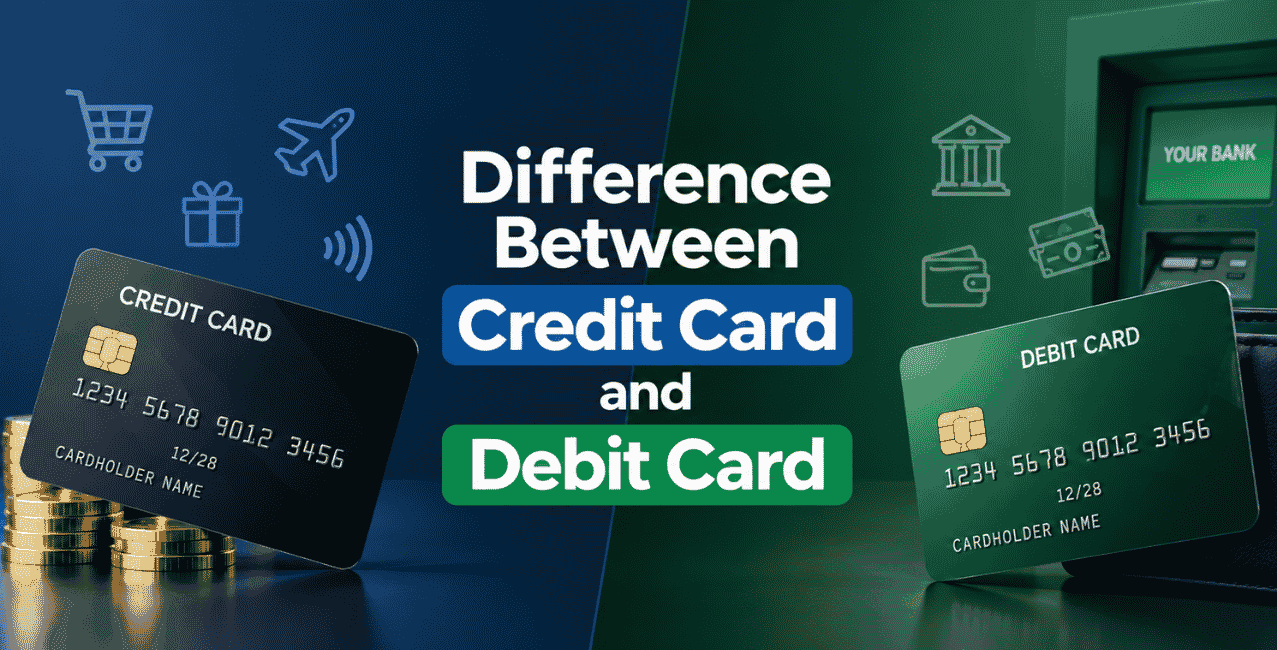
Almost everyone carries a credit card and a debit card these days. They look almost the same and both let you pay without pulling out cash. But the real difference comes down to one thing: whose money you're actually spending. It gets a lot easier to dodge extra charges and avoid getting stuck in debt.
A credit card is basically borrowed money. The bank sets a limit, and when you swipe or tap, the bank pays the merchant first on your behalf. You get a bill at the end of the month for whatever you spent. Pay it off in full before the due date and you won't owe any interest. But if you leave even part of it unpaid, interest starts piling up fast, and it's rarely small.
A debit card works differently. It's tied directly to your bank account, so whatever you spend or withdraw comes straight out of your own money. There's no borrowing involved unless your bank has set you up with an overdraft. If your account is empty, the transaction just won't go through. Most savings and current accounts come with a debit card attached by default.
The difference between a credit card and debit card are:
These reasons can help you know which card to use based on the situation.
Every time you swipe or pay online with your credit card, the amount gets added to your account, and the bank keeps track of everything over a billing cycle, usually 28 to 31 days long.
At the end of the cycle, you get a statement showing the total due, the minimum due, and the payment deadline. Most banks now give you 15 days between the statement date and the due date, some still give up to 18 days. This depends on the bank, it is not a fixed rule for every card. So depending on when in the cycle you made a purchase, you could get anywhere from 20 to 45 days interest-free.
If you pay the full bill by the due date, you don't pay a single rupee in interest. But pay even a little less than the full amount, and interest kicks in on the unpaid part, calculated all the way back from your original purchase date, not the due date. The math works like this: the yearly interest rate gets divided by 365 to get a daily rate, which is then applied to your average daily balance over however many days it's outstanding.
A lot of people think paying just the minimum due is fine because it avoids late fees, but it's still expensive. You end up paying interest that usually works out to 30-45% a year, and worse, you lose the interest-free period on any new purchases too. Withdrawing cash from a credit card is even less forgiving, interest starts from day one, with no grace period at all.
You swipe or enter debit card details. The system checks your account balance. If money is available, it is taken out at once and your balance drops.
For ATM cash you enter your PIN. Some shops also allow limited cash at their machines as per rules.
If balance is low, the payment is usually declined, unless overdraft is allowed and an extra fee is charged.
Use a debit card for daily spending when you want to stay within the money already in your account. It works well for groceries, small needs and ATM cash. It stops overspending.
Use a credit card for better protection on online or larger buys, or when you want to build credit history and can clear the full bill every month. It is also useful for hotel or car bookings that place a temporary hold.
If you already carry high-interest credit card debt, shift daily spending to a debit card until the debt is cleared.
Here are the main advantages and disadvantages of using a credit card.
Pros
Cons
These are all benefits of knowing the differences of a debit and credit card, and what fits best for you.
Here are the main advantages and disadvantages of using a debit card.
Pros
Cons
These are the advantages of a debit card for daily usage.
A credit card is generally considered safer for online payments because money does not leave your account immediately. You can dispute the charge while it stays off the bill.
RBI zero-liability rules cover both. If the bank is at fault, or if it's a third-party fraud with no fault of yours, reporting within 3 working days of the bank's alert gets you zero liability. Reporting between 4 to 7 days limits what you have to pay, usually between ₹5,000 and ₹25,000 depending on the account or card type. Report later or if the problem was your own carelessness and full liability applies.
With a debit card money leaves at once, so recovery takes longer even with temporary credit from the bank. Check both cards regularly and report unknown payments quickly.
Both cards allow cash withdrawals but costs differ. Debit card cash from your own bank ATMs is often free or low-cost after a few free uses each month. Other bank ATMs charge extra. RBI allows cash at some shop machines up to ₹2,000 per time and ₹10,000 a month. This limit can also vary a bit by city.
Credit card cash is a cash advance. You pay a fee plus higher interest from the same day with no free period. Use it only in real emergencies.
Credit cards can come with a few extra costs. You might have to pay a yearly fee, high interest on unpaid bills (usually around 30% to 45% a year), late fees, expensive cash withdrawal charges, and a 1% to 3% fee for foreign purchases.
Debit cards have charges too. Your bank might charge you for using another bank's ATM, spending more money than you have in your account, using the card abroad, or sometimes getting cash at a shop.
Luckily, the RBI gives you a small buffer. Banks must wait more than 3 days after your due date before they can charge a late fee or report your late payment to the credit bureaus. Still, it is always a good idea to read the Most Important Terms and Conditions of your specific card to know your exact costs.
Yes. Credit card activity is reported to credit score systems. Full on-time payments and low usage help build a good score. Late payments, high usage or many new applications in a short time can bring the score down.
A debit card usually has no effect on your credit score since there is no borrowing involved. Some banks may still look at your account activity for other approvals, but it does not go into your credit report.
Credit cards and debit cards both make payments easy but serve different needs. A debit card keeps spending within the money already in your account and is good for daily control and cash. A credit card offers flexibility, stronger protection and a way to build credit history if the full bill is cleared every month.
Credit card is borrowed money you repay later. Debit card spends directly from your own bank account balance.
Depends on habits. Disciplined spenders benefit from credit cards' rewards. Others may prefer debit cards' simplicity and safety.
Visa suits international travel and wider acceptance. RuPay works great domestically, often with lower fees and UPI linking.
Maximum amount your bank allows you to spend on a credit card, based on income and credit history.
Neither. It's a tool. Good if paid on time, costly if balances are carried with high interest.
Yes, but it's not advisable. High usage can hurt your credit score. Many advisors suggest staying under 30% utilisation, but this is general guidance, not a fixed rule, and can vary based on your overall credit profile.
Your credit score likely drops due to high utilization, even if you pay on time.
Overspending, high interest on unpaid dues, late fees, credit score damage, and fraud risk.
Anyone with a savings or current bank account, usually aged 18 or above.
Yes, banks set daily spending and withdrawal limits, often adjustable through the bank's app.