By continuing, you agree to LoansJagat's Credit Report Terms of Use, Terms and Conditions, Privacy Policy, and authorize contact via Call, SMS, Email, or WhatsApp
Disclaimer: The information published on LoansJagat is intended for general informational and educational purposes only and should not be considered financial, legal, or investment advice. Interest rates, loan terms, statistics, and other data may change over time and may vary by lender or source. Please verify the latest information and consult a qualified financial advisor or the respective Bank/NBFC before making any financial decisions.
Subscribe Now
About the author

Vidhi Chauhan
Vidhi Chauhan is a copywriter and content writer with extensive experience creating high-quality, SEO-driven content across multiple industries, with a strong focus on fintech. She has written extensively on GST, banking, personal loans, business loans, credit cards, income tax, insurance, and other financial topics, helping Indian readers understand complex concepts through clear, accurate, and engaging content.
Related Blog Post
Simplify All Your Loans Into One Affordable EMI

Customers Served

Debt Consolidated

1200+ Reviews

Locations in India
Club all Loans & Credit Card Bills into Single EMI

Quick Apply Loan
Consolidate your debts into one easy EMI.

Takes less than 2 minutes. No paperwork.

10 Lakhs+
Trusted Customers

2000 Cr+
Loans Disbursed

4.7/5
Google Reviews

50+
Banks & NBFCs Offers
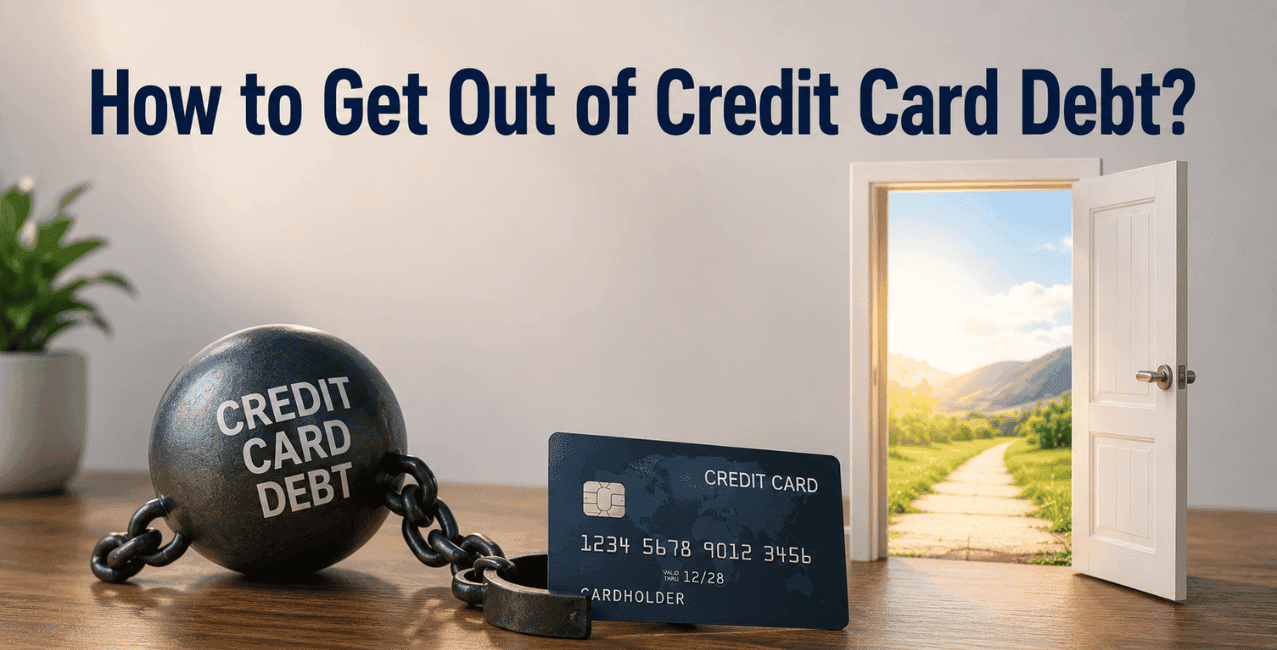
It is Possible to Get out of Credit Card Debt through the use of Correct Strategies for Debt Repayment. The first step towards this involves figuring out what causes your debt to grow and selecting a payment option that will help you save on interest while settling your debts faster. Be it one credit card or several debts to settle, there may be some factors such as high interest rates, low payment plans, penalties for delays and continuous spending that make it difficult for one to settle his/her debt. Fortunately, there are various practical measures including formulating repayment strategies, adopting the snowball or avalanche approach, and exploring the option of Debt Consolidation or a Credit Card Loan among others that can ease the debt repayment process. This article highlights the reasons behind growing credit card debt, calculating interest, and efficient approaches of settling your debt faster.
Most people get confused when they notice that their Credit Card Debt continues to rise, even though they have made timely payments. It is mainly because credit cards account balance is influenced by interest, fees, payment behaviours, and spending trends. Having knowledge about these factors would help you devise your Debt Payment plan.
How Is Interest Charged on Credit Cards?
Interest is charged by credit card companies on any outstanding amount after the interest-free period has expired. The usual interest rate per month for a credit card in India is between 2.5% and 4%, which corresponds to an annual percentage rate (APR) of 30% to 48% and sometimes even more.
The interest will be computed on the remaining amount each day and will be credited at the end of the month to your account. In case your statement amount is not paid in full, purchases made on your card will also attract interest, thereby increasing your Credit Card Debt.
For instance, if you have an outstanding amount of ₹50,000 with an interest rate of 3.5% per month, then you would have to pay around ₹1,750 as interest in a single month.
What if You Make Payments Only for the Minimum Due?
Minimum payment ensures that you do not appear in the list of defaulters; however, it does not get rid of your debt. The minimum payment of usually 5% of the outstanding amount is mostly made of interest and a small part of the principal amount.
Consequences:
This is one of the most common reasons why Credit Card Debt keeps increasing even when you make payments. Making higher payments than the minimum payment will reduce interest payments and help in Debt Repayment.
How do the late payment charges and GST add up to your outstanding balance?
If you do not make the payment by the deadline, your debt becomes bigger at a much faster rate than you expected.
The bank might charge:
This increases the total amount of your outstanding balance, resulting in your interest being calculated on a larger amount.
Why Does the Possession of Multiple Credit Cards Cause Debt?
Multiple Credit Cards may create problems for an individual when trying to remember when payments are due and what the balances are and the interest rate.
These problems include:
Since the interest rate is built up separately for each card, this causes an escalation of the Credit Card Debt.
Dealing with Credit Card Debt becomes significantly easier if you follow a proper Debt Repayment plan. Rather than making minimum payments each month, try some methods that will allow you to settle the remaining debt as quickly as possible and pay less interest overall. Below are some of the best methods of repaying credit card debt.
1. Make a Practical Repayment Plan
Begin by taking a look at your monthly income and expenses to see how much you can set aside for your credit card repayments each month. Reduce your spending on things that are not important to you, such as eating out or subscribing to things that you do not need.
2. Pick One Between the Avalanche Strategy and the Snowball Approach
The two Debt Repayment methods which are very popular include:
Decide which method suits you best based on your objectives and motivation level.
3. Avoid Making Purchases Using Credit Card until you Clear Your Debt
Do not incur further debts on the already present debt. Keep on making use of cash, UPI, and a debit card instead of using the credit card for making any purchase until you clear your Credit Card Debt. This will help you keep your debt low.
4. Always Make Extra Payments Whenever you Can
Making extra payments towards the end of each month even if small can save you from making huge interest payments. You should always try to make payments that exceed the monthly minimum amount to be paid on the debt.
5. Utilise Bonuses or Additional Income for Rapid Repayment
Bonuses, tax refunds, income from freelancing, or any additional income can have a huge impact. In lieu of using this income for other purposes, pay off your debt in lump sums using this extra income. This will allow you to rapidly decrease your principal amount and reduce interest expenses.
6. Automate Your Payments
Automate your payments to ensure that you make the minimum payments each month. It will prevent you from paying any late fees, additional interest expenses, and any adverse effect on your credit score. Make sure that you set up automatic payments for an increased amount, if possible.
Tips on How to Pay off Your Credit Card Debt Quickly
When considering how to pay off your credit card debts quickly, it is important to maintain discipline and consistency when paying back money owed. Some of the tips to consider include having a realistic budget, choosing a mode of repaying the debt that fits your preference, not using the credit card until it is paid up, increasing your monthly repayment amounts when you can, making use of any windfalls to repay in large amounts and automating your payments to prevent any penalties.
In case you have to make payments on various Credit Card Debt obligations, dealing with the different payment deadlines and interest rate may be challenging. Not making the payment on time can result in more costs and damage to your credit rating. These are two tools that can help you out with this, Debt Consolidation and Credit Card Loan.
What is Debt Consolidation and how does it work?
Debt Consolidation refers to the consolidation of your various debts into a single loan. In essence, rather than paying various bills for credit card loans separately, you consolidate all your balances through one loan and make EMI payments on it.
Advantages of Debt Consolidation
For example, if you have outstanding balances on three different credit cards, a debt consolidation loan can pay off all three. You then repay just one lender instead of keeping track of multiple bills.
*T&C Apply
What Is a Credit Card Loan?
Credit Card Loan is the type of loan provided to you by your credit card provider and is based on the credit limit and repayment record of yours. In contrast to the normal transactions using the credit card, the borrowed amount will be credited to your bank account.
Credit Card Loan may come in handy when:
As most credit card loans are pre-approved, their processing is quite fast and hassle-free.
Although both provide access to funds, there are some important differences.
A personal loan generally offers a higher borrowing limit, while a Credit Card Loan is convenient for existing cardholders who need immediate access to funds.
The way Out of Credit Card Debt entails an effective repayment plan, budgeting, and wise decision-making. Irrespective of whether you opt for quick repayment methods, Debt Consolidation, or Credit Card Loan, consistency will be the mantra that helps you get out of debt. LoansJagat offers you insightful finance information and guidance on borrowing.
The most effective way of getting out of credit card debts is paying more than the minimum due each month and applying a proper plan of repaying the amounts. The debt snowball strategy and the debt avalanche strategy will help you to repay the debts.
To settle your credit card debt fast, make sure you have a practical budget, pay the minimum amount on all cards and utilize the rest to repay the credit cards one by one. You could employ a debt payment plan such as the avalanche or snowball strategy to get yourself out of debt fast.
The 2/3/4 rule is an unofficial rule observed by some credit card companies regarding the number of credit cards that a person may be issued within a certain period of time. This implies that you may be issued a maximum of two cards within two months, three cards within twelve months, and four cards within twenty-four months.
When you have no money to sort out your credit card debts, it is recommended that you approach the credit card provider company and try to negotiate your way out.
If you are unable to make payments for your credit card, then you might be charged with late payment fees, interest on the amount that is pending, and you would end up having an effect on your credit rating.
When you spend 90 percent of your credit card limit, your credit utilization rate will be very high, thereby reducing your credit score even if you make timely payments. It is advisable that you keep your credit utilization at less than 30 percent.
The answer to this question is that the most significant thing that kills your credit score is missing or delaying payments on your credit card or loan bills. A bad history of paying your dues on time has a very negative impact on your credit score.
It is possible that your credit card debts might be too many when you owe more than 30% of your total credit limit or if you are unable to pay anything more than your minimum monthly payments.
Credit card companies will be willing to settle for 40%-70% of your remaining balance, which depends on your ability to pay back, financial standing, and policy of the creditor. It should be noted that agreeing to settle debt can affect your credit rating and ability to borrow money.
The minimum credit score that one can achieve according to most common credit scoring systems is 300. This implies that one has very bad credit history and might not be able to get any loans or credit cards.