By continuing, you agree to LoansJagat's Credit Report Terms of Use, Terms and Conditions, Privacy Policy, and authorize contact via Call, SMS, Email, or WhatsApp
Disclaimer: The information published on LoansJagat is intended for general informational and educational purposes only and should not be considered financial, legal, or investment advice. Interest rates, loan terms, statistics, and other data may change over time and may vary by lender or source. Please verify the latest information and consult a qualified financial advisor or the respective Bank/NBFC before making any financial decisions.
Subscribe Now
About the author

Anishka Bhadly
Anishka Bhadly is a content writer with a finance and business background. She has completed her bachelor's degree with a specialisation in finance and is currently pursuing an MBA in the finance field too. The knowledge she has gained from her studies and experience working with EdTech companies helped her combine theoretical knowledge with practical industry insight. Her expertise lies in creating well-researched, informative, and reader-friendly content in various banking, personal finance, loans, insurance, and investment-related topics.
Related Blog Post
Simplify All Your Loans Into One Affordable EMI

Customers Served

Debt Consolidated

1200+ Reviews

Locations in India
Club all Loans & Credit Card Bills into Single EMI

Quick Apply Loan
Consolidate your debts into one easy EMI.

Takes less than 2 minutes. No paperwork.

10 Lakhs+
Trusted Customers

2000 Cr+
Loans Disbursed

4.7/5
Google Reviews

50+
Banks & NBFCs Offers
Other services mentioned in this article
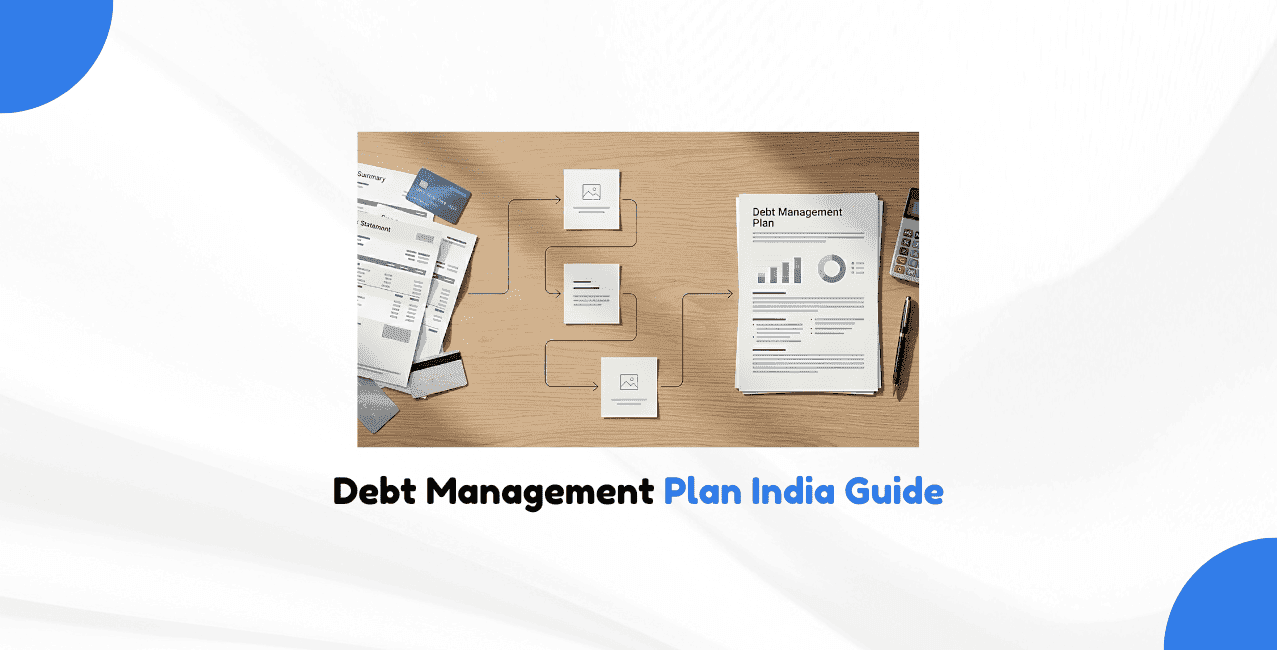
A debt management plan is a strategic initiative that allows you to pay off all your debts systematically while avoiding the risk of default. With the help of a DMP, you can make your repayments in accordance with your EMI schedule, income, and future financial goals to minimise financial stress. The idea is to prevent defaults and pay off all your debts on time to achieve financial freedom. In India, borrowers usually turn to debt consolidation to repay multiple loans with one single EMI. If you are a borrower looking for the best debt consolidation loans in India, you can rely on LoansJagat, a debt consolidation marketplace that connects you with top NBFCs and banks regulated by the RBI.
Key Takeaways:
A Debt Management Plan (DMP) is a strategic repayment programme for clearing debts in accordance with your monthly income. Unlike debt settlement, this process will not reduce your overall debt amount but help you come up with a feasible repayment plan to ensure that you never miss out on paying your Equated Monthly Installments (EMIs).
The following are some of the core features of a debt management plan:
This entails listing out all your debts, loans, credit cards, their interest rates, and outstanding amounts. You may also need to come up with a budget that suits your repayment capabilities in order to stay within your financial means.
The best debt management plan should help you pay off debts with high-interest rates first while leaving those with lower rates for later. In addition, it should help you negotiate with lenders to ensure that you have a reduced payment scheme that is more suitable for your repayment programme.
At this stage, you will be expected to start paying off your debts while keeping track of your progress. A good DMP should help you meet your financial goals without putting yourself in any financial distress.
A debt management plan is only as good as the borrower’s ability to stick to it and avoid additional debt. By being smart about their spending, repaying what they owe on time, and carefully reviewing their plan, Indian borrowers can free themselves of debt obligations and maintain a good credit history.
A debt management plan is suitable for a borrower who cannot manage multiple debts’ payments but can repay them and wants to establish better control over their financial situation without additional expenses.
A debt management plan (DMP) is appropriate for those who:
On the other hand, a DMP is not a good choice for people with no steady income, those who have already defaulted on their payments for several periods, and those who are unable to pay off their debts in full. In such cases, debt settlement and/or consolidation may be a better choice. A borrower should evaluate their own needs and capabilities to choose the best option.
A debt management plan is a systematic approach to repaying debts.
By following a few simple steps, debtors can ensure that they are making the most of their resources and not missing out on any instalments.
Here are the key steps to follow when developing a debt management plan.
Debt management plans can help significantly in minimising debts. As can be seen from the points mentioned above, following a debt management plan makes it possible for individuals in India to repay their debts strategically. This not only helps in reducing the overall amount of money owed but also prevents damage to the credit score.
The Reserve Bank of India manages the central government's and most of the state governments' finances. The RBI plans government borrowings, auctions bonds, and collects proceeds from these operations.
Debt management by the Reserve Bank of India enables the government to raise funds at a lower cost and with less risk. The RBI's role in financing and managing the government's debt is crucial to its operations and, by extension, the Indian economy.
Managing multiple loans can be daunting. At LoansJagat, we streamline the process of consolidating your debts by assisting you in selecting the best deals, with expert help at every step of the way.
With LoansJagat, you can look forward to a seamless experience of comparing and selecting the best offers for your debt consolidation needs without the hassles of directly approaching multiple lenders.
A debt management plan cannot be implemented in the short term; it requires sustainable efforts in the form of budgeting, repayment, and preventing additional borrowing to get rid of debt and improve your financial status. It is essential to choose the most suitable and beneficial option according to your income, debts, and repayment capacity. Moreover, if multiple EMI payments start to become stressful, you can always consolidate your debt with the help of reputed third-party platforms that have tie-ups with the RBI-regulated banks and NBFCs.
Debt management is the process of organising and repaying your debts through budgeting, timely payments, and a structured repayment plan.
Yes. It helps borrowers manage multiple loans, avoid missed EMIs, and improve financial discipline.
Its purpose is to reduce financial stress, repay debts efficiently, and maintain a healthy credit profile.
Yes, if you have a steady income and can repay your debts consistently.
The types include a debt management plan, debt consolidation, refinancing of loans, and debt settlement.
It requires financial responsibility and income and may not be suitable for those with serious financial issues.
Contact your lender and explain your situation. You can ask them to settle the sum owed to you all at once and provide them with proof.
It is a proposal to close a loan by paying a negotiated amount that is lower than the total outstanding balance.
Loan settlement can reduce your creditworthiness and make future borrowing more difficult.
Yes. A settled loan is reported differently from a fully repaid loan and can negatively impact your CIBIL score.