By continuing, you agree to LoansJagat's Credit Report Terms of Use, Terms and Conditions, Privacy Policy, and authorize contact via Call, SMS, Email, or WhatsApp
Disclaimer: The information published on LoansJagat is intended for general informational and educational purposes only and should not be considered financial, legal, or investment advice. Interest rates, loan terms, statistics, and other data may change over time and may vary by lender or source. Please verify the latest information and consult a qualified financial advisor or the respective Bank/NBFC before making any financial decisions.
Subscribe Now
About the author

Vidhi Chauhan
Vidhi Chauhan is a copywriter and content writer with extensive experience creating high-quality, SEO-driven content across multiple industries, with a strong focus on fintech. She has written extensively on GST, banking, personal loans, business loans, credit cards, income tax, insurance, and other financial topics, helping Indian readers understand complex concepts through clear, accurate, and engaging content.
Related Blog Post
Simplify All Your Loans Into One Affordable EMI

Customers Served

Debt Consolidated

1200+ Reviews

Locations in India
Club all Loans & Credit Card Bills into Single EMI

Quick Apply Loan
Consolidate your debts into one easy EMI.

Takes less than 2 minutes. No paperwork.

10 Lakhs+
Trusted Customers

2000 Cr+
Loans Disbursed

4.7/5
Google Reviews

50+
Banks & NBFCs Offers
Use of a credit card can either positively or negatively affect your CIBIL score, depending on how diligently you manage it. The transactions, bill repayments, balances, and credit card applications all add up to your credit history and play a role in determining how you are evaluated by the creditors.
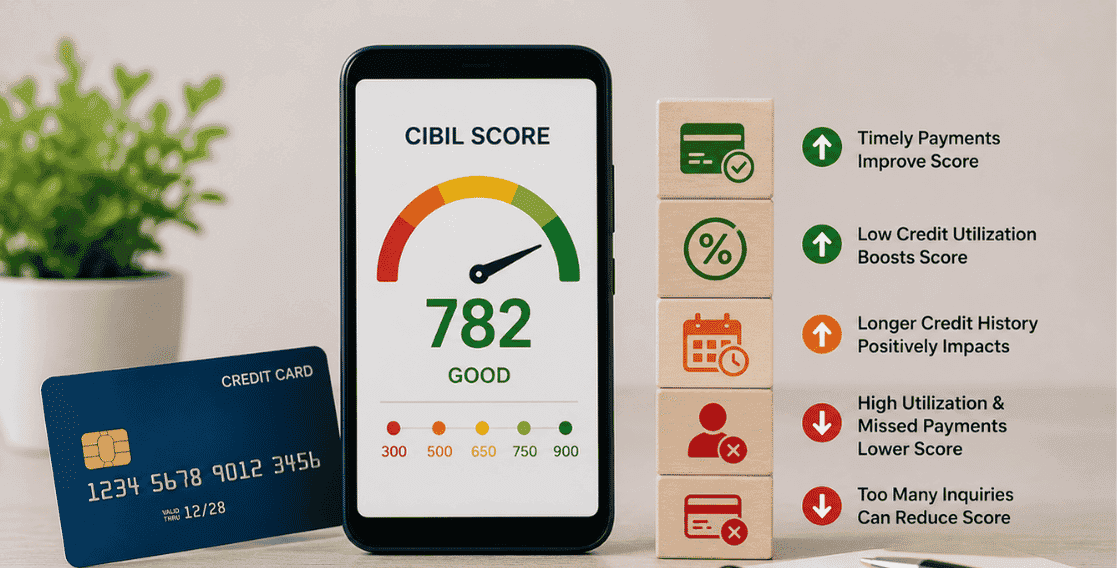
Good behaviours such as timely bill payments, low utilisation of credit, and older accounts will improve your credit profile, whereas late payments, overspending, and frequent credit applications can lower your score and make you ineligible for loans. So, if you know how the use of credit cards impacts your CIBIL score, it helps you increase your financial credibility and get favourable interest rates and loan eligibility for personal, housing, and automobile loans. The factors that affect your CIBIL score and tips to manage them will be discussed in the subsequent sections of this paper.
Knowledge about the relationship between credit cards and credit history
Your credit card usage plays an important role in determining your CIBIL score because it reflects how responsibly you manage credit. Factors such as your payment history, credit utilisation ratio, outstanding balances, and overall account behaviour contribute to your credit profile, which lenders review before approving loans or credit cards.
One of the main factors is payment behaviour, where timely payments will be considered an indicator of responsibility, whereas delayed payments will be counted against you.
Length of your credit history is also a factor that determines your score. When we maintain old credit cards, it shows lenders that you have good habits of paying back money for long periods of time.
Credit utilisation ratio is another key factor, which is defined as the proportion of your total credit limit that you are utilising. It is advisable not to cross 30%.
Elements that affect the score directly
Several elements decide the impact of the credit card use on the CIBIL score:
Fewer applications for credit cards
Application of several credit cards at one time might make the creditor feel that you rely too much on your credit, which will be reflected in your score.
Advantages of credit card usage responsibly
Responsible use of your credit cards can help you develop a good credit history and increase your financial credibility. A good repayment history also makes you eligible to get personal loans, home loans, etc.
With discipline in expenditure, credit cards can become a good way to boost your financial status.
1. Missing or late payments
The failure to pay credit card bills on time is one of the most typical reasons why people's CIBIL scores go down. Your credit score is partly influenced by your payment record. Even a small mistake of paying the bill late can harm your credit score.
Charges levied for late payments make you incur additional costs while indicating irregular behaviour when it comes to paying off debts. In case of prolonged delay in making payments, the lenders may report this activity to credit bureaus and thereby affect your credit report and chances of getting future loans.
2. High credit utilisation ratio
If you have a high credit utilisation ratio, this means you use up most of your credit limit. Finance experts recommend that people maintain their credit utilisation ratio below 30 per cent of their credit limit.
Overusing the available credit limit may be an indication of financial problems for you, thereby making you riskier for the lenders. Consequently, your CIBIL score goes down.
3. Multiple card applications in a short span
Application of multiple cards at one time results in several hard enquiries made against your credit history. Such enquiries will have a negative impact on your CIBIL score by portraying an image of being over-reliant on credit facilities.
4. Closing of an older credit card account
Closing an old credit card account is going to lower the average age of your credit history. It is also likely to lower your total available credit limit, thus increasing the credit utilisation rate.
There are various ways through which using a credit card can help improve your CIBIL score. Since credit card usage is well-monitored by credit bureaus, having good financial habits is key.
1. Pay your dues before the due date
The best way of improving your CIBIL score through credit card usage is ensuring that you make payments for your credit card before the due date. Just one delay in making payments will have a negative effect on your credit score.
You can ensure that there is no delay in your payment process by scheduling automatic payments from your bank account or by reminding yourself to pay before the due date.
2. Maintain a good credit utilisation rate
The amount of credit that you use is the credit utilisation rate. Financial advisers often recommend that the credit utilisation rate should always be less than 30 per cent of your total credit limit.
If your total credit limit is ₹1,00,000, you should strive to use less than ₹30,000. This shows responsible use of credit and not borrowing too much.
3. Make smart use of credit cards
A balanced credit portfolio, along with controlled use of credit cards, will have a positive impact on your CIBIL score. It is better not to get many credit cards in one go, as many applications suggest that you may be in need of money.
*T&C Apply
A good CIBIL score is very crucial in establishing the credibility of the borrower. This score helps in evaluating the borrowing pattern and management skills of an individual. Not only will the individual be able to acquire a loan, but he will also get better terms and conditions.
1. Easy to Acquire Various Loans
The individuals having good CIBIL scores have an easy time obtaining various kinds of loans from financial institutions.
2. Improved Interest Rates and Loan Tenure
Having a high credit score makes it easier for potential borrowers to secure better loan conditions. Financial establishments will be ready to provide competitive interest rates to such customers with good credit histories.
Variable loan tenure and conditions
A credit card can be a powerful financial tool when used responsibly. Timely repayments, low credit utilisation, limited credit applications, and maintaining older accounts can significantly improve your CIBIL score. In turn, a strong credit profile can help you secure loans more easily, enjoy better interest rates, and strengthen your overall financial standing in the long run.
A CIBIL score is generally refreshed by the credit card issuers, who submit updated transaction details to credit bureaus monthly. However, different banks have different refresh rates for their customers, and thus recent transactions might not be reflected in the credit report.
No, there is no chance of my CIBIL score being affected negatively since viewing your credit score falls under soft inquiries. I can view my credit report anytime to detect mistakes or monitor my credit history.
Certainly, errors such as wrong payment records, duplicate entries, or wrong outstanding balances will influence my CIBIL score adversely.
An increase in the credit limit is sure to boost the credit score profile as long as the spending stays the same. This means that the credit utilisation ratio becomes lower; however, it all depends on disciplined spending and timely repayments.
The minimum required payments will help not become the defaulter; however, there will be additional interest charges on the total amount.
In many situations, it is the primary cardholder who is responsible for all the transactions carried out with the use of supplementary cards.
Surely, the use of the secured credit card backed up with a fixed deposit is a good way of establishing a new credit history or improving it.
Negative information like delays in payment, defaulting, or settlement of loans stays on your report for a few years. Lenders always consider this data while evaluating the suitability of customers for getting loans and credit facilities.
It does not matter what kind of expenditure is incurred using the credit card because credit bureaus always emphasise repayment behaviour and credit utilisation. Irrespective of whether it is travel, shopping or utility expenses, it is your responsibility that matters the most.
It is better if you feel the need to close the recently acquired credit card, especially when you find yourself unable to handle more than one credit line or if you want to avoid overspending. But think twice about its effect on your overall credit limit and credit history.