By continuing, you agree to LoansJagat's Credit Report Terms of Use, Terms and Conditions, Privacy Policy, and authorize contact via Call, SMS, Email, or WhatsApp
Disclaimer: The information published on LoansJagat is intended for general informational and educational purposes only and should not be considered financial, legal, or investment advice. Interest rates, loan terms, statistics, and other data may change over time and may vary by lender or source. Please verify the latest information and consult a qualified financial advisor or the respective Bank/NBFC before making any financial decisions.
Apply for Loans Fast and Hassle-Free
Subscribe Now
About the author

LoansJagat Team
‘Simplify Finance for Everyone.’ This is the common goal of our team, as we try to explain any topic with relatable examples. From personal to business finance, managing EMIs to becoming debt-free, we do extensive research on each and every parameter, so you don’t have to. Scroll up and have a look at what 15+ years of experience in the BFSI sector looks like.
Related Blog Post
Simplify All Your Loans Into One Affordable EMI

Customers Served

Debt Consolidated

1200+ Reviews

Locations in India
Club all Loans & Credit Card Bills into Single EMI

Quick Apply Loan
Consolidate your debts into one easy EMI.

Takes less than 2 minutes. No paperwork.

10 Lakhs+
Trusted Customers

2000 Cr+
Loans Disbursed

4.7/5
Google Reviews

50+
Banks & NBFCs Offers
Other services mentioned in this article
Key Insights
1. Passive index investing in India follows market indices like the Nifty 50 and aims to provide steady, low-cost returns that help build wealth over the long term.
2. Investors can benefit from passive strategies because they usually have lower fees, offer tax advantages, and deliver reliable returns that match the market.
3. Key passive strategies like SIP, diversification, buy-and-hold, and annual rebalancing help investors grow their wealth steadily over time.
What if the smartest investment strategy required almost zero effort and still outperformed most experts?
That's the quiet power behind passive investing. More than half of all U.S. investments now flow into passive index funds, fundamentally changing how the world thinks about wealth building.
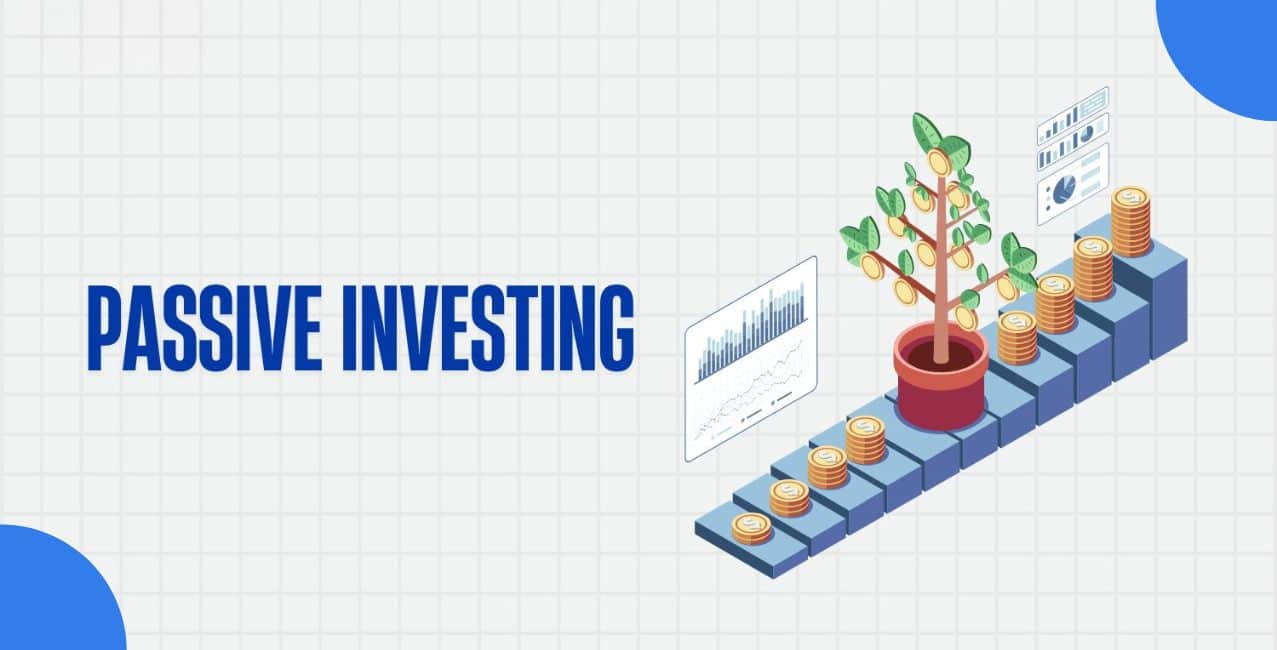
Passive index investing is a long-term approach where people follow market indices like the Nifty 50 or S&P 500 instead of picking individual stocks. This method usually costs less, reduces risk, and matches market returns, which is why millions of investors around the world prefer it.
The passive investment meaning is more than just buying index funds. It is a disciplined, low-cost passive investment strategy that aims to match market returns over time. If you Knowwho manages the fund in passive investing can help you make smarter decisions for long-term wealth
A passive investment strategy is like using a GPS. Instead of guessing which way to go, it follows a set path based on the market. Unlike active funds, passive investing means tracking indices like the Nifty 50 without making frequent trades. In passive investing, fund managers copy the index’s composition instead of picking individual stocks.
Example
I started a passive investment strategy by putting ₹10,000 each month into a Nifty 50 index fund, and I Learn what passive investing means helped me grow my wealth without having to think about who manages the fund in passive investing.
Passive investments meaning can help build wealth over the long term. However, knowing its limits helps investors make better and more balanced choices for their portfolios.
Here is the table benefits and drawbacks of the passive investing:
For example, Rohan invested ₹5,000 each month in a Nifty 50 index fund for 10 years. He earned 12% annual returns, paid very low fees, and did not have to worry about picking stocks.
Passive vs index investing is a good choice for disciplined, long-term investors who want steady, low-cost market returns. This approach is now the fastest-growing way to build wealth in India.
Bonus Tip: Indices such as the Total Market Index, which includes nearly 750 stocks, offer a broader look at the Indian stock market. By investing in a fund that follows the Nifty Total Market Index, you can reach a wide variety of stocks with just one investment.
A good passive investments meaning plan helps you avoid emotional decisions, keep costs low, and steadily grow your wealth by staying invested in the market.
*T&C Apply
1. Buy & Hold: Buy index funds and keep them, no matter what the market does. Staying invested for the long term often works better than trying to guess when to buy or sell.
2. Systematic Investment Plan (SIP): Invest a set amount each month with an SIP. This helps you build wealth over time and benefit from rupee cost averaging.
3. Portfolio Diversification: Spread your investments across Nifty 50, Sensex, and international index funds. This way, you lower your risk by not putting all your money in one place.
4. Annual Rebalancing: Review your portfolio once a year and make changes if needed to keep your chosen mix of investments, but avoid trading too much.
For example, Priya started investing ₹3,000 each month in a Nifty 50 index fund when she was 25. By sticking with this passive approach, she grew her savings to over ₹1 crore by the time she retired.
If you follow a steady passive investing plan, even small monthly investments can grow into significant wealth over time.
Passive index investing remains one of the most effective ways to grow wealth over time in India. If you invest regularly through SIPs, diversify across different assets, and rebalance your portfolio once a year, you can keep costs low and match the market’s returns. In the long run, patience, consistency, and a simple approach often outperform expensive and complex active strategies.
What are your arguments against passive investing?
Critics of passive investing often point out that it cannot beat the market, offers little flexibility during downturns, and leaves investors exposed to all of the market’s ups and downs. Because passive strategies are built to follow market indexes, they miss out on chances to profit from market inefficiencies.
Do index funds still remain the best low-risk, long-term investment in 2025 and beyond?
Index funds are still one of the best low-cost investment choices for 2025 and the years ahead. They offer steady returns that match the market, have low fees, and provide built-in diversification. Many people see them as a smart way to build wealth over time, especially for periods longer than seven years, because they help lower the risks that come with picking individual stocks.
Where can I learn more about passive/index investing?
Passive or index investing is a simple, low-cost way to invest for the long term. Instead of trying to beat the market, you aim to match its performance by following indices like the Nifty 50 or S&P 500.
When adopting a passive index investment strategy, what are some buy & sell signals to capitalise on big equity movements? Any literature reference?
Passive index investing is about building wealth over the long term by keeping costs low and holding investments rather than trading frequently. Rather than trying to time the market, investors use steady strategies like Dollar-Cost Averaging, which means buying regularly to help smooth out price swings. They also rebalance their portfolios to maintain their target investment mix and use low-cost ETFs to track market indexes.
Do passive funds guarantee returns?
Passive funds aim to match the returns of the market, but just because an index performed well in the past does not mean it will do so in the future.