Credit CardLast updated: 30 September 2026, 14:20 IST
Check Your Loan Eligibility Now
+91
By continuing, you agree to LoansJagat's Credit Report Terms of Use, Terms and Conditions, Privacy Policy, and authorize contact via Call, SMS, Email, or WhatsApp
Disclaimer: The information published on LoansJagat is intended for general informational and educational purposes only and should not be considered financial, legal, or investment advice. Interest rates, loan terms, statistics, and other data may change over time and may vary by lender or source. Please verify the latest information and consult a qualified financial advisor or the respective Bank/NBFC before making any financial decisions.
Darshana Patel is a finance and tech writer with a strong background in journalism, financial economics, and political science, working with Loans Jagat. She has immense experience writing content through her previous work in fintech and edtech companies. Her contribution at Loans Jagat is to simplify finance-backed content and academically powered content for the readers.
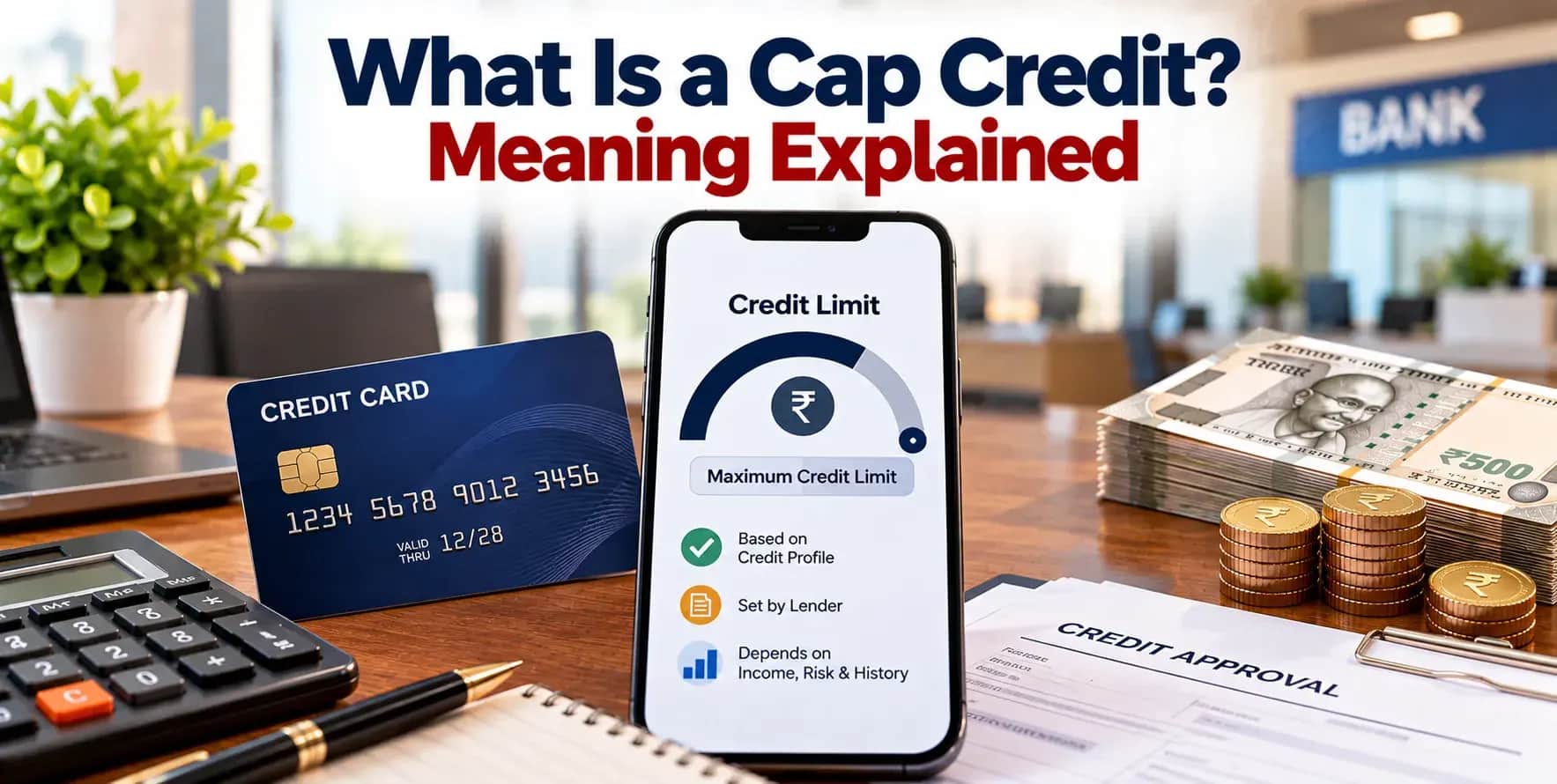
A credit cap is the limit set by the lender for the borrower to prevent defaults and manage risks. The lender might consider multiple factors before considering the credit cap for the borrower. Credit caps are mainly applied to loans or credit cards. Moreover, this helps borrowers in financial management. In this blog, we will learn about the credit cap in more detail.
Key takeaways:
'Credit cap' is the maximum limit set by the lender for loans or credit cards.
The credit cap is not generally fixed; it depends on the lender’s assessments.
The lender may consider your credit history, credit score, income, employment, etc.
What is a cap credit?
A cap credit means the highest amount a lender is willing to give or allow a borrower to use. It can be set for things like a personal loan, credit card, or overdraft. The lender looks at the borrower’s financial details before setting this amount.
Why do lenders cap your credit at all?
A credit cap is not meant to restrict a borrower without reason. The lender sets it after looking at the possible risk of giving a higher amount. A few key factors are usually considered when deciding this limit:
Income: A regular and stable income may be considered for a higher credit limit, as it shows that the borrower has a source of money for repayments.
Repayment history: Paying EMIs and other dues on time can help build trust with the lender over time.
Credit history: A good credit score can benefit the borrower when the lender reviews the application.
Existing debt: If the borrower has multiple dues, the lender might put a lower credit limit for them
This is why two people with the same salary may receive different credit limits. Their existing debts, credit records, and repayment patterns may not be the same. The final limit is decided after the lender reviews these factors.
What factors determine your credit?
A lender looks at several things before deciding how much credit to offer. The main factors that can affect the limit are:
Credit score Your credit score shows how you have handled credit in the past. A good score may help you get a higher limit.
Income Your regular income is another important factor. A stable income can show that you can manage repayments.
Credit history The lender may look at your previous loans and repayment record. Regular payments and responsible use of credit can support a higher limit.
Existing debts Your current loans and other outstanding dues are also considered. A high debt burden may result in a lower limit.
Hence, these are the factors lenders generally assess before deciding how much credit to offer.
Credit card cap vs. loan cap: what is the difference?
There is a broader difference between the credit cap and the loan cap. Both serve different functions for the borrowers.
Here are the differences between cap credit and loan cap:
Difference
cap credit
Loan cap
How does it work?
You can use the available amount, repay it, and use the credit again when needed.
Overall financial profile:Lenders look at different details together rather than relying only on income.
Employment status Your job and income stability can also play a part in the lender's decision. A steady source of income may support a higher limit.
Requested limit You can request a particular amount when applying for credit. The lender will review your financial details before deciding the final limit.
Relationship with the lender A good and long-standing relationship with a lender may also be considered when deciding the available limit.
No Hidden Charges
100% Digital Process
*T&C Apply
— Need money urgently?
Poonawalla Fincorp Personal Loan
Money in your account within 15 minutes
*T&C apply
Get up to
₹15 Lakhs
For salaried & self-employed
Serving 10,000+ Locations
No Hidden Charges
100% Digital Process
Apply Now→
The lender approves a fixed amount for a particular loan.
Purpose
It can be useful for regular or short-term expenses.
It is generally taken for a specific financial need and repaid over an agreed period.
Interest
Interest can be higher if the amount used is not repaid on time.
The interest rate and repayment schedule are usually fixed as per the loan terms.
Availability
The available amount changes as you use and repay the credit.
Once the approved amount is used, you may generally need to make a fresh application to borrow again, depending on the type of loan or credit facility.
Hence, these are the differences between the cap credit and the loan cap.
What if you need more than what the cap limit has allowed from the lender?
There may be situations where a borrower needs more funds than the lender’s cap limit allows. In such cases, there are a few options that may help the borrower manage the additional financial requirement.
Here are the methods one can approach:
Add a Co-Applicant: You can apply with a family member whose income can be added to yours when the lender checks your eligibility.
Give Additional Security: If possible, you can offer another asset, such as property or an investment, when applying for a higher amount.
Pay Some Existing Loans: Clearing part of your current debt can reduce your overall debt burden and may help with getting a higher limit.
Talk to the Lender: If you have a good repayment record, you can ask the lender to review your application again.
Look at Other Funding Options: If the approved amount does not cover your need, you can consider another personal loan or line of credit for the remaining amount.
Hence, these are the ways that may help borrowers when such a situation occurs.
Bottom line:
The credit cap determines the borrower’s maximum limit from the lender. The lender may set this limit based on various factors, like income, daily spending, etc. However, this credit limit is adjustable, but you need to consider and follow the provided process as per the lender’s policies.
FAQs:
What is the meaning of cap credit?
The cap credit refers to the action of a lender limiting the maximum loan or credit amount to the borrower after considering financial details and risk assessment.
Are loan cap and cap credit different?
A loan cap is the maximum loan amount offered to the borrower. Whereas a credit cap is the maximum limit a borrower can use on a credit card.
Does the lender assess your credit profile before setting your ‘credit card’ limit?
The lender generally assesses several factors, including credit history, score, income, etc., before setting your credit card limit.
Can one increase the credit limit?
One can increase the credit limit, but this depends on the lender's assessment and approval policies.
Does every lender provide different credit limits to people?
It depends on the lender’s assessment process and what factors they may consider for the assessment to consider your credit limit. So, it would be difficult to analyse the standard margin to justify the credit limit provided by all lenders.
What are the possible ways to increase my credit limit?
There are multiple ways, like asking banks to increase the limit, submitting income update proof, etc. The final approval depends on the lender’s assessment.
Is it necessary for the lender to set the credit limit?
The lender sets the credit limit for multiple reasons, like preventing defaults and risk management, etc.
What happens if a borrower is unable to pay the EMI even after the lender sets a credit limit?
If such a case happens, then the lender might apply some charges as per their policies, and the credit report may get affected.
What is the major similarity between the loan's limit and the credit limit?
Both set a maximum amount that a lender may allow a borrower to use or receive. The limit is generally decided after looking at the borrower’s financial details.
Can I get a credit card without a limit?
Credit cards generally come with a set spending limit, which is decided by the card issuer based on the customer’s financial profile and other factors.