By continuing, you agree to LoansJagat's Credit Report Terms of Use, Terms and Conditions, Privacy Policy, and authorize contact via Call, SMS, Email, or WhatsApp
Disclaimer: The information published on LoansJagat is intended for general informational and educational purposes only and should not be considered financial, legal, or investment advice. Interest rates, loan terms, statistics, and other data may change over time and may vary by lender or source. Please verify the latest information and consult a qualified financial advisor or the respective Bank/NBFC before making any financial decisions.
Subscribe Now
About the author

Anishka Bhadly
Anishka Bhadly is a content writer with a finance and business background. She has completed her bachelor's degree with a specialisation in finance and is currently pursuing an MBA in the finance field too. The knowledge she has gained from her studies and experience working with EdTech companies helped her combine theoretical knowledge with practical industry insight. Her expertise lies in creating well-researched, informative, and reader-friendly content in various banking, personal finance, loans, insurance, and investment-related topics.
Related Blog Post
Simplify All Your Loans Into One Affordable EMI

Customers Served

Debt Consolidated

1200+ Reviews

Locations in India
Club all Loans & Credit Card Bills into Single EMI

Quick Apply Loan
Consolidate your debts into one easy EMI.

Takes less than 2 minutes. No paperwork.

10 Lakhs+
Trusted Customers

2000 Cr+
Loans Disbursed

4.7/5
Google Reviews

50+
Banks & NBFCs Offers
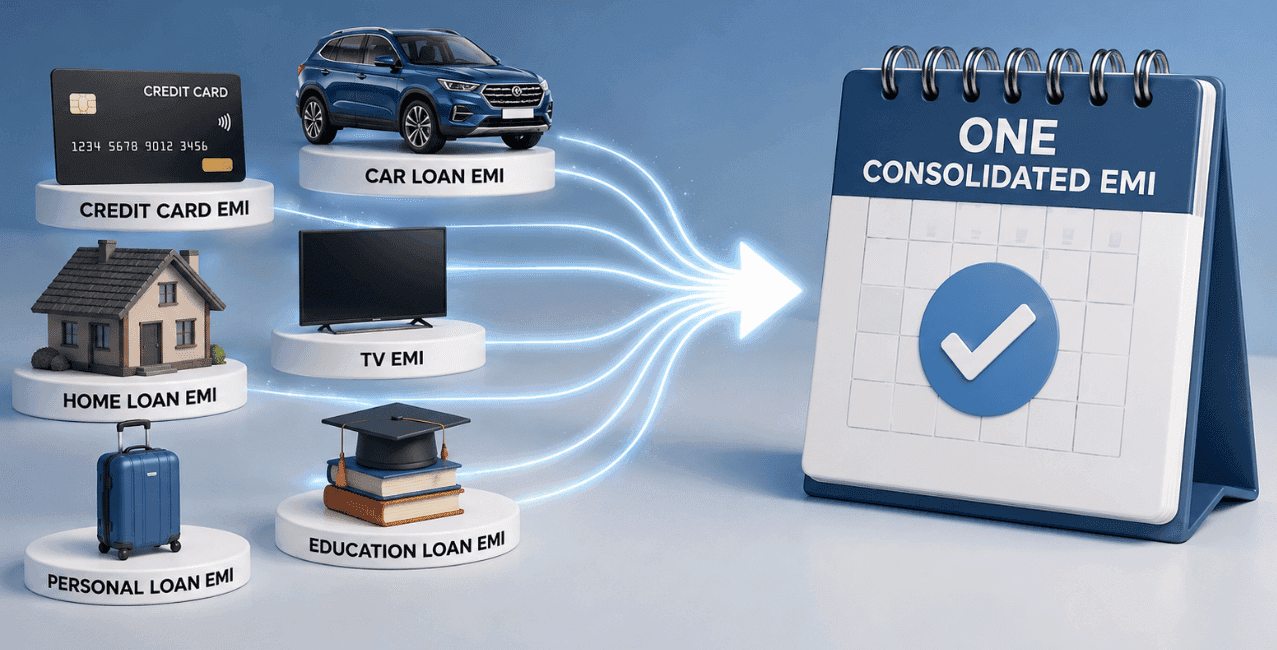
You can consolidate multiple EMIs into a single EMI by taking a suitable debt consolidation or personal loan to pay off your existing debts. This means that instead of paying several EMIs to various lenders at possibly different rates of interest, you would only have to pay a single EMI to a new lender that provides you with a debt consolidation loan. One alternative is a direct balance transfer from one lender to another. With LoansJagat’s help, you can compare loans and understand the expenses involved to make the best choice when it comes to debt consolidation loans. Before consolidating your debts, compare the interest rate, processing fees, foreclosure charges, and tenure of the new loan to avoid paying more in overall repayments than you already are. The Reserve Bank of India (RBI) has issued some norms for prepayment charges for floating rate loans to individuals.
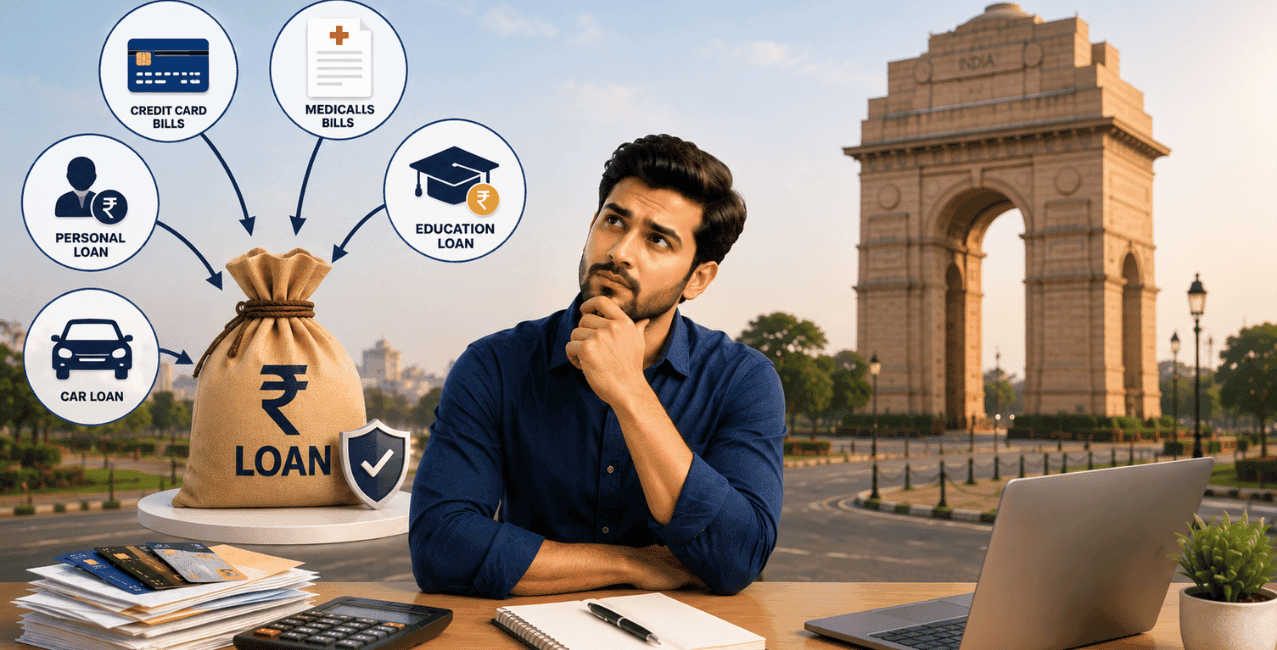
Converting all EMIs into one EMI refers to paying multiple EMIs as one single payment. Suppose an individual has a personal loan, a car loan and credit card dues; he may consider consolidating his debts by taking a consolidation loan. By doing so, he will only have to make one EMI payment to the lender instead of making separate payments to different lenders. This may ease the repayment process and lighten the monthly financial burden, depending on the tenure and rate of interest of the consolidated loan.
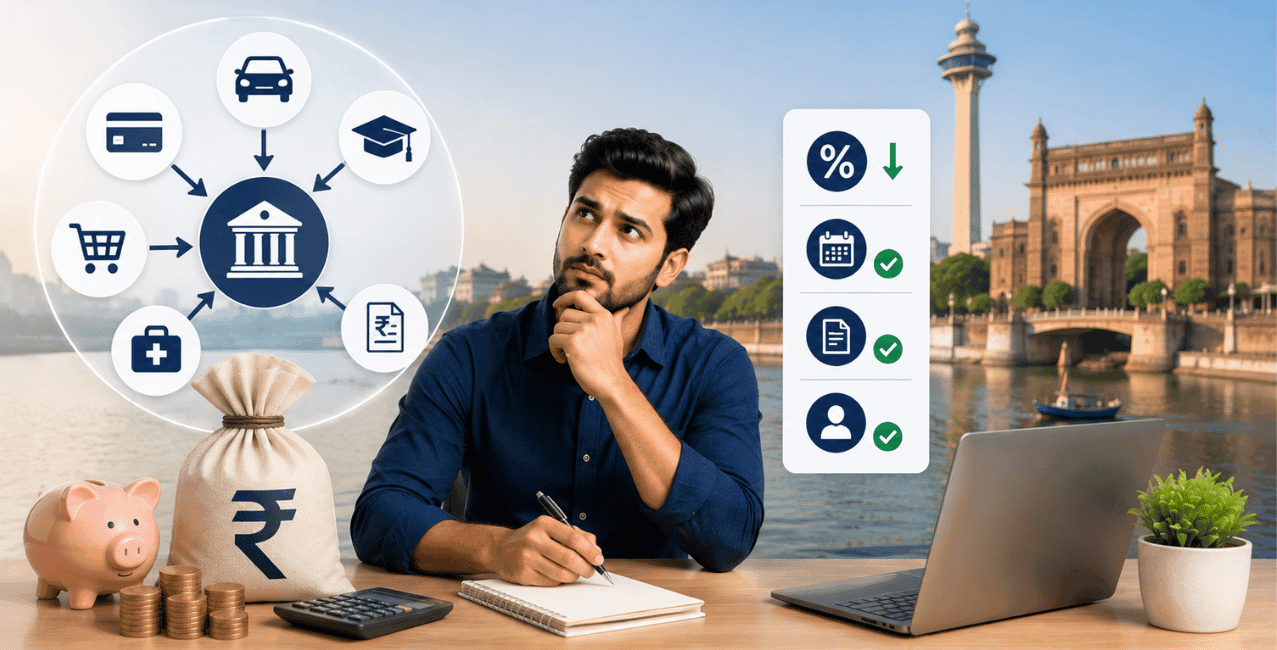
Debt consolidation involves combining multiple outstanding debts into a single loan or repayment scheme. In other words, you would be paying off one loan instead of several creditors. You can consolidate your debts if you have to pay interest on multiple loans or if you have to pay different creditors on different dates. The main objective of consolidating debt is to make repayments easy, and in some cases, to also reduce the overall quantum of interest or make monthly repayments easier.
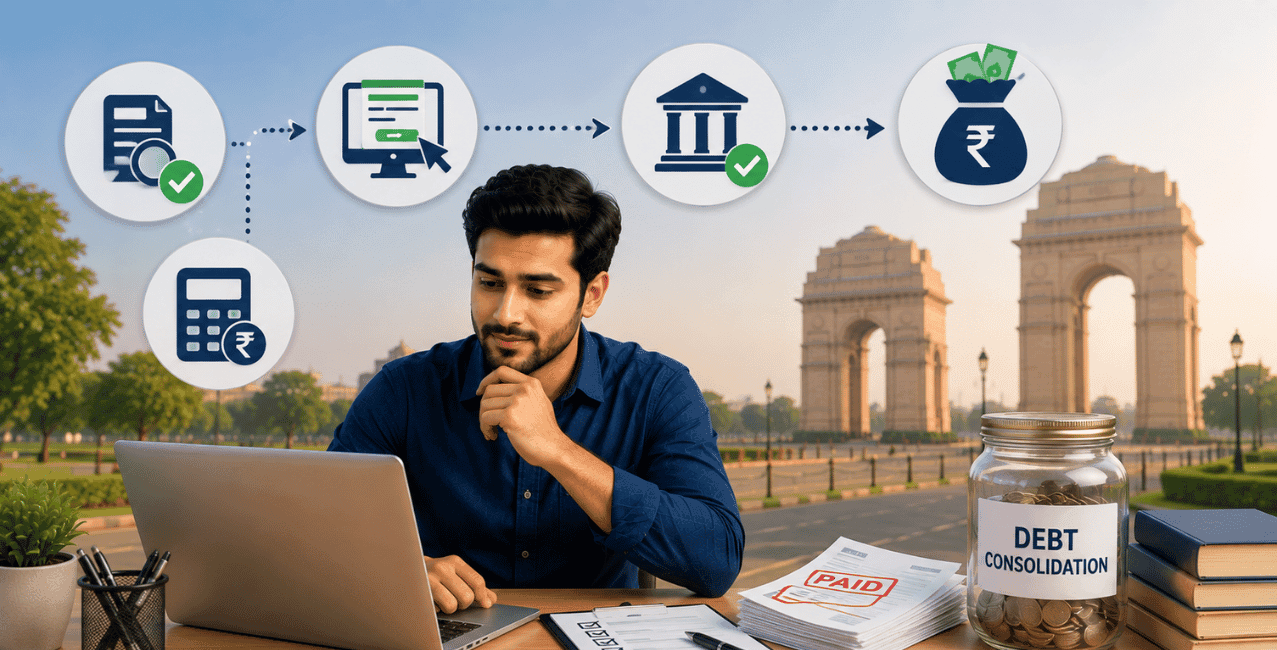
Here are the steps included in debt consolidation:
Debt consolidation can help you pay back your loans and credit card dues easily. However, it is important to compare interest rates, processing fees, and tenure before consolidating your debts.
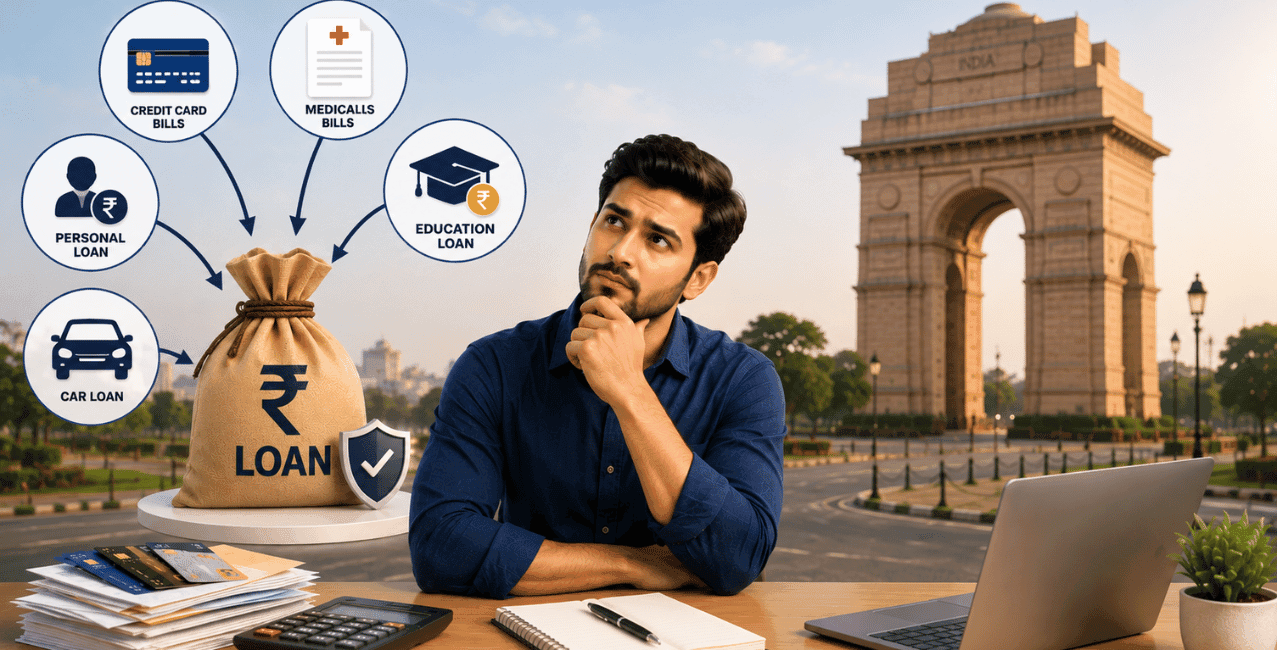
Debt consolidation may be a good option if you have several loans and credit card bills due, particularly if the existing loans or credit cards have high rates of interest or varying due dates for repayments.
Debt consolidation could be a good option to simplify your financial management and save on the amount of interest that you pay, but remember to compare and contrast the rates, charges, tenure, and repayment amount of the consolidated loans before deciding to consolidate your debts.
Interest rates have a direct impact on not only your EMI but also the overall payment you make during the life of the loan. Say, for instance, you are considering consolidating your outstanding credit card dues of, say, ₹300,000 at 16% as compared to keeping them as credit card outstanding at 38%. In such a case, you might save on interest if you consolidate, but that would depend on tenure, fees, and other terms of repayment. A lower rate may mean manageable EMIs, but if the tenure is too long, it may end up costing you more in overall interest paid. Consider both factors, i.e., EMI and overall repayment, before opting for loan consolidation.
Converting multiple EMIs into a single EMI may make it easier to repay your loan, but the benefits will depend on the interest rate, charges, and tenure of the new loan.
Consolidation can be a good option in certain situations, but it may not always be cheaper. Compare the interest rates, charges, tenure and total repayment amount before you consolidate your loans.
LoansJagat can assist many Indian borrowers in evaluating and understanding various loan options for personal loans and credit cards so that they can make a better choice based on interest rates, amounts and eligibility, apart from the monthly instalment or the EMI, helping a borrower understand if they want to consolidate their loans. However, it is important for the borrower to compare the processing charges and the overall payout before opting for a debt consolidation facility, as it may not always be the best option for repayment.
While converting multiple EMIs to a single one can ease repayment obligations, it is necessary to understand that a lower monthly outflow does not always equate to a cheaper loan. The choice between multiple EMIs and a consolidated one depends on various factors like outstanding amount, rate of interest, time left to repay, and whether you can consolidate. You must compare the overall cost of both repayment methods. If consolidating can help you reduce the rate of interest and enable faster payoff without stretching your debt profile unwisely, it makes sense to consider the switch.
Yes, you can consolidate multiple loans or credit card bills into a single payment called an EMI (Equated Monthly Instalment); however, this depends on the eligibility criteria set by the lender.
A single EMI may have a lower interest rate; however, the total amount paid for a single EMI is dependent upon the interest rates and other applicable charges and the tenure of repayment. It is not always cheaper to pay a single EMI.
A single EMI may have a lower interest rate and thus can reduce the monthly outflow; however, this depends on the terms and conditions provided by the lender. The repayment tenure also impacts the EMI amount and the total interest paid.
Yes, there are certain eligibility criteria for a personal loan; a borrower can consolidate their credit card dues into a personal loan.
Applying for a personal loan or any other form of consolidation can impact your credit score initially; however, it can improve your credit score if you are able to make repayments on time.
Lenders ask for documents that confirm your identity, address, income, and existing loans, among other things, and requirements may differ.
It depends on the consolidation product that you apply for and the lender’s terms and conditions; the new loan consolidates eligible debts, including loans from multiple lenders.
No, it doesn’t. It replaces multiple debts with a new one, which means you now have to pay back the consolidated loan.
The interest rate, processing fees, foreclosure charges, tenure, EMI, and total repayment amount should be compared and evaluated.
It depends on a particular situation, but debt consolidation may not be a good option if the cost is too high or you are tempted to take out new loans.