Debt Consolidation: Meaning, Benefits, Process & Ways to Reduce Financial Stress
By continuing, you agree to LoansJagat's Credit Report Terms of Use, Terms and Conditions, Privacy Policy, and authorize contact via Call, SMS, Email, or WhatsApp
Disclaimer: The information published on LoansJagat is intended for general informational and educational purposes only and should not be considered financial, legal, or investment advice. Interest rates, loan terms, statistics, and other data may change over time and may vary by lender or source. Please verify the latest information and consult a qualified financial advisor or the respective Bank/NBFC before making any financial decisions.
Subscribe Now
About the author

Anishka Bhadly is a content writer with a finance and business background. She has completed her bachelor's degree with a specialisation in finance and is currently pursuing an MBA in the finance field too. The knowledge she has gained from her studies and experience working with EdTech companies helped her combine theoretical knowledge with practical industry insight. Her expertise lies in creating well-researched, informative, and reader-friendly content in various banking, personal finance, loans, insurance, and investment-related topics.
Related Blog Post
Simplify All Your Loans Into One Affordable EMI

Customers Served

Debt Consolidated

1200+ Reviews

Locations in India
Club all Loans & Credit Card Bills into Single EMI

Quick Apply Loan
Consolidate your debts into one easy EMI.

Takes less than 2 minutes. No paperwork.

10 Lakhs+
Trusted Customers

2000 Cr+
Loans Disbursed

4.7/5
Google Reviews

50+
Banks & NBFCs Offers
Managing many debts is hard. You have to track different payment dates, interest rates, and amounts. This can create confusion and stress. This guide will break down everything you need to know about combining your loans and how doing so can make your life easier.
Never risk your home or gold blindly, and avoid running up fresh credit card debt after consolidating.
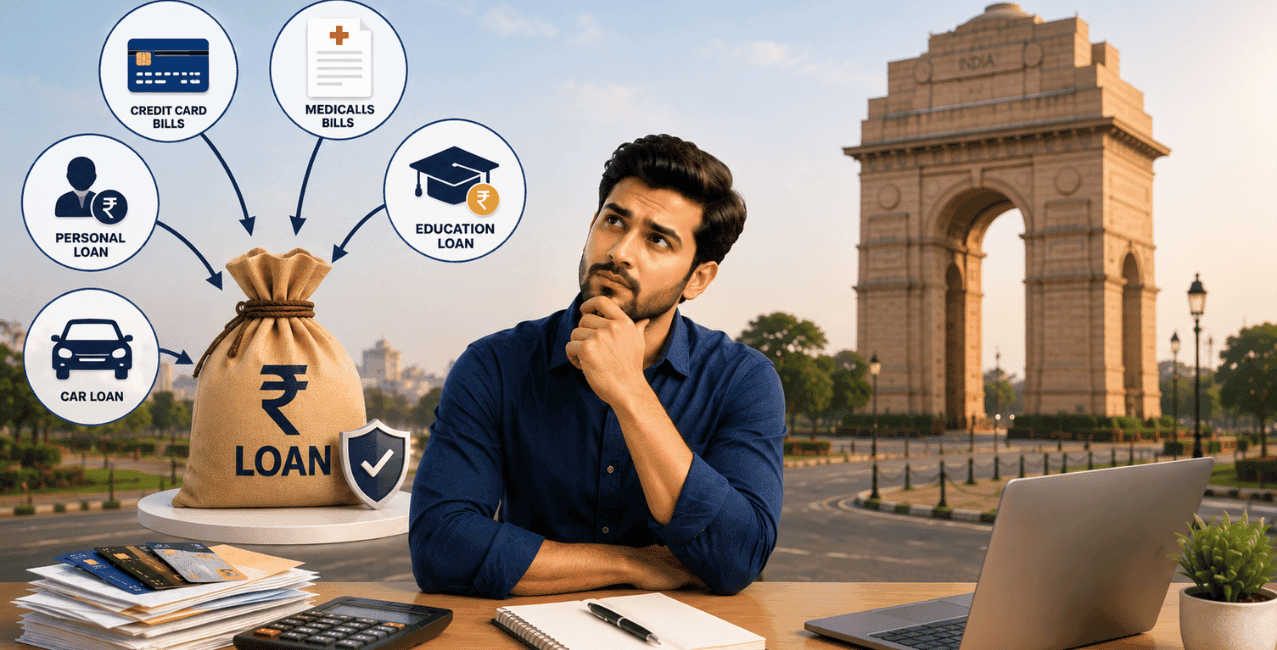
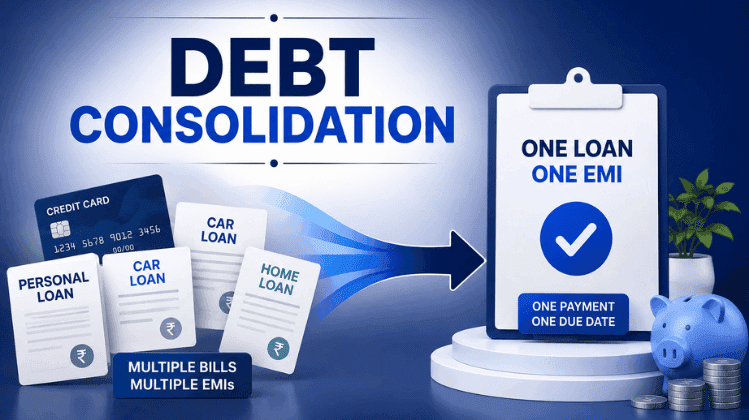
Debt consolidation is taking one new loan to clear many small debts. Instead of paying many lenders every month, you pay just one loan. This makes debt management easier. If you have a good credit score, the new loan may offer a lower interest rate, which can help bring down your monthly payments. Also, this will help you reorganise your debts and make them manageable.
In countries like India too, there have been many instances where people take secured loans (gold loans or loans against property) to clear their high-interest unsecured debts (credit card bill), etc.
Warning: Be very careful with secured loans. If you use a gold loan or property loan to pay off credit cards and cannot repay it later, the bank can take away your gold or your property.
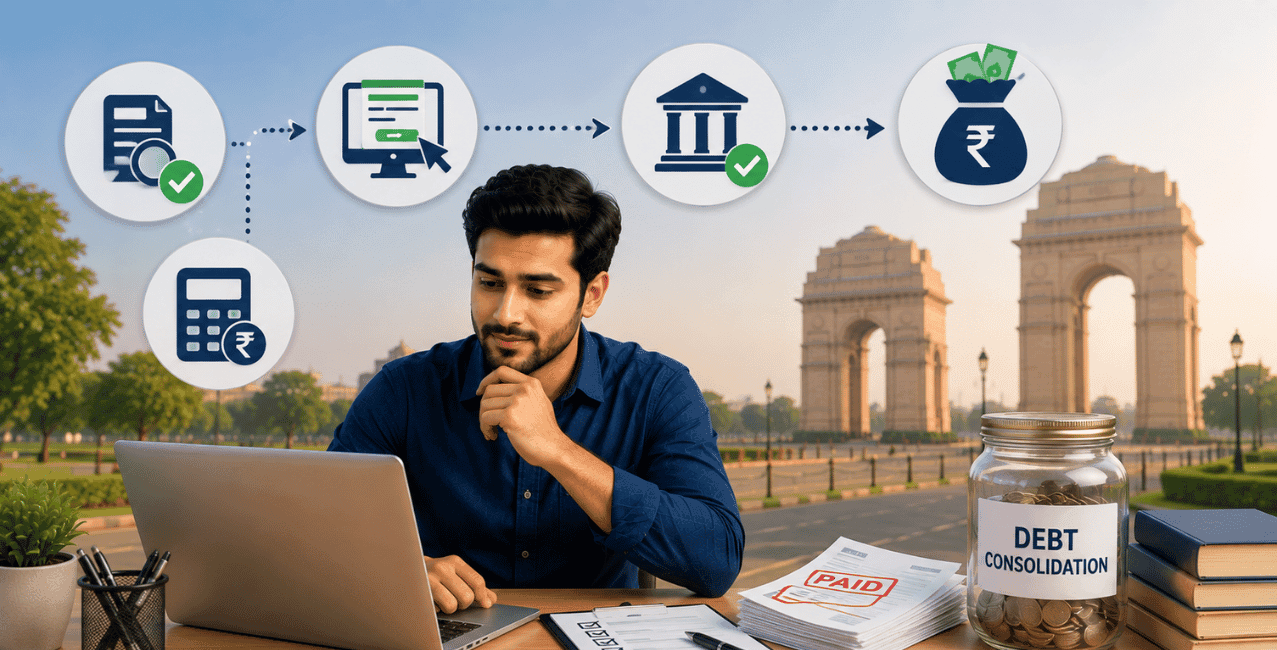
First, list all your current debts. Then, apply for a consolidation loan that covers the total of these debts. Once approved, use this loan to pay off your small debts. Now, you only have one loan to repay. The loan terms like interest rate and repayment time are set based on what you can afford. This single payment is usually less than the total of all your old payments, making it easier to manage every month. Another common method in India is to transfer many credit card balances to one card with a lower interest rate or convert the balance into monthly installments.
You can consolidate different kinds of unsecured debts, such as:
Debt consolidation simplifies your finances. You only need to focus on one payment instead of many. This reduces the chance of missing payments and late fees. If your new loan has a lower interest rate, you may pay less overall. This can free up more money every month for other needs or savings.
Having just one payment gives you peace of mind. It helps you budget better and reduces money related worry. But be careful. Paying off credit cards with a new loan can free up your card limits. if you aren't mindful about your expenses, chances are you'll accumulate even more credit card debt. So, if you want to go ahead with taking a loan to consolidate your debts, give yourself some time and figure out what kind of loan is going to work best for you.
The benefits of taking a Debt Consolidation loan are:
Consolidating your debt gives you immediate breathing room, but its real benefit depends on disciplined spending and avoiding new dues.
Look at the interest rates from a few different banks and figure out the best timeline for paying it back. A fast repayment plan means a bigger monthly bill, but you save money on interest in the end. A longer plan gives you a tiny monthly bill, but you pay more total interest.
Always look out for extra costs like processing fees. New banking rules starting in January 2026 say lenders cannot charge you a penalty for paying off a floating interest rate loan early. However, if you pick a loan with a fixed interest rate, banks can still charge you a fee for early payment.
Before taking a debt consolidation loan, know about these costs:
LoansJagat is a digital loan marketplace partnering with over 50 RBI-regulated banks and NBFCs. Instead of applying to multiple lenders, you can compare debt consolidation offers up to ₹50,00,000in one place. Their quick digital process matches you with suitable interest rates, helping you merge multiple EMIs into a single, manageable payment.
Debt consolidation provides an effective solution for simplifying your financial life and reducing associated stress.By consolidating multiple debts into a single payment, you can potentially lower your interest costs, work toward improving your credit score, and feel more in control of your monthly budget. But it is important to pick the right loan and know all the costs involved. With the right plan, debt consolidation can help you move toward a more secure and worry free financial future.
It can dip your score a bit at first from the new loan check. But it helps later if you pay on time and cut overall debt.
It is hard. Most lenders reject people with recent defaults or very low CIBIL scores.
You may pay more total interest if the new loan runs for a longer time than your old debts.
Missing payments or paying late hurts the score the most. High credit use also pulls it down fast.
You can try balance transfer cards, strict budgeting, talking to lenders for lower rates, or a debt management plan.
Do not take new loans or spend more after consolidating. Avoid high fees and very long repayment periods.
Lenders may reject your application if you have a low credit score, recent payment defaults, unstable income, or debt exceeding your repayment capacity.
Stop spending money on things you do not need, work hard to clear your most expensive bills first, and ask your current lenders for a more flexible payment plan.
Combining your bills means you still plan to pay back everything you borrowed. Debt relief usually means reaching an agreement to pay back a smaller amount than what you actually owe.
Combining your loans is much better for your financial record if you can get approved. Settling your debts hurts your score badly and stays on your record for a very long time.