By continuing, you agree to LoansJagat's Credit Report Terms of Use, Terms and Conditions, Privacy Policy, and authorize contact via Call, SMS, Email, or WhatsApp
The information published on LoansJagat is intended for general informational and educational purposes only and should not be considered financial, legal, or investment advice. Interest rates, loan terms, statistics, and other data may change over time and may vary by lender or source. Please verify the latest information and consult a qualified financial advisor or the respective Bank/NBFC before making any financial decisions.
Subscribe Now
About the author

Anishka Bhadly
Anishka Bhadly is a content writer with a finance and business background. She has completed her bachelor's degree with a specialisation in finance and is currently pursuing an MBA in the finance field too. The knowledge she has gained from her studies and experience working with EdTech companies helped her combine theoretical knowledge with practical industry insight. Her expertise lies in creating well-researched, informative, and reader-friendly content in various banking, personal finance, loans, insurance, and investment-related topics.
Related Blog Post
Simplify All Your Loans Into One Affordable EMI

Customers Served

Debt Consolidated

1200+ Reviews

Locations in India
Club all Loans & Credit Card Bills into Single EMI

Quick Apply Loan
Consolidate your debts into one easy EMI.

Takes less than 2 minutes. No paperwork.

10 Lakhs+
Trusted Customers

2000 Cr+
Loans Disbursed

4.7/5
Google Reviews

50+
Banks & NBFCs Offers
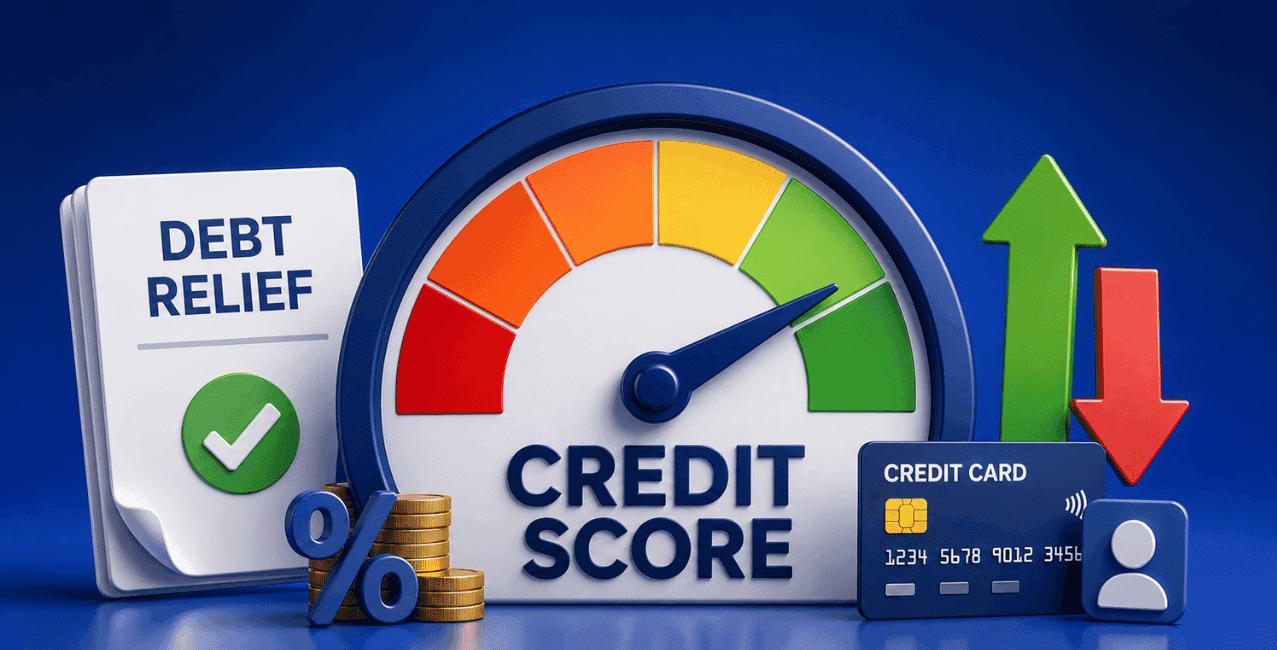
Debt relief can lower your credit score. The amount it drops and how long the drop lasts depend on the kind of relief you use and what happens to your accounts during that time. Some kinds cause a bigger drop. Others cause a smaller one. The size of the drop also depends on the score you have at the start, the number of accounts involved, and how far behind those accounts already are.
In India, your credit score is calculated by CIBIL, Experian, Equifax, or CRIF credit bureaus. Credit scores, most commonly, range from 300 to 900; other bureaus use their own scales. Analyzing these numbers can help you take right steps to solve the immediate problem, without creating an additional burden for yourself in terms of your score.
Debt relief covers several methods people use when debts become too hard to handle with regular payments. The common methods are debt settlement (often called One-Time Settlement or OTS by banks), debt management plans, debt consolidation, and personal insolvency under the Insolvency and Bankruptcy Code.
With a One-Time Settlement, the bank agrees to accept a smaller total than what you owe, following RBI's Framework for Compromise Settlements. Most people stop the normal payments first so they can save money. They then make a lower offer. If the bank accepts, the account closes and gets listed as “Settled” for less than the full balance.
A debt management plan uses a credit counselling service. That service speaks with the lenders and works to reduce interest rates or remove fees. You still repay every rupee of the original debt. You send one payment each month to the service and they send the money to each lender. Many of the accounts get closed while you stay in the plan. These plans exist in India but are less common and less structured than in some other countries.
Debt consolidation combines several debts into one new loan or one new credit account. People often do this to get a lower interest rate or to have just one payment to track. After the switch you work on paying down that single new account.
Personal insolvency under the Insolvency and Bankruptcy Code (IBC) is a formal court process. The court can cancel certain debts or set new payment terms. It is rare for ordinary individuals and is used more often for personal guarantors of companies. It has a heavier effect on credit than other options.
All of these methods change the way accounts appear on your credit report with CIBIL or the other bureaus. Those changes are what cause the score to move.
The four options do not hit the credit report in the same way. This table shows the usual pattern:
The actual size of the change still depends on the starting score, the number of accounts, and how late the accounts already were. Banks and bureaus do not publish fixed point drops.
Payment history carries the most weight in credit scores. When regular payments stop during settlement talks, late marks appear on the report. Marks show for 30 days late, then 60 days, then 90 days and beyond. Each late mark lowers the score.
The portion of available credit that is being used can rise as well. Interest continues to grow on unpaid balances. Closed accounts reduce the total credit limit. Using a larger share of the remaining credit is another reason the score can fall.
A settled account is listed as “Settled” rather than “Closed”. Lenders see this as proof that the original agreement was not completed. That listing counts as negative information on your CIBIL or other bureau report.
These issues often begin while talks are still under way and stay after the settlement is finished.
Most debt relief options lower the score at first. After the debt is cleared the score can begin to rise again.
Once accounts are settled or paid under a management plan the total debt load is smaller. That improves the share of credit being used. Consistent on-time payments on remaining accounts or carefully opened new ones create positive history. As more positive marks appear the score can climb.
People who have already been missing payments for months usually see less additional harm from a One-Time Settlement than from continuing to skip payments. Ongoing missed payments keep adding late marks. They can also hand the account to a recovery agent or initiate recovery proceedings. Both of those steps hurt the score further.
Negative marks do not stay forever. They remain for a fixed period and then drop off.
Late payments and “Settled” accounts normally stay up to seven years. The seven years are usually counted from the first missed payment that was never brought current again, though some reporting starts from the settlement date. The negative effect is strongest in the early years.
Personal insolvency under the IBC has a heavier and longer impact on the credit report because it is a formal court process.
Positive information such as on-time payments and open accounts in good standing can remain longer than seven years. Over time new positive activity reduces the weight of the older marks even while they are still visible on your CIBIL, Experian, Equifax or CRIF report.
These points decide how large the drop will be:
*T&C Apply
Every effect can’t be avoided, but extra damage can be limited:
Rebuilding begins after the debts are resolved and better habits are in place.
Pay every remaining bill on time each month. Payment history remains the largest factor. Keep credit card balances low relative to their limits. A secured credit card against a fixed deposit can provide a way to show new positive activity. Small purchases are made and the balance is paid in full each month.
Check the reports from CIBIL, Experian, Equifax and CRIF every few months and dispute any incorrect items. Time also reduces the impact of old marks. Older negative marks carry less weight. No fixed schedule or guaranteed point gain exists. Progress depends on consistent on-time payments and lower balances over the following months and years.
In most cases debt relief is the better choice. Skipping payments month after month adds more late marks. It increases the chance of the account becoming a non-performing asset, getting written off, and facing recovery action. It can also lead to legal notices. Each of those outcomes damages the score more and stays on the report for years.
Debt relief ends that cycle. After accounts are closed or placed under a clear plan, new late marks stop appearing. More space opens in the monthly budget so staying current on other bills becomes realistic. The short-term score drop is usually preferable to years of continued damage and possible recovery proceedings.
Debt relief is worth considering when minimum payments can no longer be met, when interest grows faster than the balance can be reduced, or when several accounts are already past due. It also makes sense when budgeting and cutting costs have not fixed the shortfall.
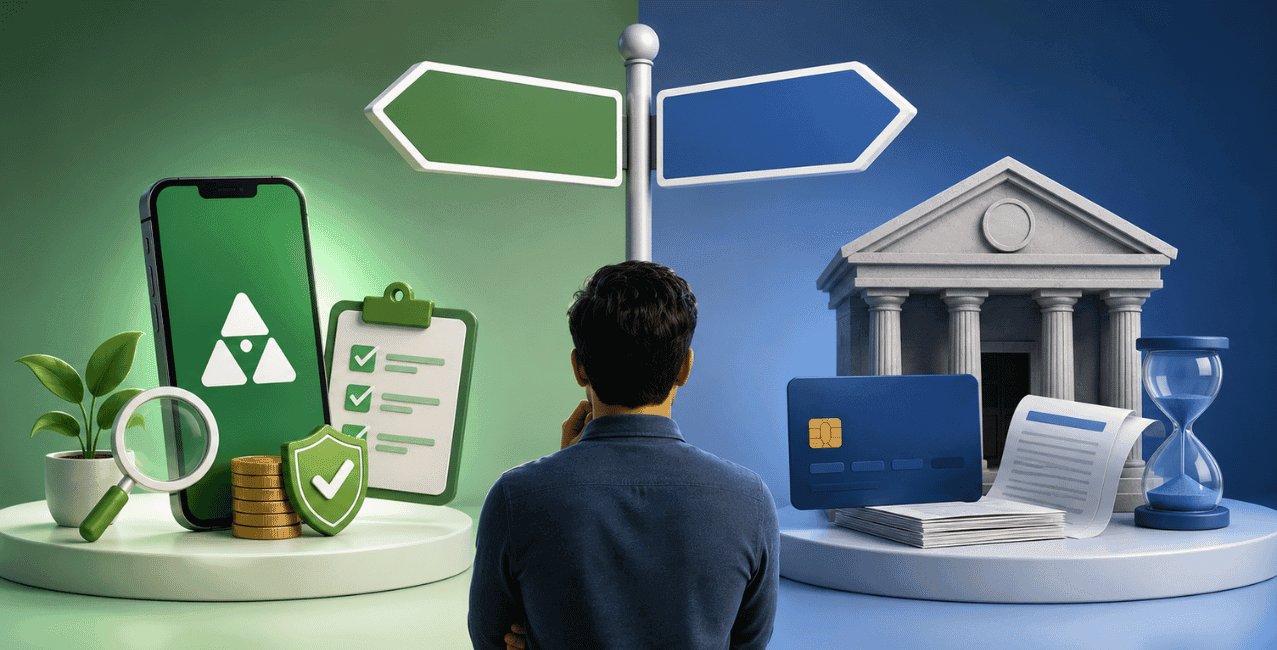
Compare the options before deciding. A management plan that repays the full amount is usually easier on the score than a One-Time Settlement. Consolidation works only when better terms can be obtained and the new payment can be kept current. Personal insolvency under the IBC is typically reserved for cases where other methods will not clear enough debt and is rarely used by ordinary individuals.
Speak with a credit counsellor or a trusted financial advisor first. They can review the actual numbers and describe realistic effects without promoting any single product.
Debt relief affects the credit score and the score usually falls in the short term. The size and duration of the change depend on the method selected. A One-Time Settlement and personal insolvency under the IBC leave stronger marks that last longer. Management plans and careful consolidation tend to cause milder shorter effects. Recovery becomes possible later if on-time payments continue.
Yes. Most types, especially One-Time Settlement, lower your CIBIL score because of late payments and the Settled mark.
Yes, later. It becomes possible with steady on-time payments, though new loans may be harder in the first few years.
Score usually drops, Settled status stays up to seven years, and getting new credit or loans becomes challenging for a while.
Late payments and Settled accounts normally stay on CIBIL reports for up to seven years from the first default.
Sometimes yes. Banks may accept around half or less in One-Time Settlement, but it depends on the case and is never guaranteed.
Missed payments. Payment history carries the most weight and late marks hurt the score the most.
In India, after settlement the score often stabilises. With on-time payments it can start recovering in the following months.
Not always. It is better than keeping missing payments when you cannot manage, though the score still takes a hit.
No fixed official rate exists. Success depends on the type used, your situation, and whether you stick to the plan.
Your score tends to plummet first, before it can recover if you continue to pay your dues on time and keep your balances low.