By continuing, you agree to LoansJagat's Credit Report Terms of Use, Terms and Conditions, Privacy Policy, and authorize contact via Call, SMS, Email, or WhatsApp
Disclaimer: The information published on LoansJagat is intended for general informational and educational purposes only and should not be considered financial, legal, or investment advice. Interest rates, loan terms, statistics, and other data may change over time and may vary by lender or source. Please verify the latest information and consult a qualified financial advisor or the respective Bank/NBFC before making any financial decisions.
Subscribe Now
About the author

Anishka Bhadly
Anishka Bhadly is a content writer with a finance and business background. She has completed her bachelor's degree with a specialisation in finance and is currently pursuing an MBA in the finance field too. The knowledge she has gained from her studies and experience working with EdTech companies helped her combine theoretical knowledge with practical industry insight. Her expertise lies in creating well-researched, informative, and reader-friendly content in various banking, personal finance, loans, insurance, and investment-related topics.
Related Blog Post
Simplify All Your Loans Into One Affordable EMI

Customers Served

Debt Consolidated

1200+ Reviews

Locations in India
Club all Loans & Credit Card Bills into Single EMI

Quick Apply Loan
Consolidate your debts into one easy EMI.

Takes less than 2 minutes. No paperwork.

10 Lakhs+
Trusted Customers

2000 Cr+
Loans Disbursed

4.7/5
Google Reviews

50+
Banks & NBFCs Offers
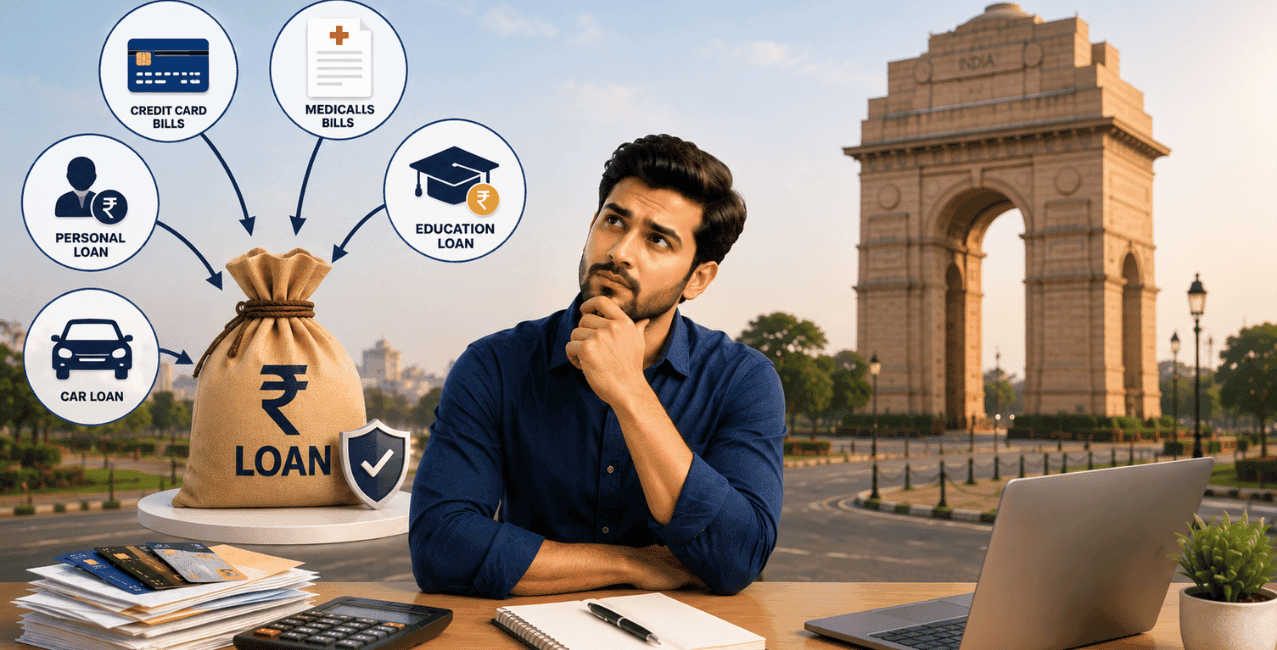
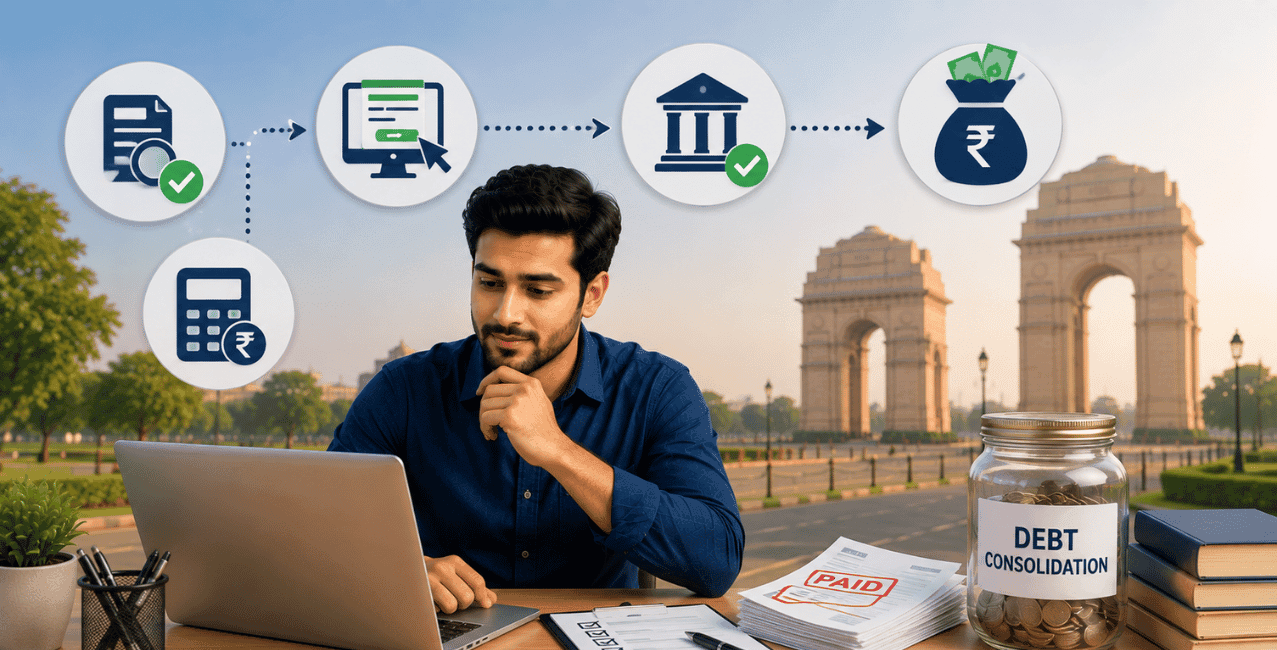
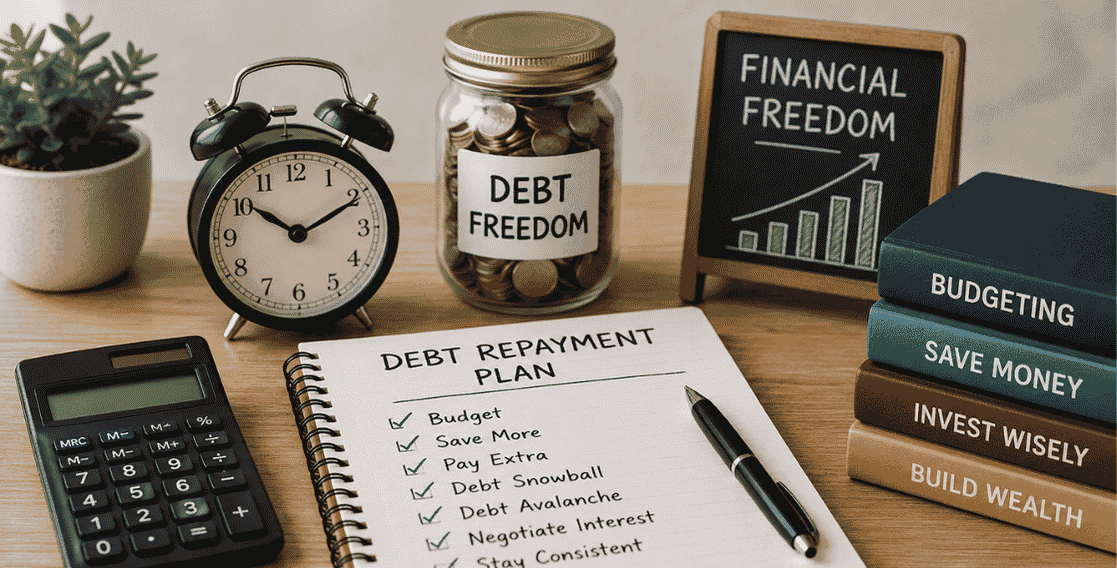
The best way to pay off debts is to chalk out a repayment schedule and stick to the decided terms of payment. Some of the best methods to tackle debts are the debt snowball, debt avalanche, and debt consolidation. The former two strategies suggest repaying the debts in either ascending or descending order, depending on the outstanding amount or rate of interest, respectively, while the latter involves consolidating multiple debts into one by availing a loan that covers all dues with an easily manageable EMI. It is essential to choose the most suitable option and clear debts according to the decided plan. LoansJagat helps borrowers consolidate debts by comparing the best private and public banks and NBFCs authorised by the RBI.
Key Takeaways:
Debt management refers to managing one’s personal and business loans in order to achieve financial objectives. It is an essential area in personal finance, as it ensures that debts are controlled in a sustainable manner. Additionally, when done right, it allows one to meet financial goals promptly. The key to effective debt management is to understand the amount of money borrowed, the rate of interest payable, and the amount of instalments that can be afforded every month. These factors determine the best course of action to pay back debts. For instance, it may be wise to consolidate several debts into a single instalment, depending on the terms. Similarly, one should consider prioritising debts with lower rates of interest. The need for debt management arises among individuals with personal loans, credit cards, or other forms of credit facilities in place. Enterprises with loans against property, machinery, or equipment usually rely on loans to finance their business activities.
Debt management encompasses a wide range of personal, commercial, and governmental obligations and liabilities. Each of these types of debt requires a particular method of repayment in order to decrease the amount of money spent on interest and maintain an appropriate cash flow. The table below provides an overview of the most common types of debt and methods of their management.
Personal Debt
A personal debt includes debt taken for certain needs such as education, housing, vehicles, and daily expenses.
It is vital that borrowers make sure they choose the best repayment method for personal loans to reduce interest expenses, improve a credit rating, and achieve financial goals in the long run.
Corporate Debt
Corporate debt is mostly used by businesses to support growth, operations, or expansion. Its types are:
Managing corporate debt is an effective way to improve liquidity and reduce financing costs while sustaining business growth and maintaining good relationships with creditors and investors. Corporate companies employ this practice to improve financial management.
Government Debt
Governments can obtain funds from the debt market by issuing bonds or other securities. The following are types of government debt and their management policies:
A prudent government debt management strategy is critical to ensuring sustainable economic growth, funding public expenditures, and mitigating the negative implications of too much debt on the economy.
Also Read: Top 5 NBFCs for Debt Consolidation Loans in India
Managing debt properly requires discipline. There are many ways to address your debts, but the major ones are several, and following them can significantly improve your financial future.
The main tips for Indian borrowers to manage debt properly include
identifying your debts using these strategies:
Managing your debts is essential for everyone who has some form of credit. Maintaining a good credit score, monitoring your debts, and having some cash on hand are some ways of managing your debts properly. Furthermore, following these tips will allow you to gradually reduce your debts and have enough money for future expenses.
The easiest way to pay debts is to plan and pay regularly. The main difference between the Debt Snowball method, the Debt Avalanche method, and Debt Consolidation is that you need to pay the credit off systematically: some of them require you to pay off debts in one instalment, while others are to be paid several times a month. However, the critical point is not to add any further debts to the existing ones. The best way to repay debts is to decide based on your financial capabilities and motivation. If you have several credits with different due dates and interest rates, it is better to consolidate them into one EMI scheme. And the most critical point is a timely start of actions – the faster you begin to repay the debts according to the plan, the less time it will take you to get rid of all financial obligations.
The best strategy is different for every individual depending on their financial position. The debt avalanche is for individuals who want to pay off debts; the debt snowball is when an individual pays off debts with the smallest amount first.
The three strategies in getting out of debt are debt snowball, debt avalanche, and debt consolidation.
The fastest method to pay off debt is by paying additional payments along with Equated Monthly Instalments (EMI) and by not paying debts with high interest rates.
The aggressive mode of paying debts consists of paying higher amounts of instalments every month, minimising expenses, paying EMIs with surplus money in hand, and avoiding new debts.
The best way to pay off debt quickly is by making a budget plan, clearing payments on time, making a repayment strategy, and having an emergency fund.
Zombie debt refers to old debts that are no longer actively collected but can be reactivated at any time and pursued by collectors.
Some healthy debt management options include making a budget plan, making payments on time, not taking any additional loans, and maintaining a good credit score.
The best approach to paying off debt is by paying off debts with the highest interest rate first, making additional payments when possible, and consolidating debts.
There is no specific amount of debt that one should have. Having said that, a good amount of debt is one that an individual can cover with their monthly salary.
Debt relief options include consolidating debts, restructuring debts, negotiating with creditors, using a balance transfer credit card, and contacting credit counsellors.