By continuing, you agree to LoansJagat's Credit Report Terms of Use, Terms and Conditions, Privacy Policy, and authorize contact via Call, SMS, Email, or WhatsApp
Disclaimer: The information published on LoansJagat is intended for general informational and educational purposes only and should not be considered financial, legal, or investment advice. Interest rates, loan terms, statistics, and other data may change over time and may vary by lender or source. Please verify the latest information and consult a qualified financial advisor or the respective Bank/NBFC before making any financial decisions.
Apply for Loans Fast and Hassle-Free
Subscribe Now
About the author

LoansJagat Team
‘Simplify Finance for Everyone.’ This is the common goal of our team, as we try to explain any topic with relatable examples. From personal to business finance, managing EMIs to becoming debt-free, we do extensive research on each and every parameter, so you don’t have to. Scroll up and have a look at what 15+ years of experience in the BFSI sector looks like.
Related Blog Post
Simplify All Your Loans Into One Affordable EMI

Customers Served

Debt Consolidated

1200+ Reviews

Locations in India
Club all Loans & Credit Card Bills into Single EMI

Quick Apply Loan
Consolidate your debts into one easy EMI.

Takes less than 2 minutes. No paperwork.

10 Lakhs+
Trusted Customers

2000 Cr+
Loans Disbursed

4.7/5
Google Reviews

50+
Banks & NBFCs Offers
Other services mentioned in this article
Key Insights:
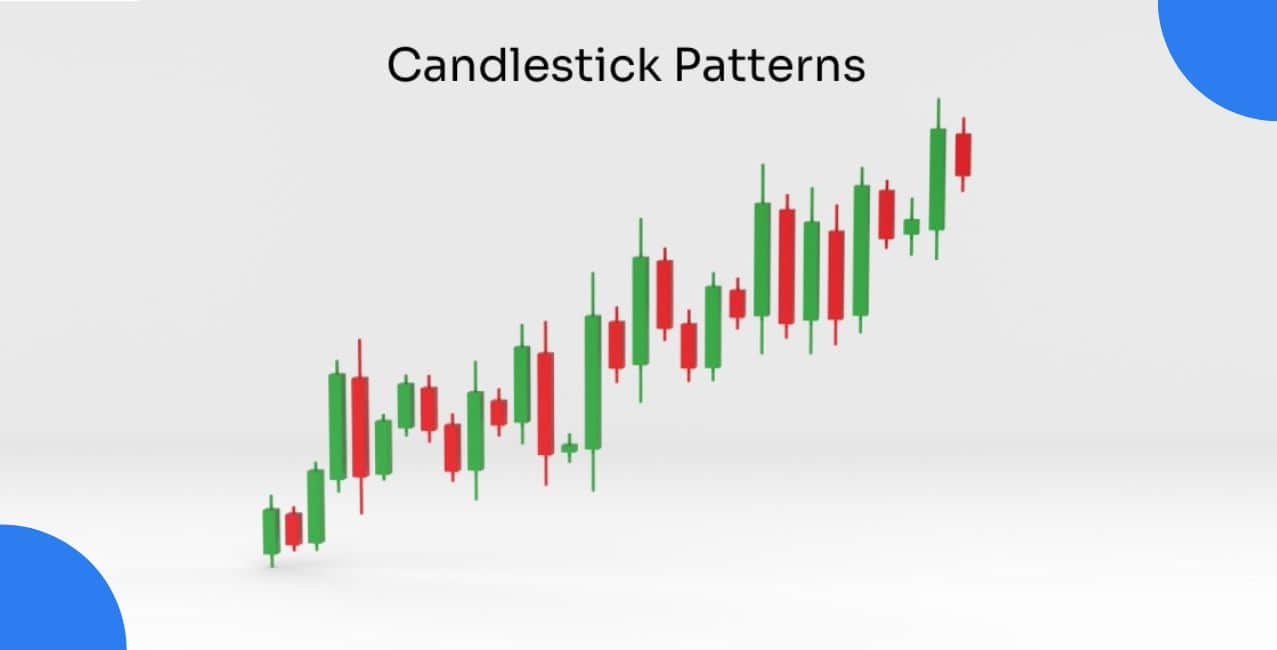
Candlestick charts are popular tools that traders use to analyse price movements in financial markets. They help traders gauge market sentiment and spot potential price reversals or continuation trends. Candlestick patterns originated in 18th-century Japan, created by rice trader Munehisa Homma. Today, they are widely used in stock, forex, and cryptocurrency markets globally.
If you want to understand candlestick patterns, learning how these charts work can help you interpret price movements and trading signals better.
Candlestick patterns visually represent price movements during a specific time period. Each candlestick provides four key data points:
The body of the candle shows the difference between the opening and closing price, while the shadows (or wicks) display the highest and lowest prices reached during that time. These patterns assist traders in interpreting market behaviour and identifying potential trend reversals.
To fully grasp candlestick patterns, traders often analyse the following elements:
The length of the body and shadows offers clues about buying or selling pressure in the market. For instance, a long bullish candle suggests strong buying momentum, while a long bearish candle indicates strong selling pressure.
Candlestick Patterns Chart
Below is a simplified candlestick patterns chart showing common patterns traders often study.
These patterns help traders identify entry and exit points in the market.
Bullish candlestick patterns typically appear when the market may reverse from a downtrend to an uptrend.
1. Hammer Pattern
The hammer pattern forms when a candle has a small body with a long lower shadow. This means that sellers pushed the price down, but buyers regained control.
2. Bullish Engulfing
This occurs when a large bullish candle completely engulfs the previous bearish candle.
3. Morning Star
This is a three-candle formation that signals a possible upward reversal after a downtrend.
These patterns indicate increasing buying pressure.
Bearish Candlestick Patterns
Bearish patterns often appear after an uptrend and signal potential downward movement.
Common bearish patterns include:
*T&C Apply
The tweezer top and bottom candlestick patterns are common reversal indicators.
Tweezer Top
This bearish pattern appears when two candles have similar highs after an uptrend. It indicates that the price repeatedly fails to move higher, showing resistance.
Tweezer Bottom
This bullish reversal pattern occurs when two candles have similar lows after a downtrend. It suggests strong support in the market.
These patterns are widely used in trading strategies involving candlestick patterns.
Despite their usefulness, candlestick patterns have limitations:
This is why traders use candlestick analysis as part of a broader trading strategy.
Candlestick patterns remain powerful tools in technical analysis. By learning to read patterns like hammer, engulfing, and tweezer top and bottom, traders can better grasp market psychology.
However, understanding these patterns is just the first step. Successful trading usually combines chart patterns with risk management, technical indicators, and market fundamentals.
When used correctly, candlestick charts can guide traders in navigating the complex world of financial markets.
Bonus Tip: Candlestick charts have been used for over 250 years. They were first developed in Japan in the 1700s for rice trading. Even today, modern traders use the same visual method to analyse financial markets.
What are candlestick patterns in trading?
Candlestick patterns visually represent price movements on charts. They help traders identify trends, reversals, and market sentiment.
What is the most accurate candlestick pattern?
There is no single “most accurate” pattern. Patterns like bullish engulfing, hammer, and morning star are often used but should always be confirmed with other indicators.
How many candlestick patterns exist?
There are more than 30 widely recognised candlestick patterns used in technical analysis.
Are candlestick patterns useful for beginners?
Yes. Candlestick charts are among the easiest ways for beginners to understand price action and market behaviour.
What is the difference between bullish and bearish candlestick patterns?
Bullish patterns suggest potential price increases, while bearish patterns indicate possible price declines.
Related Blog Pages | |||