By continuing, you agree to LoansJagat's Credit Report Terms of Use, Terms and Conditions, Privacy Policy, and authorize contact via Call, SMS, Email, or WhatsApp
Disclaimer: The information published on LoansJagat is intended for general informational and educational purposes only and should not be considered financial, legal, or investment advice. Interest rates, loan terms, statistics, and other data may change over time and may vary by lender or source. Please verify the latest information and consult a qualified financial advisor or the respective Bank/NBFC before making any financial decisions.
Apply for Loans Fast and Hassle-Free
Subscribe Now
About the author

LoansJagat Team
‘Simplify Finance for Everyone.’ This is the common goal of our team, as we try to explain any topic with relatable examples. From personal to business finance, managing EMIs to becoming debt-free, we do extensive research on each and every parameter, so you don’t have to. Scroll up and have a look at what 15+ years of experience in the BFSI sector looks like.
Related Blog Post
Simplify All Your Loans Into One Affordable EMI

Customers Served

Debt Consolidated

1200+ Reviews

Locations in India
Club all Loans & Credit Card Bills into Single EMI

Quick Apply Loan
Consolidate your debts into one easy EMI.

Takes less than 2 minutes. No paperwork.

10 Lakhs+
Trusted Customers

2000 Cr+
Loans Disbursed

4.7/5
Google Reviews

50+
Banks & NBFCs Offers
Other services mentioned in this article
Key Insights
1. The reverse charge mechanism actively shifts GST tax liability from suppliers to recipients, preventing widespread tax evasion effectively.
2. Businesses must identify inward supplies liable to reverse charge using the GST reverse charge list under Section 9(3) and 9(4).
3. RCM actively broadens India's tax base, secures government revenue, and aligns with global UAE VAT and European VAT standards.
Did you know businesses ignoring the reverse charge mechanism face penalties up to ₹25,000 per violation under Indian tax law?
Understanding the reverse charge mechanism in GST protects businesses from costly penalties. Unlike traditional forward charge mechanism and reverse charge mechanism structures, the reverse charge mechanism VAT shifts tax liability to recipients. Countries like the UAE apply a reverse charge mechanism UAE VAT across cross-border B2B transactions strategically.
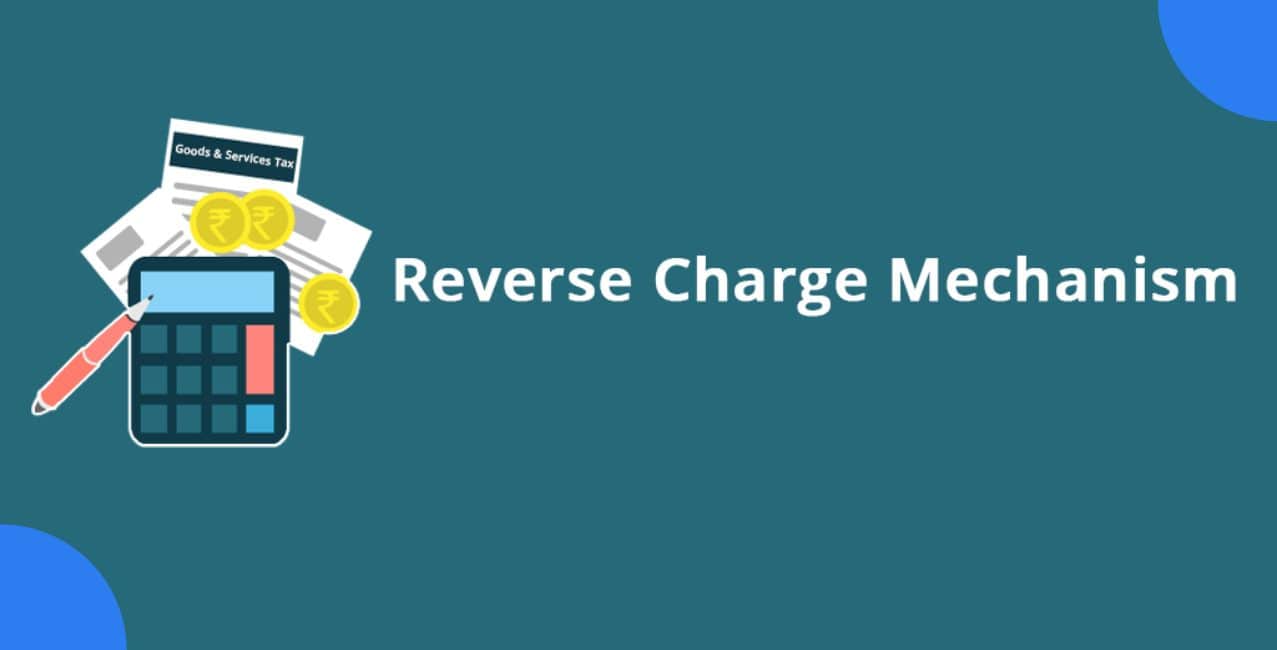
Reverse charge mechanism shifts tax liability from suppliers to recipients, transforming how businesses handle GST compliance nationwide.
The reverse charge mechanism under GST operates through five powerful defining features:
If you want to master the reverse charge mechanism features, then complete GST compliance, which eliminates penalties and gives every business a confident financial and regulatory foundation.
Bonus Tip: An ISD is not allowed to make purchases that are subject to reverse charge. If the ISD wants to buy these supplies and claim the reverse charge paid as ITC, it needs to register as a regular taxpayer.
There are three main situations where RCM applies:
Each of these types helps improve compliance and makes sure the government collects tax in different situations.
Every year, thousands of businesses pay unnecessary GST penalties simply because they misunderstand how the reverse charge mechanism works.
The reverse charge mechanism under GST follows a clear, step-by-step process:
Step 1: Check the GST reverse charge list under Section 9(3) and 9(4) to confirm if your purchase counts as an inward supply that is liable for reverse charge.
Step 2: The supplier issues a GST invoice that clearly states “Reverse Charge Applicable.” This means the tax responsibility shifts fully to the recipient right away.
Step 3: The recipient calculates the GST on inward supplies that are subject to reverse charge. They work out CGST, SGST, or IGST on their own, following ICAI guidelines.
Step 4: Unlike regular GST, the recipient pays the tax directly to the government. The supplier is not involved, as required by the reverse charge mechanism under GST rules.
Step 5: Claim Input Tax Credit. After paying the reverse charge, recipients can claim Input Tax Credit (ITC) on those amounts. This helps recover tax costs through proper filings on the GST portal.
Example
Delhi-based startup TechSolve hires an unregistered legal consultant for ₹1,00,000. According to the GST reverse charge list, TechSolve pays 18% GST (₹18,000) directly to the government. The company then claims full ITC, following the reverse charge mechanism ICAI compliance standards.
Understanding how the reverse charge mechanism works protects businesses from penalties, ensures seamless GST compliance, and maximises legitimate input tax credit recovery effortlessly.
India collects billions in additional tax revenue annually all because the reverse charge mechanism closes critical compliance gaps effectively.
The reverse charge mechanism serves as one of India's most powerful GST enforcement tools here's precisely why it matters:
3. Mandatory GST Registration
*T&C Apply
2. Broadens Tax Base
RCM includes unregistered dealers, foreign service providers, and informal-sector transactions for GST compliance. This helps expand India's overall tax collection system.
3. Ensures Government Revenue Security
Because recipients pay the tax directly, the government gets guaranteed revenue without relying on suppliers to comply. This removes any uncertainty about tax collection.
4. Promotes Business Accountability
Businesses that handle inward supplies under reverse charge keep careful records. This improves financial transparency and raises corporate governance standards.
5. Supports Cross-Border Compliance
For imported services, the reverse charge mechanism makes sure that foreign suppliers who are not registered for Indian GST still contribute fairly to India's tax system.
6. Aligns with Global Standards
ICAI and international tax bodies recognise RCM as a proven global mechanism. It has been successfully used in the UAE VAT and European VAT systems.
The reverse charge mechanism is a key tax compliance tool in India. It helps protect government revenues, encourages business transparency, and makes sure every transaction supports the country’s economic growth.
The reverse charge mechanism is an important GST compliance tool in India. It shifts tax responsibility to recipients, helps prevent tax evasion, and follows global VAT practices. This approach protects government revenues, supports business transparency, and ensures all transactions help India’s economy grow.
Do I need to pay GST under the reverse charge mechanism on this service fee?
You must pay GST under the Reverse Charge Mechanism (RCM) if the service fee falls under specific notified categories (e.g., legal, security, transport, or services from unregistered persons) where liability shifts from the supplier to the recipient. RCM is mandatory if you are a registered taxpayer receiving these specified services, regardless of your turnover.
What all do I need to do to get started reserse charge mechanism, like getting a GST number?
To get started, you need to finalize your business structure, register your business name, and obtain a PAN card for the business or proprietor. Mandatory GST registration is required if your annual turnover exceeds ₹40 lakh (goods) or ₹20 lakh (services), or immediately for e-commerce sellers, costing ₹0 on the official portal.
What is a reverse charge mechanism under GST?
The Reverse Charge Mechanism (RCM) under GST is a system where the recipient of goods or services is liable to pay the tax directly to the government, instead of the supplier. This reverses the normal GST process, ensuring tax compliance on specific, notified goods/services, imports, and supplies from unregistered dealers.
What is the importance of the reverse charge mechanism in GST?
The Reverse Charge Mechanism (RCM) in GST is crucial for shifting the tax liability from the supplier to the recipient for specific goods, services, or imports, ensuring compliance from unregistered vendors and improving tax coverage. It enhances tax transparency, aids in formalising unorganised sectors, and prevents tax leakage by requiring registered buyers to pay tax directly to the government.
How to report RCM transactions in GSTR-3B and GSTR‑1?
RCM transactions are reported by the recipient in GSTR-3B Table 3.1(d) for tax liability and Table 4 for ITC; registered suppliers report in Table 4B of GSTR-1.
Related Blog Pages | |||