By continuing, you agree to LoansJagat's Credit Report Terms of Use, Terms and Conditions, Privacy Policy, and authorize contact via Call, SMS, Email, or WhatsApp
Disclaimer: The information published on LoansJagat is intended for general informational and educational purposes only and should not be considered financial, legal, or investment advice. Interest rates, loan terms, statistics, and other data may change over time and may vary by lender or source. Please verify the latest information and consult a qualified financial advisor or the respective Bank/NBFC before making any financial decisions.
Apply for Loans Fast and Hassle-Free
Subscribe Now
About the author

LoansJagat Team
‘Simplify Finance for Everyone.’ This is the common goal of our team, as we try to explain any topic with relatable examples. From personal to business finance, managing EMIs to becoming debt-free, we do extensive research on each and every parameter, so you don’t have to. Scroll up and have a look at what 15+ years of experience in the BFSI sector looks like.
Related Blog Post
Simplify All Your Loans Into One Affordable EMI

Customers Served

Debt Consolidated

1200+ Reviews

Locations in India
Club all Loans & Credit Card Bills into Single EMI

Quick Apply Loan
Consolidate your debts into one easy EMI.

Takes less than 2 minutes. No paperwork.

10 Lakhs+
Trusted Customers

2000 Cr+
Loans Disbursed

4.7/5
Google Reviews

50+
Banks & NBFCs Offers
Other services mentioned in this article
Key Insights
You can understand what are twin deficits are is essential for every economist, investor, and policymaker navigating macroeconomic vulnerabilities. The twin deficit theory powerfully links fiscal and current account imbalances. If you study a real-world twin-deficit example and you want to master the twin-deficit formula, you have to understand how simultaneous deficits dangerously destabilise national economies.
The twin deficit hypothesis reveals the dangerous connection between fiscal and current account deficits, simultaneously weakening national economies. If you tracking the twin deficit of India, understanding the twin deficit in economics empowers policymakers and investors to confidently anticipate currency pressures and economic vulnerabilities.
Twin deficit in economics works like a leaking boat with two holes; fix one, and water still enters through the other simultaneously. The twin deficit hypothesis argues that rising fiscal deficits directly worsen current account deficits, creating a dangerous self-reinforcing economic cycle.
The twin deficit of India emerges when government overspending increases imports while reducing national savings, simultaneously pressuring both fiscal and external balances dangerously.
Example:
I studied the twin deficit in economics while analysing India's macroeconomic challenges. Understanding the twin deficit hypothesis revealed why the twin deficit of India consistently pressures the rupee, foreign reserves, and overall economic stability significantly.
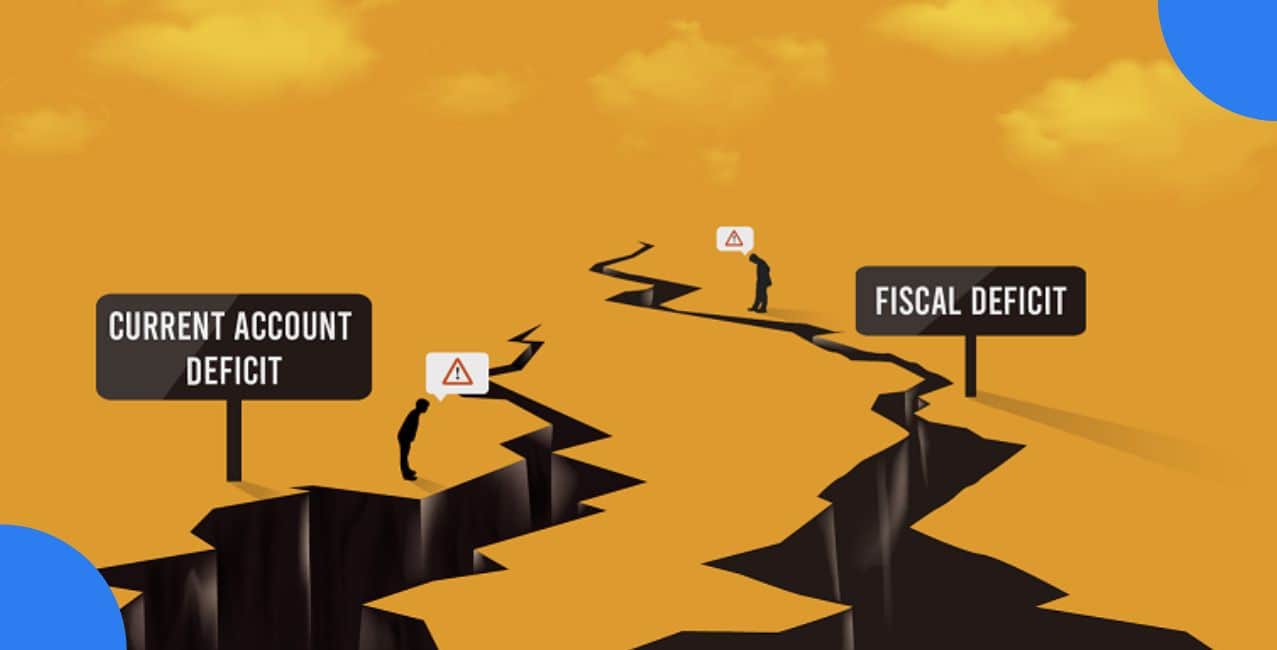
A country is said to have a Twin Deficit when it faces both a fiscal deficit and a current account deficit at the same time. A fiscal deficit occurs when the government spends more than it earns. A current account deficit means the country buys more from other countries than it sells to them.
Learning about twin deficit formulas helps show important economic weaknesses. This knowledge can help countries develop better fiscal and trade policies.
When a government has twin deficits, it faces a number of problems.
For example, in a country with twin deficits, if the capital account deficit gets smaller but the current account deficit gets bigger, inflation can go up and subsidised imports can cost more.
A fiscal deficit, or budget deficit, is when a country spends more money than it brings in. Although this sounds bad, some economists, like those who follow Keynesian ideas, think deficits can be helpful in certain situations.
For example, if the government spends money on building roads or other large projects during a recession, it can boost demand. The workers hired for these jobs spend their earnings, which helps the economy and can increase business profits.
To pay for fiscal deficits, governments often issue bonds. Investors buy these bonds, lending money to the government and earning interest. When the government repays its debt, investors get their money back. Lending to a stable government is usually considered safe because governments can collect taxes to pay back what they owe.
Bonus Tip:
*T&C Apply
A country’s current account keeps track of its trade and financial activities with other countries. It records the difference between exports and imports, as well as net payments from foreign investments and other transfers.
If a country has a current account deficit, it is spending more overseas than it brings in. To make up the difference, the country often has to borrow money and pay interest on that debt. Smaller or developing countries can be more exposed to changes in international markets and investor decisions.
Sometimes, a current account deficit means a country is attractive to investors, as is the case with the U.S. Advanced economies often run current account deficits, while developing countries tend to have surpluses.
Twin deficits highlight important weaknesses in a country’s finances and its economy with other countries. Understanding the twin deficit theory, its formulas, and related policy issues helps investors, economists, and policymakers deal with challenges such as India’s currency pressures and rising inflation.
What are deficits?
A deficit happens when the amount of money or resources you have is less than what you need or expect. This usually means expenses are higher than income, or liabilities are greater than assets.
How does America dig its way out of its debt, and how did we get into this situation?
America could reduce its $39 trillion debt by cutting mandatory spending, especially on healthcare and social security, raising tax revenue, and encouraging economic growth. This debt has accumulated over decades of deficit spending, as government spending on defence, entitlements, and crises has consistently exceeded revenue.
How does twin deficits affect an economy?
Twin deficits, the simultaneous occurrence of a large fiscal deficit and a current account deficit, weaken an economy by increasing public debt, depreciating the currency, and inflating import costs.
How do you explain the difference between the current account deficit and the fiscal deficit to someone with no background in economics?
A fiscal deficit happens when the government spends more money than it collects in taxes, so it borrows to make up the difference. A current account deficit means a country buys more goods and services from other countries than it sells, and uses foreign money to cover the shortfall.
Why Is a Trade Deficit Bad?
A trade deficit happens when a country buys more goods from other countries than it sells to them. This increases the need for foreign currency and lowers the demand for the country’s own money. If this continues for a long time, it can hurt the local economy because local businesses may struggle to find enough buyers for their products.