By continuing, you agree to LoansJagat's Credit Report Terms of Use, Terms and Conditions, Privacy Policy, and authorize contact via Call, SMS, Email, or WhatsApp
Disclaimer: The information published on LoansJagat is intended for general informational and educational purposes only and should not be considered financial, legal, or investment advice. Interest rates, loan terms, statistics, and other data may change over time and may vary by lender or source. Please verify the latest information and consult a qualified financial advisor or the respective Bank/NBFC before making any financial decisions.
Subscribe Now
About the author

Vaishnavi is a Financial Content Writer at LoansJagat. She holds a B.Sc. and an M.Sc. She has experience in writing SEO-focused content across finance, digital marketing, education, and Ayurveda. Before joining LoansJagat, she worked with digital marketing agencies serving fintech clients and quick-commerce brands like Zepto and blinkit. At LoansJagat, Vaishnavi writes on banking, loans, personal finance, and insurance. Her work involves researching financial topics, understanding user search intent, and creating content that is clear and accurate. She has experience in SEO content writing, keyword research, content optimisation, and AEO. She enjoys simplifying complex topics into practical information that readers can easily understand and use. She believes that well-researched and reliable content plays an important role in helping people make informed financial decisions.
Related Blog Post
Simplify All Your Loans Into One Affordable EMI

Customers Served

Debt Consolidated

1200+ Reviews

Locations in India
Club all Loans & Credit Card Bills into Single EMI

Quick Apply Loan
Consolidate your debts into one easy EMI.

Takes less than 2 minutes. No paperwork.

10 Lakhs+
Trusted Customers

2000 Cr+
Loans Disbursed

4.7/5
Google Reviews

50+
Banks & NBFCs Offers
Other services mentioned in this article
Your repayment history, your credit usage, credit type, recurring enquiries, loan modification, and, most importantly, credit duration affect the CIBIL score drastically. One small change in your financial activity or planning can significantly affect your credit score. The most important point is that a credit score is not stable all the time; even if you follow smart ways to handle your finances, sometimes it happens that your CIBIL score still shows average performance because there was something was unintentionally affecting your credit score until you got to know it.
Key takeaways:
Several factors affect the CIBIL score, including repayments, credit usage, financial planning, credit history, etc.
This table represents the key terms that will be explained in the blog, related to the factors affecting the CIBIL score:
Hence, these are the aspects that affect the CIBIL score heavily and will be discussed in the blog in a detailed manner.
The CIBIL score stands for TransUnion CIBIL Limited, which creates credit reports for clients. Credit reports are also created by other companies, which are further analysed by banks to decide whether to approve your loan request or not. Banks look at other factors too.
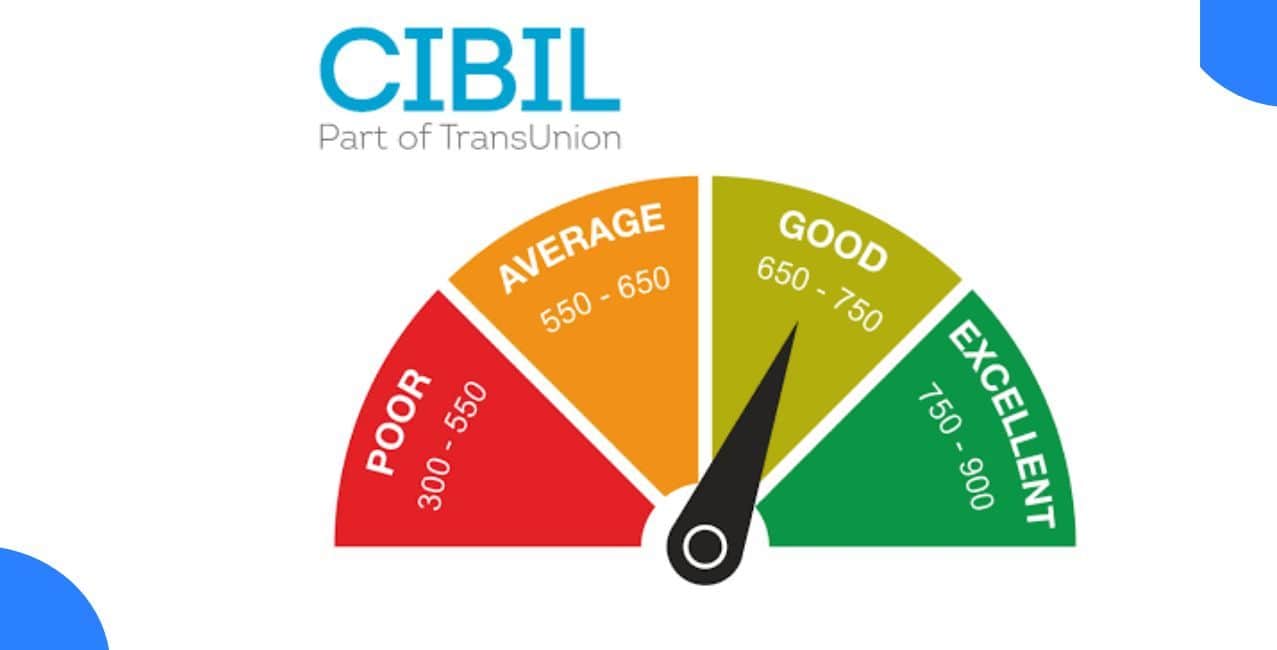
In India, the CIBIL score is calculated differently, ranging between 300 and 900. 900 is considered an excellent credit score, which can generally benefit the borrower in all terms from the banks.
These are the ranges of the CIBIL score that India follows:
Loans Jagat highly recommends analysing the CIBIL score for better financial planning and helping the client to sustain better financial health in the long term. A credit score shows the creditworthiness of the person.
Your financial handling, from active loans to paid loans, from credit usage to credit duration, all affect the CIBIL score intensely.
In India, a credit score is usually represented in the form of a CIBIL score, which is from TransUnion CIBIL Limited. So, your CIBIL score is totally dependent on how you are utilising your finances and where. This is because it is very important to know when to utilise what portion of your money that will affect your credit score rapidly, and this needs smart planning and choices.
Hence, these are some of the options that highly affect the CIBIL score and give the perfect reason why and when one should use them.
Yes, debt settlement heavily affects the CIBIL score, but it is highly likely to have a negative impact.
The arrangement in which the lender agrees to accept a reduced lump-sum payment to settle outstanding debt is called debt settlement. In simple terms, if a person is not able to pay the existing loan amount with the interest rate, they will negotiate with the lender to pay only a certain amount of the loan, which can be less than the principal amount of the loan. Mostly people choose this option when there are hard financial difficulties faced by them, when they cannot pay the loan dues at all.
These are the two possibilities that can be caused by debt settlements, which inversely affect the CIBIL score:
Debt settlement may help the borrower repay a loan with less amount than the outstanding amount. But it might negatively affect their CIBIL report which may have an impact on future loan applications.
Credit score plays a major role in determining the creditworthiness of the borrower. A low credit score indicates missed EMIs, irresponsible behaviour towards loan repayment and many more things that can be consolidated; the person won't be able to repay the loan in the future. That's why maintaining a credit score is important.
A credit score is highly fragile in nature; it rapidly changes according to changes in your finances. activities. Sometimes it is not you, but your situation can also land you with a bad credit score, like “loan settlement”.
The economy of India is a mixed economy which is volatile, and volatility of the market results in financial ups and downs; sometimes a person faces a financial crunch with heavy loans on him, and loan settlement can be the only option to relieve the pain. But it generally damages the credit score, with a huge burden on the person. That is why it is important that after loan settlement, one needs to act smart and slowly financially to cope with the damage. Yes, it is nearly impossible, but not always impossible.
Approval of loans in the future and building the bank's trust are important. Hence, hard work is just halfway to covering it, but the other half should be the smarter way.
Debt consolidation combines multiple debts into one loan with a lower interest rate and longer tenure, which makes it favourable for the borrower to repay the loan amount regularly.
That's why debt consolidation is used to build a credit score. Initially, it lowers the credit score because you combine the debt, but later it acts as a helping hand for people with multiple debts.
Loans Jagat makes people understand the mechanism of debt consolidation, which is made easily understandable to them.
For any reason, like job loss or financial crisis, if you had to settle your loan, you can take these steps to rebuild your credit profile:
Bottom line:
A CIBIL score is a result of your financial activities, which can be harsh or soft when revealed. Loans Jagat, a debt consolidation platform supporting fintech aspects, reveals that it is highly affected by factors like credit usage, debt consolidation, and loan settlement. It is important to maintain a credit score because it helps in approving loans by the bank and detecting the financial position in the economy.
Is debt consolidation bad for a credit score?
Not always. Debt consolidation is not bad for a credit score, though it initially holds back the score; later, it boosts it with a proper increment. So, it can become a good choice for building a credit score for the long term. But it can trigger a minor, temporary dip when you first apply.
What is a good score on credit?
A good credit score is above 750 in India. This is because it gives a favourable chance for the borrower to negotiate and get a proper lower interest rate on loans.
What exactly is a credit score?
The credit score is a parameter that states the financial position of a person based on their financial activity. A credit score is usually between 300 and 900 in India.
What percentage should I offer for the debt settlement?
Typically, 25% to 30% is the safe zone, but most loans are settled between 50% and 60%, which heavily damages the credit score and makes it harder for the borrower to overcome the damage.
Can I get a loan with a 643 credit score?
One can get a loan with a 643 credit score, but it can be approved only by some of the banks and not for all types of loans. Also, it depends on the lender.
What are the credit score factors?
The factors of the credit score are credit utilisation, debt consolidation, repayment, credit history and loan tenure. Also, there are other factors too, like credit mix. These factors decide whether your credit score will increase or decrease.
Can I increase my credit score?
You need to pay EMIs and dues on time to improve your credit score. Also, you can keep your credit utilisation ratio low, avoid multiple loans and credit cards, and maintain a healthy mix of credit types.
What are credit score ranges in India?
The credit score range in India is between 300 and 900. 750 and above is considered an excellent credit score, between 600 and 749 is considered an average-to-good credit score, and below 600 is generally considered a poor credit score in India.
What are the 5 elements of credit?
The 5 elements of credit are amount owed, payment history, credit mix, new credit and credit score. These categories provide the proper analysis for the credit score to create the credit report.
What is the definition of 'debt'?
Debt is the money that people have borrowed but have not repaid yet. Its impact depends on factors like loan amount, repayment capacity, interest rate, and how the money is used.