By continuing, you agree to LoansJagat's Credit Report Terms of Use, Terms and Conditions, Privacy Policy, and authorize contact via Call, SMS, Email, or WhatsApp
Disclaimer: The information published on LoansJagat is intended for general informational and educational purposes only and should not be considered financial, legal, or investment advice. Interest rates, loan terms, statistics, and other data may change over time and may vary by lender or source. Please verify the latest information and consult a qualified financial advisor or the respective Bank/NBFC before making any financial decisions.
Apply for Loans Fast and Hassle-Free
Subscribe Now
About the author

LoansJagat Team
‘Simplify Finance for Everyone.’ This is the common goal of our team, as we try to explain any topic with relatable examples. From personal to business finance, managing EMIs to becoming debt-free, we do extensive research on each and every parameter, so you don’t have to. Scroll up and have a look at what 15+ years of experience in the BFSI sector looks like.
Related Blog Post
Simplify All Your Loans Into One Affordable EMI

Customers Served

Debt Consolidated

1200+ Reviews

Locations in India
Club all Loans & Credit Card Bills into Single EMI

Quick Apply Loan
Consolidate your debts into one easy EMI.

Takes less than 2 minutes. No paperwork.

10 Lakhs+
Trusted Customers

2000 Cr+
Loans Disbursed

4.7/5
Google Reviews

50+
Banks & NBFCs Offers
Other services mentioned in this article
Key Takeaways:
Let’s start this blog with a fun activity. Buy a 90% cocoa chocolate one for you and one for your chocolate-loving friend, now both of you have a bite of it. Have you noticed how you and your friend had a different experience? Your friend loved it as she knows what true chocolate feels like; on the other hand, you hated the taste because you are unaware of the goodness.
Similarly, both of you invest in the same company, but your experiences turn out completely different. One gets a say in company decisions, attends meetings, and hopes the business grows fast. The other does not really get involved in decisions but quietly receives fixed returns before anyone else.
That is the actual difference between common stock and preferred stock. Both represent ownership, but the benefits and priorities are not the same. Some investors prefer having control and taking risks for higher returns, while others focus on stability and predictable income. Most companies use both of them to attract better investors, so they get more value. Let’s check out more about it.
Bonus Tip: Do you know that the average yearly return of the S&P is 10.424% since the last 100 years? That's interesting, right? After adjusting it for the 100-year average stock market return, it is approx 7.268%.
Read More : Study the Stock Market in India
Learning About Common & Preferred Stocks
We are not going to waste any more time with generic talks; now, we will go straight to the point and understand the real meaning of common equity vs preferred equity.
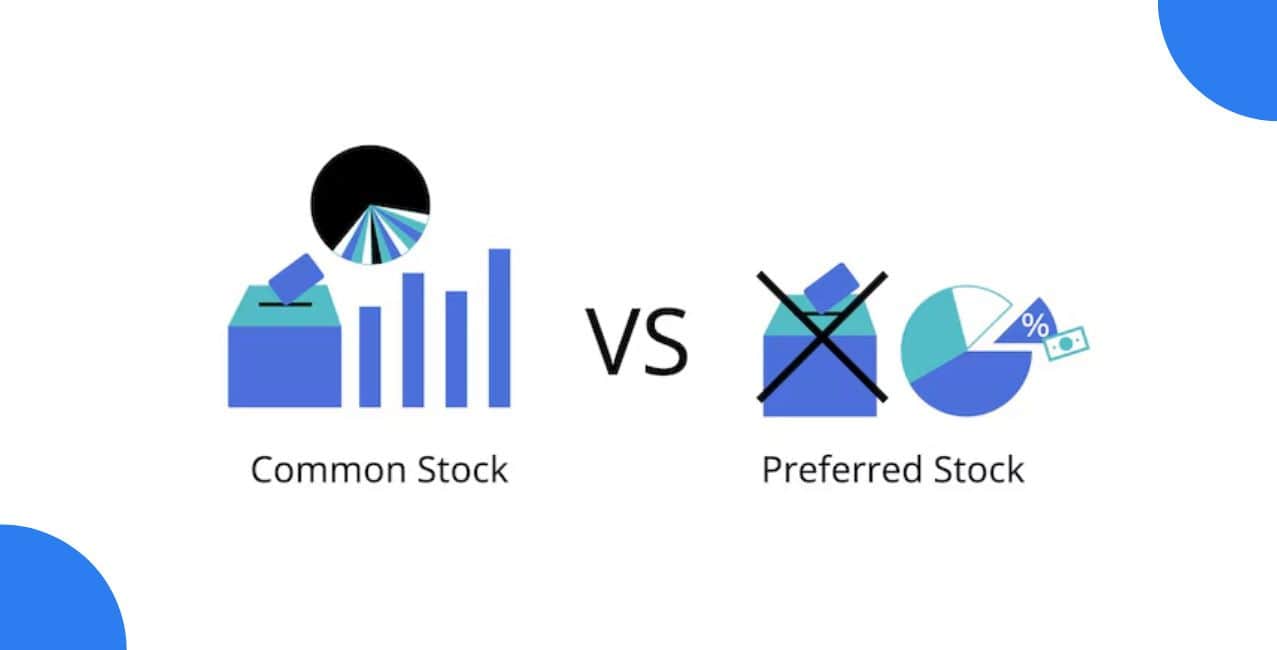
Common stock represents ownership in a company and also gives its shareholders voting rights in major financial decisions. It offers investors the opportunity to benefit from a company’s growth. However, the returns are not guaranteed in some cases. Dividends may or may not be paid, and common shareholders are the last to receive payouts after all obligations are met.
Preferred stock also represents ownership but focuses more on stable income than control. In preferred stocks, investors receive fixed dividends and prefer priority over payments and liquidation. However, they usually do not get voting rights. It combines features of both stocks and bonds by offering lower risk but limited growth potential.
Hope you have understood what common equity vs preferred stock means in a company. They both reflect ownership; however, their main focus is different in some terms.
Also Read : How to Analyse Stocks
Choosing between a common, preferred, and treasury stock can be a tough choice for some. This is not about picking the “best” one; it is about understanding what each actually does. We already learned about common and preferred stocks. Let’s understand the meaning of treasury stock along with the difference between common stock and preferred stock in table:
No (held by the company)
*T&C Apply
The difference between common stock vs preferred stock vs treasury stock has confirmed how these three serve different purposes in the same company.
When it comes to common, preferred, and treasury stocks, it is not about competition or comparing who is better. These three are like Rahu, Ketu, and Shani in your Kundali, but make it nerdy and apply it to a financial market. These help you in ways that can be a deal maker and deal breaker at the same time; it depends on you how you use them.
One gives you a voice to speak, one gives you priority, and one is just sitting quietly in the company’s pocket. Most investors like excitement and growth, while others just want to be stable and hate surprises. To be honest, both choices are better in their own ways, depending on what you prefer for yourself. In the end, investing is not about picking what sounds smarter; it is about picking what feels right. Once you understand how each type works, the confusion fades, and the decisions start to feel a lot more natural.
What are preferred stock dividends?
Preferred stock dividends are fixed payments given to preferred shareholders before common shareholders, usually at a set rate decided when the stock is issued.
What is the downside of preferred stocks?
The main downside of a preferred stock is that it usually doesn’t offer voting rights and has limited growth potential compared to common stocks.
What's the key difference between preferred and common stock?
The key difference between them is that preferred stock offers fixed dividends and priority, while common stock offers voting rights and higher growth potential.
Why and when is the value of preferred stock and common stock different?
The difference in value is often seen as preferred stock value changes with interest rates, while common stock value depends on company performance and market demand.
Why is tax adjustment not necessary while estimating the cost of preferred stock and common stock?
Tax adjustment is not necessary while estimating the cost of preferred and common stock because dividends are paid from after-tax profits, so no tax deduction applies, as it does for debt.