By continuing, you agree to LoansJagat's Credit Report Terms of Use, Terms and Conditions, Privacy Policy, and authorize contact via Call, SMS, Email, or WhatsApp
Disclaimer: The information published on LoansJagat is intended for general informational and educational purposes only and should not be considered financial, legal, or investment advice. Interest rates, loan terms, statistics, and other data may change over time and may vary by lender or source. Please verify the latest information and consult a qualified financial advisor or the respective Bank/NBFC before making any financial decisions.
Apply for Loans Fast and Hassle-Free
Subscribe Now
About the author

LoansJagat Team
‘Simplify Finance for Everyone.’ This is the common goal of our team, as we try to explain any topic with relatable examples. From personal to business finance, managing EMIs to becoming debt-free, we do extensive research on each and every parameter, so you don’t have to. Scroll up and have a look at what 15+ years of experience in the BFSI sector looks like.
Related Blog Post
Simplify All Your Loans Into One Affordable EMI

Customers Served

Debt Consolidated

1200+ Reviews

Locations in India
Club all Loans & Credit Card Bills into Single EMI

Quick Apply Loan
Consolidate your debts into one easy EMI.

Takes less than 2 minutes. No paperwork.

10 Lakhs+
Trusted Customers

2000 Cr+
Loans Disbursed

4.7/5
Google Reviews

50+
Banks & NBFCs Offers
Other services mentioned in this article
Key Takeaways:
Let’s not dive deep into a wave of technical words. We will understand this together.
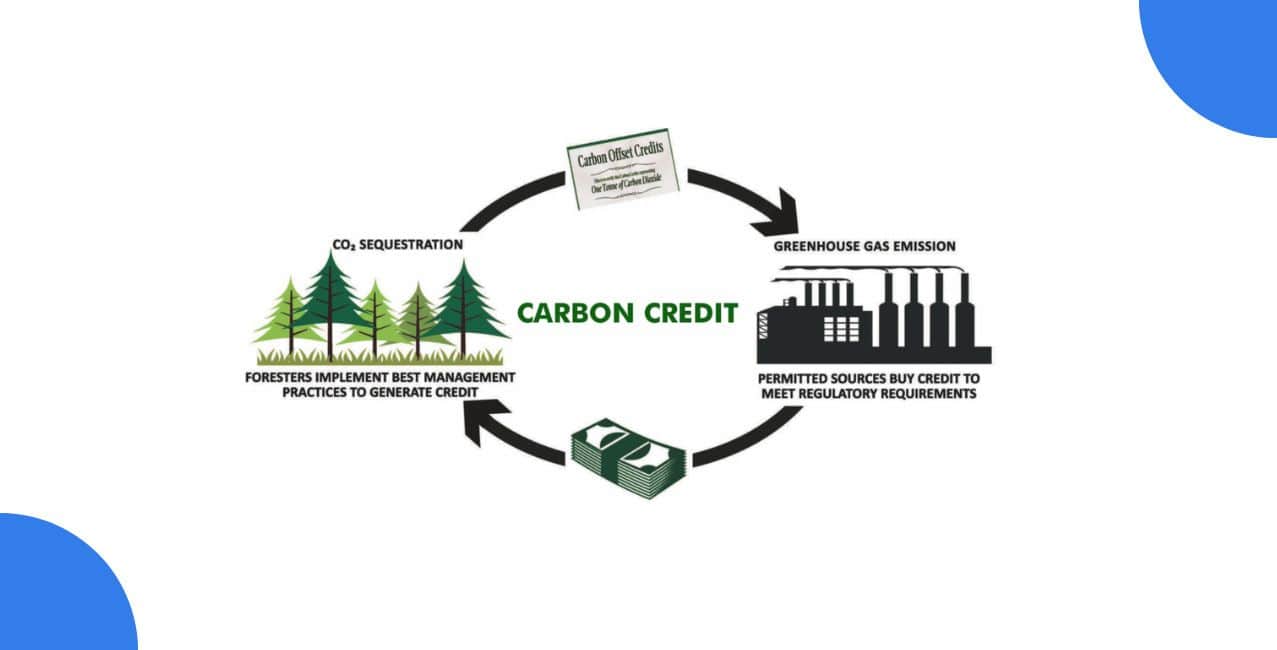
Just imagine you own two factories that manufacture daily-use goods. Both of them are very successful and generate a decent return.
What should we do in this situation? The only practical option in front of us is to shut down everything that you have built with your sweat and blood. Wait! Don’t be so dramatic.
Instead of closing down your whole firm or paying a huge penalty, Factory No. 2 can buy “extra pollution permission” from Factory No. 1. Yes, it is possible. In technical terms, we call it a carbon credit. The process of buying and selling these credits is called Carbon Credit Trading.
The Central Pollution Control Board of India releases an advisory. In that notice, you will see a pollution limit set for industries, operations, construction sites, etc. Under this, you also have an opportunity to:
Apart from this, the government has made this advisory even stronger by introducing the Carbon Credit Trading Scheme 2023. This initiative has shown a positive and legal aspect in this market. The main purpose of doing this is to reduce pollution, efficient use of energy, and improve the environment.
As we are learning about legal advisories, let’s take a look at the act passed in 2001 by the government of India. This act was introduced to meet the main objective of conserving energy. The main motive here is:
Under the Energy Conservation Act 2001, the Bureau of Energy Efficiency (BEE) was also created. This law was passed to familiarise India with the carbon market. The term familiarise here indicates that the carbon credit price in India now has legal support in this country.
The business sectors in India that come under the CPCB advisory need to undergo a registration process before starting their business. To trade carbon credits, the businesses must:
If found incapable of doing so, the company may face issues while buying and selling carbon credits in the market. This ensures transparency and avoids fake claims.
Bonus Tip: India is expecting to start its first carbon credit trading in mid-2026. There are nine major sectors under the Carbon Credit Trading Scheme, including cement & steel industries.
In India, advisories are mostly overlooked as rules rather than how it actually benefits you. CCT is one of the examples of this. Businesses mostly think of it as a burden, but here is how it works in their favour:
Instead of spending a huge amount on energy efficient machineries to reduce pollution, companies can buy credit points when needed.
When you are not increasing pollution, but rather reducing it in some ways, you will earn extra carbon credits. Afterwards, these credits can be sold to earn profits.
*T&C Apply
Recently, India has been going green, and most people prefer companies that are environmentally responsible. If you register under the CCT, people will consider you over any other.
According to the CCT Scheme 2023, some of the companies that are the first movers towards energy-efficiency are mentioned below:
Other than these, many companies are also leveling with businesses that have already adopted the CCT. The India carbon credit trading scheme targets a better future for this country rather than just the rules and regulations of the government.
The Carbon Market in India is now legalised and is more organized than ever before. Industries that are adapting to this system are already experiencing a different growth. Instead of treating it as a burden or just another rule that will go away in a few days, we can actually contribute and make a change.
By simply planning to reduce pollution, you can make a profit and improve your growth in the long term. Just like the phrase “Ek teer se do nishane”.
What is a good strategy for a CCT business?
A good strategy can be looking out for high-quality and verified credits from accountable projects to avoid market risks.
What is a carbon credit program?
Is a government-supported regulatory system that allows people to buy and sell carbon credit points to businesses to help reduce harmful emissions.
Is there real profit potential in trading carbon credits as financial commodities?
Yes, as the government is working through energy-efficient industries, the demand for buying credits will increase, and the price will be higher.
How can I make money with carbon credits?
You can make money through developing carbon offsets or by selling credits in the market at higher prices.
Can individuals buy and sell carbon credits?
Yes, experienced individuals who have existing carbon credits can trade their credits on various platforms.