By continuing, you agree to LoansJagat's Credit Report Terms of Use, Terms and Conditions, Privacy Policy, and authorize contact via Call, SMS, Email, or WhatsApp
Disclaimer: The information published on LoansJagat is intended for general informational and educational purposes only and should not be considered financial, legal, or investment advice. Interest rates, loan terms, statistics, and other data may change over time and may vary by lender or source. Please verify the latest information and consult a qualified financial advisor or the respective Bank/NBFC before making any financial decisions.
Subscribe Now
About the author

LoansJagat Team
‘Simplify Finance for Everyone.’ This is the common goal of our team, as we try to explain any topic with relatable examples. From personal to business finance, managing EMIs to becoming debt-free, we do extensive research on each and every parameter, so you don’t have to. Scroll up and have a look at what 15+ years of experience in the BFSI sector looks like.
Related Blog Post
Simplify All Your Loans Into One Affordable EMI

Customers Served

Debt Consolidated

1200+ Reviews

Locations in India
Club all Loans & Credit Card Bills into Single EMI

Quick Apply Loan
Consolidate your debts into one easy EMI.

Takes less than 2 minutes. No paperwork.

10 Lakhs+
Trusted Customers

2000 Cr+
Loans Disbursed

4.7/5
Google Reviews

50+
Banks & NBFCs Offers
Other services mentioned in this article
Key takeaways
Bonus point - From April 1, 2026, two-factor authentication (2FA) is compulsory for all transactions.
In March 2026, the UPI transactions in India were 18 billion. It shows how drastically India moved towards digital transformation. Financial inclusion is a core part of digital transformation, and without a payment settlement system, financial inclusion is not possible. It acts like a pathway for any online transaction. The payment settlement system is backed by government regulations and the RBI framework. Here is all about payment settlement systems that you should know.
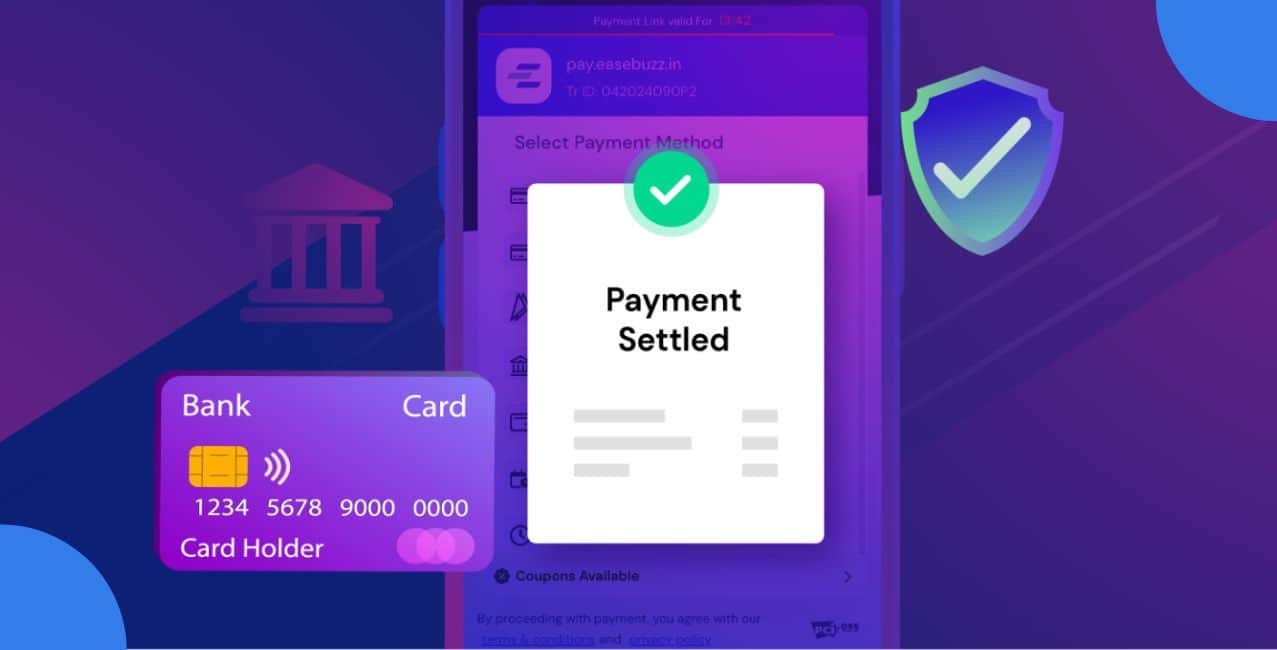
In online transactions, when money leaves the customer’s account and reaches the seller’s account, that point is called the payment settlement system. Even if money is left from the buyer's account but has not reached the merchant, the transaction isn't completed. In India, payment settlement is carried out by methods like RTGS, NEFT, and UPI. All these systems work under the Reserve Bank of India (RBI).
India's payment settlement system is regulated by the Payment and Settlement Systems Act of 2007 (PSS Act). There are multiple payment settlement systems in India. Almost everyone has access to the internet today, and 1.3 billion biometric ID numbers are generated, which is a great advantage for using electronic payment systems.
The payment settlement system ensures that the transaction is smooth and carried out without any interruption.
This is how Payment Settlement Works. It makes transactions easy for both merchants and buyers.
India works with both gross and net settlement systems.
1. Gross settlement system
It does not build or net with any other transaction; gross settlement on a one-to-one basis. In gross, a real-time gross settlement (RTGS) system works. RTGS was implemented in 1995 by three central banks. In India, it is regulated by the RBI.
In RTGS, money is transferred from one bank to another in real time, so there is no settlement risk further.
2. Net settlement
In the net settlement system, all the transactions between the bank and the merchant are combined and settled at once.
Net settlement includes:
Here is the information about payment settlements done in India in recent years.
*T&C Apply
684
UPI was developed by the National Payment Corporation of India (NPCI) in 2016. This is backed by inter-bank peer-to-peer (P2P) and person-to-merchant (P2M) transactions.
In the payment settlement system, many key components work together.
Regulators make sure that payment systems are safe, and secure. In India, the Reserve Bank of India has the authority over the payment system. National Payments Corporation of India (NPCI) manages systems like UPI, IMPS, etc.
The payment settlement system makes it easy to transfer money from one bank account to another. In India, the rules and regulations of the payment settlement system come under the Reserve Bank of India. Online money transactions have become an essential part of our daily lives. By understanding the payment settlement system businesses can include it to grow.
What is the payment and settlement systems act in India in simple words?
This law gives the Reserve Bank of India the right to control and supervise all online payments.
What does the payment and settlement systems act 2007,section 25, actually do?
According to section 25, penalties are imposed on those who breach the law.
What is the role of the payment and settlement system of the RBI?
The Reserve Bank of India makes rules and regulations, approving payment systems, and monitoring transactions.
What are examples of payment and settlement systems in India?
Examples of payment and settlement systems in India are UPI, NEFT, RTGS, and IMPS.








.png&w=3840&q=75)
