Check AI Loan Optimisation Plans to Reduce Your EMI

Disclaimer: The information published on LoansJagat is intended for general informational and educational purposes only and should not be considered financial, legal, or investment advice. Interest rates, loan terms, statistics, and other data may change over time and may vary by lender or source. Please verify the latest information and consult a qualified financial advisor or the respective Bank/NBFC before making any financial decisions.
Subscribe Now
About the author

Anishka Bhadly is a content writer with a finance and business background. She has completed her bachelor's degree with a specialisation in finance and is currently pursuing an MBA in the finance field too. The knowledge she has gained from her studies and experience working with EdTech companies helped her combine theoretical knowledge with practical industry insight. Her expertise lies in creating well-researched, informative, and reader-friendly content in various banking, personal finance, loans, insurance, and investment-related topics.
Related Blog Post
Simplify All Your Loans Into One Affordable EMI

Customers Served

Debt Consolidated

1200+ Reviews

Locations in India
Club all Loans & Credit Card Bills into Single EMI

Quick Apply Loan
Consolidate your debts into one easy EMI.

Takes less than 2 minutes. No paperwork.

10 Lakhs+
Trusted Customers

2000 Cr+
Loans Disbursed

4.7/5
Google Reviews

50+
Banks & NBFCs Offers
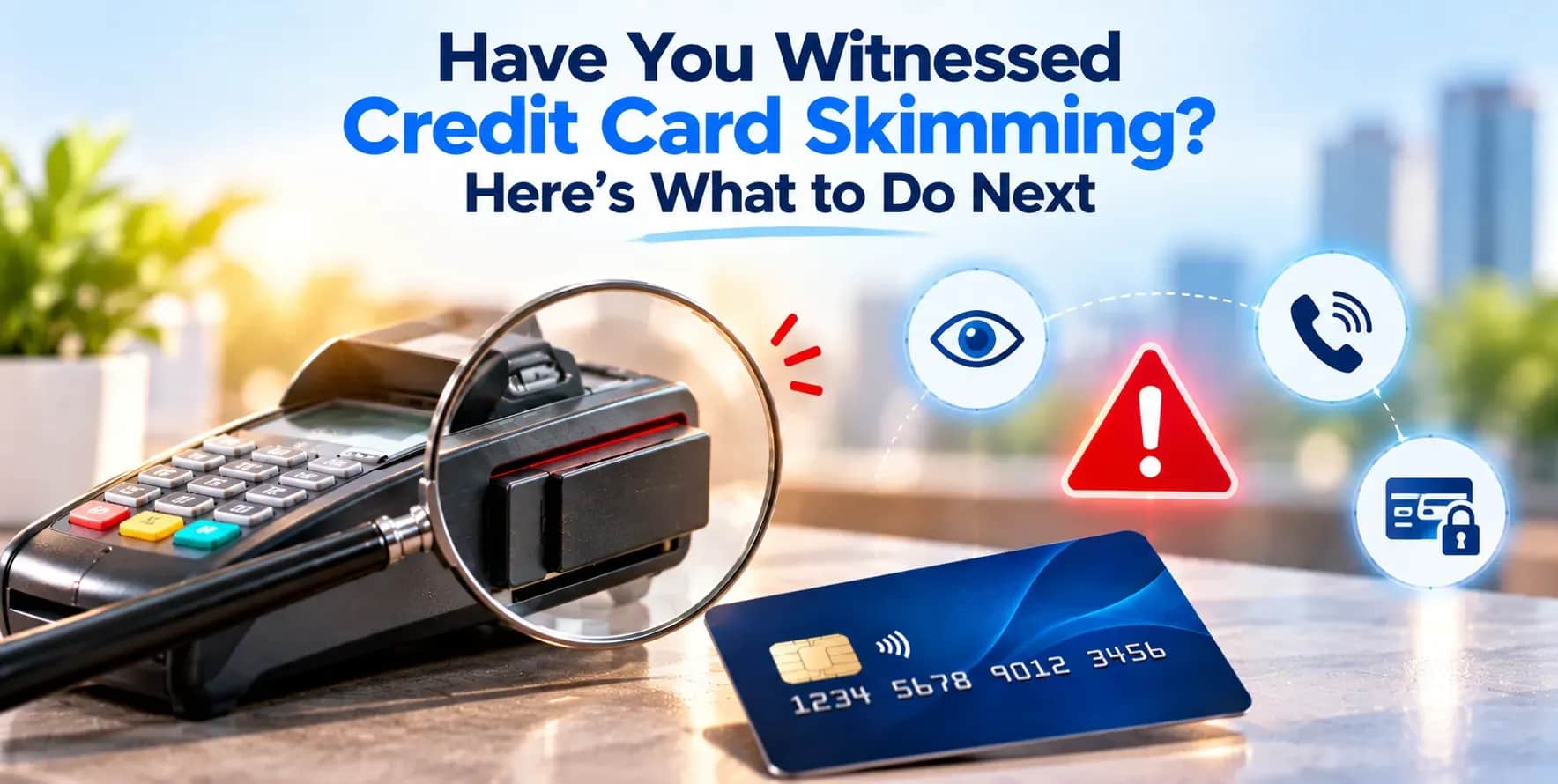
Credit card skimming is a type of fraud activity that includes criminals using devices at point-of-sale (POS) terminals. Most of the time, this activity leads to stealing your credit card details for unauthorised use. Unlike other electronic data theft, credit card skimming includes capturing information directly from your card that will be used to create a counterfeit. However, if you already have a doubt if your credit card is skimmed, you must instantly contact your card provider and block the card immediately. Skimming can be hard to detect sometimes; this is why it is important to regularly review your transactions and bank statements to identify any suspicious activity.
Key Takeaways:
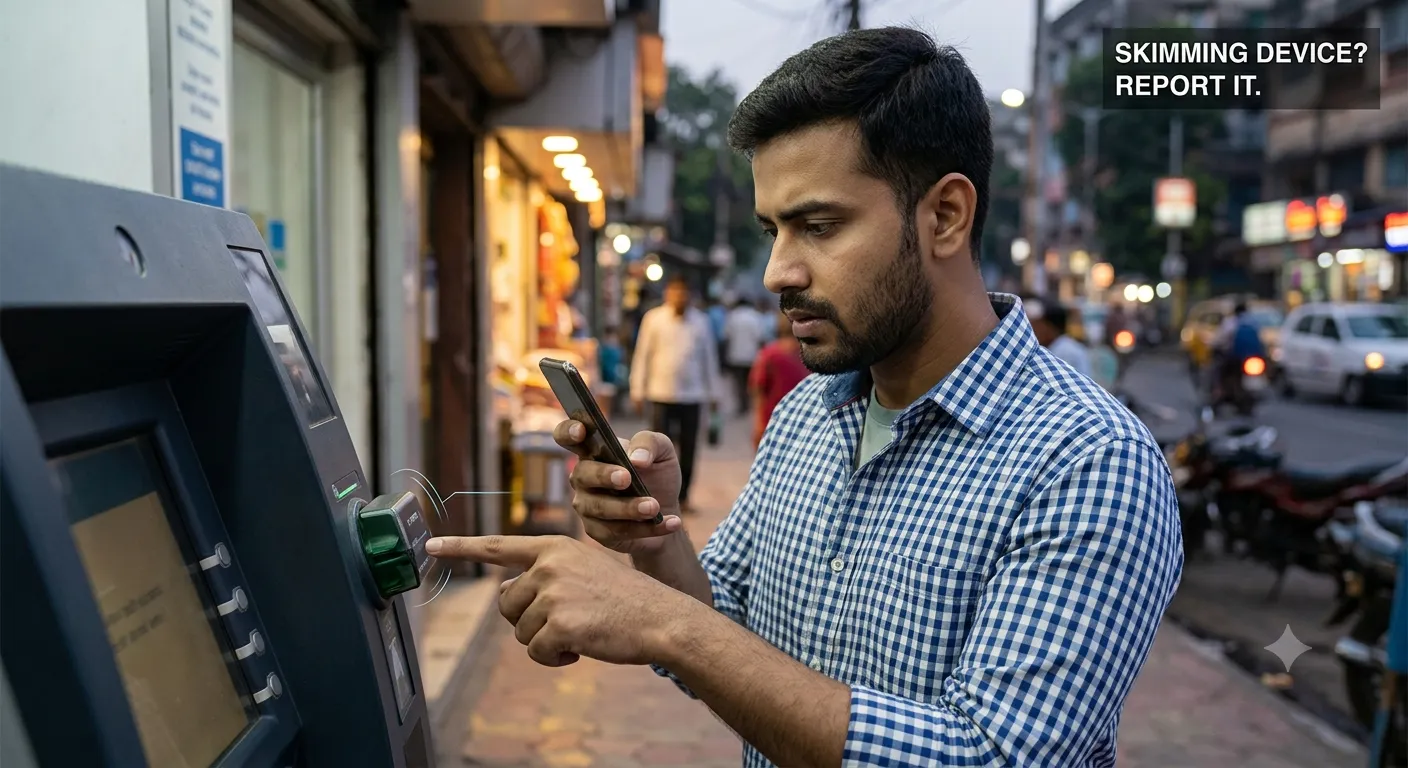
Credit card skimming is a crime that involves using a skimming device to capture the details of your credit card. The skimming devices are usually small and can be attached to ATMs, petrol pumps or other payment machines to extract the necessary information. Fraudsters may use stolen card details to make unauthorised payments without the cardholder’s knowledge or consent. Credit card skimming may go unnoticed most of the time as many of us forget to review our bank account. It is important to review your account statements regularly and contact your bank if you spot any unfamiliar transactions or suspicious activity.
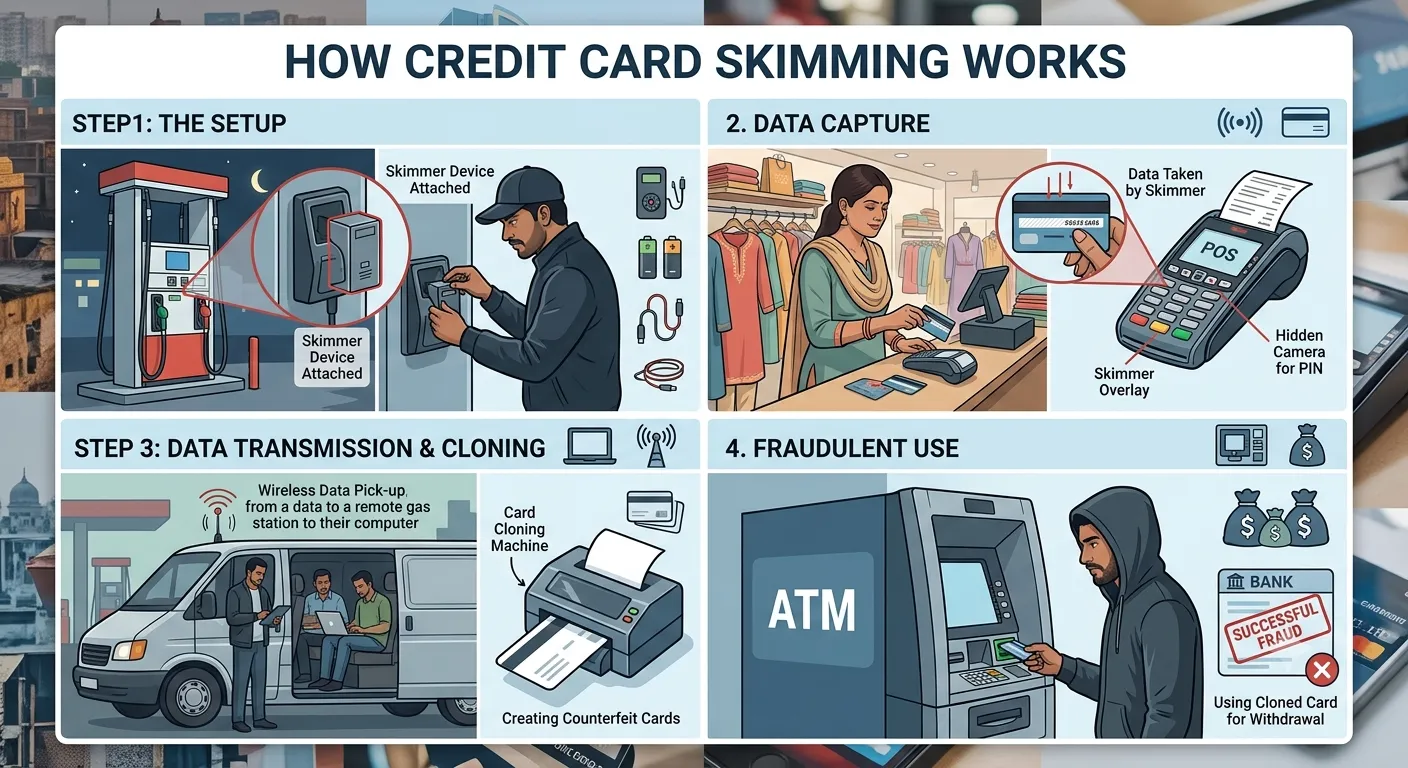
Credit card skimming occurs when criminals use skimming devices to obtain information from cards. It is important that people know how skimming devices work in order to detect them and protect their money.
You can reduce the chances of becoming a victim of credit card skimming. Ensure paying attention to little details and checking your bank statements for any suspicious activity. Make sure that you report any unrecognised transactions to your bank.
Credit card skimming devices can be attached to numerous objects where people tend to pay with their cards. This is why it is essential to know precisely what things are more susceptible to such theft.
In cases where an individual finds something unusual about the card machine, it is better not to use it and inform the management or bank about the suspicious activity.
Credit card skimmers are sometimes not easy to notice, but there are some warning signs that may indicate their presence. Recognising them and knowing how to protect yourself is essential in order to avoid credit card skimming. The following table discusses how to detect skimmers and prevent credit card skimming.
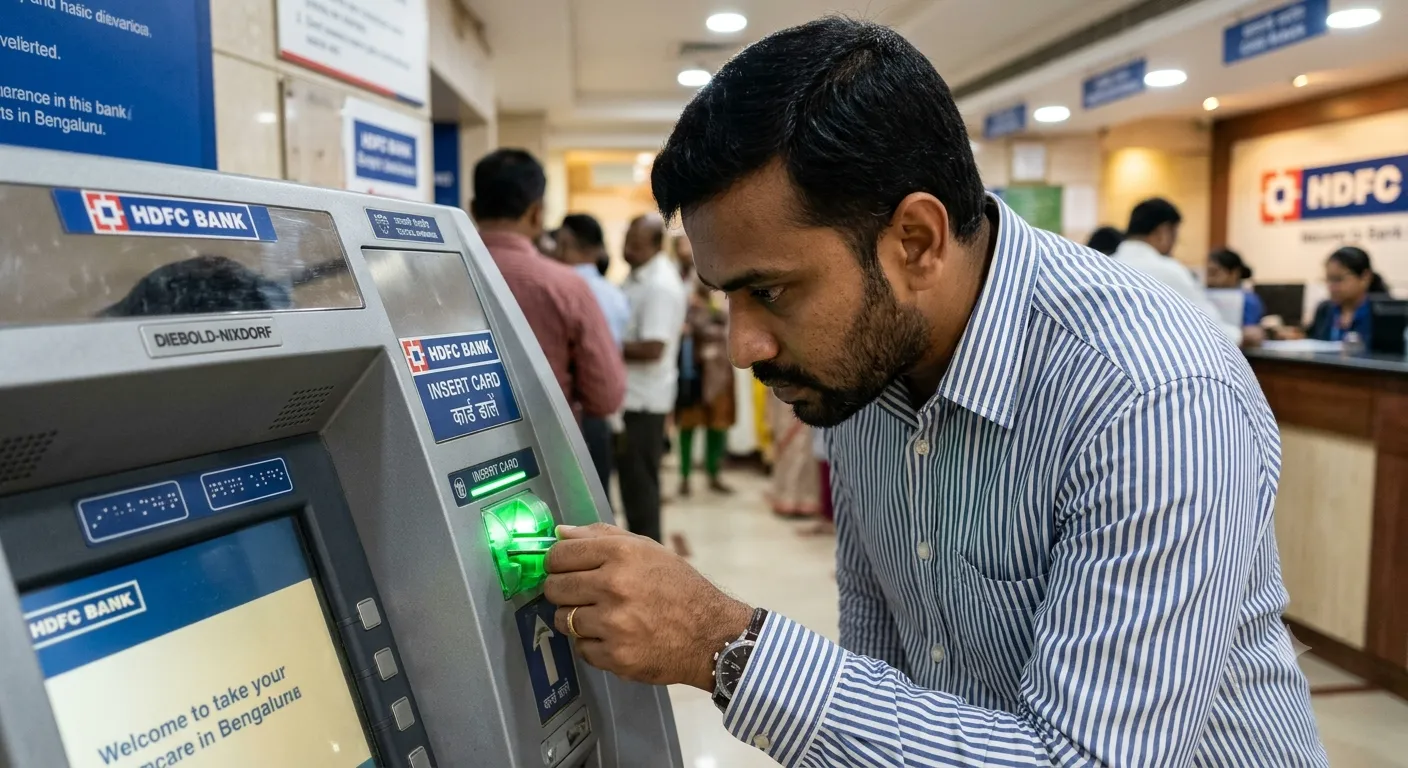
Remaining wary of credit card skimming is important in ensuring that one’s financial information is protected. It is essential to check the machine’s status, shield the PIN, and avoid using machines located in dimly lit and isolated places.
In the case of credit card skimming, criminals can steal your card data in various ways and use it for their own gain. So it is essential to reduce the chances of fraud and becoming a victim of fraud by learning the critical consequences of card skimming.
1. Identity theft – If your data is utilised by criminals, they can impersonate you and ruin your reputation.
2. Unauthorised purchases– The criminals can make unauthorised purchases using stolen card details. In this case, the responsibility depends on the situation, RBI guidelines, and the time of response and notification of the bank about the crime.
3. Counterfeit cards – The criminals can make counterfeit cards from the data and use them to make purchases instead of the original card.
You can reduce these risks by staying alert to suspicious card activity. You should report any unauthorised transactions to your bank immediately to limit further losses.
If you suspect that your credit card has been skimmed, there are a few immediate steps you can take to prevent further unauthorised use. Here are a few tips that should help you report the fraud and protect yourself from being charged for any unauthorised purchases.
Use the measures below to report credit card fraud and protect your credit card.
Taking action against credit card fraud can help you to minimise further losses. In addition, it is important that you follow the procedures recommended by your bank and keep track of all complaints in order to protect your credit card.
Credit card skimming can lead to cardholders becoming victims of fraud, but the damage can be minimised if they take appropriate action. The key is to check the transactions regularly and report any suspicious activity to the bank right away. If the card details have been compromised, it is advisable to call the bank and ask them to cancel the card to avoid further losses and request a new one. In addition, one should be wary of unauthorised withdrawal of cash from automated teller machines (ATMs) and point-of-sale (POS) terminals.
Credit card skimming devices can steal information stored on a card’s magnetic stripe, such as the card number and other encoded details. Criminals may use these details to make unauthorised transactions or create counterfeit cards.
Unusual transactions, unexpected notifications, or suspicious card activity may be signs of skimming. In such cases, it is necessary to immediately contact the bank and ask for help in lifting the card and eliminating problems with the account.
Skimming can take place at ATMs where the criminal usually inserts a skimming device at the card slot to get the card details of an unsuspecting victim. Always be wary of skimming devices when using ATMs.
Criminals can use phishing emails, fake websites, and malware to skim details of a victim’s card. It is important to be careful when browsing online, especially when transacting online.
Report the suspected skimming to your bank, block your card, and dispute the unauthorised charges with the bank. The bank will review and analyse the dispute according to the rules. In addition, you can request a new card to be issued.
The impact of credit card skimming on your credit score is indirect. If the fraudulent charges are not paid, and reported to the credit bureau as delinquent accounts, it will hurt your credit score.
Look out for dishonest devices on payment terminals, cover the PIN keypad when entering the code, and double-check that you are making online purchases on reliable websites.
This depends on the information stolen and the banking protocols in place. Fraudsters may try to make unauthorised transactions, especially if they manage to obtain the PIN.
Yes, in case of suspected online financial fraud, you can report it to India’s cybercrime reporting portal or your local police station. Retain a copy of the complaint for your records.
The question of liability depends on the nature of the skimming and the time of reporting. According to the RBI regulations, the customer's liability is either restricted or zero depending on the situation, the customer's reporting time, and whether a customer or bank is at fault.
Start your journey today
Apply Now*T&C apply