Check AI Loan Optimisation Plans to Reduce Your EMI

Disclaimer: The information published on LoansJagat is intended for general informational and educational purposes only and should not be considered financial, legal, or investment advice. Interest rates, loan terms, statistics, and other data may change over time and may vary by lender or source. Please verify the latest information and consult a qualified financial advisor or the respective Bank/NBFC before making any financial decisions.
Subscribe Now
About the author

Darshana Patel is a finance and tech writer with a strong background in journalism, financial economics, and political science, working with Loans Jagat. She has immense experience writing content through her previous work in fintech and edtech companies. Her contribution at Loans Jagat is to simplify finance-backed content and academically powered content for the readers.
Related Blog Post
Simplify All Your Loans Into One Affordable EMI

Customers Served

Debt Consolidated

1200+ Reviews

Locations in India
Club all Loans & Credit Card Bills into Single EMI

Quick Apply Loan
Consolidate your debts into one easy EMI.

Takes less than 2 minutes. No paperwork.

10 Lakhs+
Trusted Customers

2000 Cr+
Loans Disbursed

4.7/5
Google Reviews

50+
Banks & NBFCs Offers
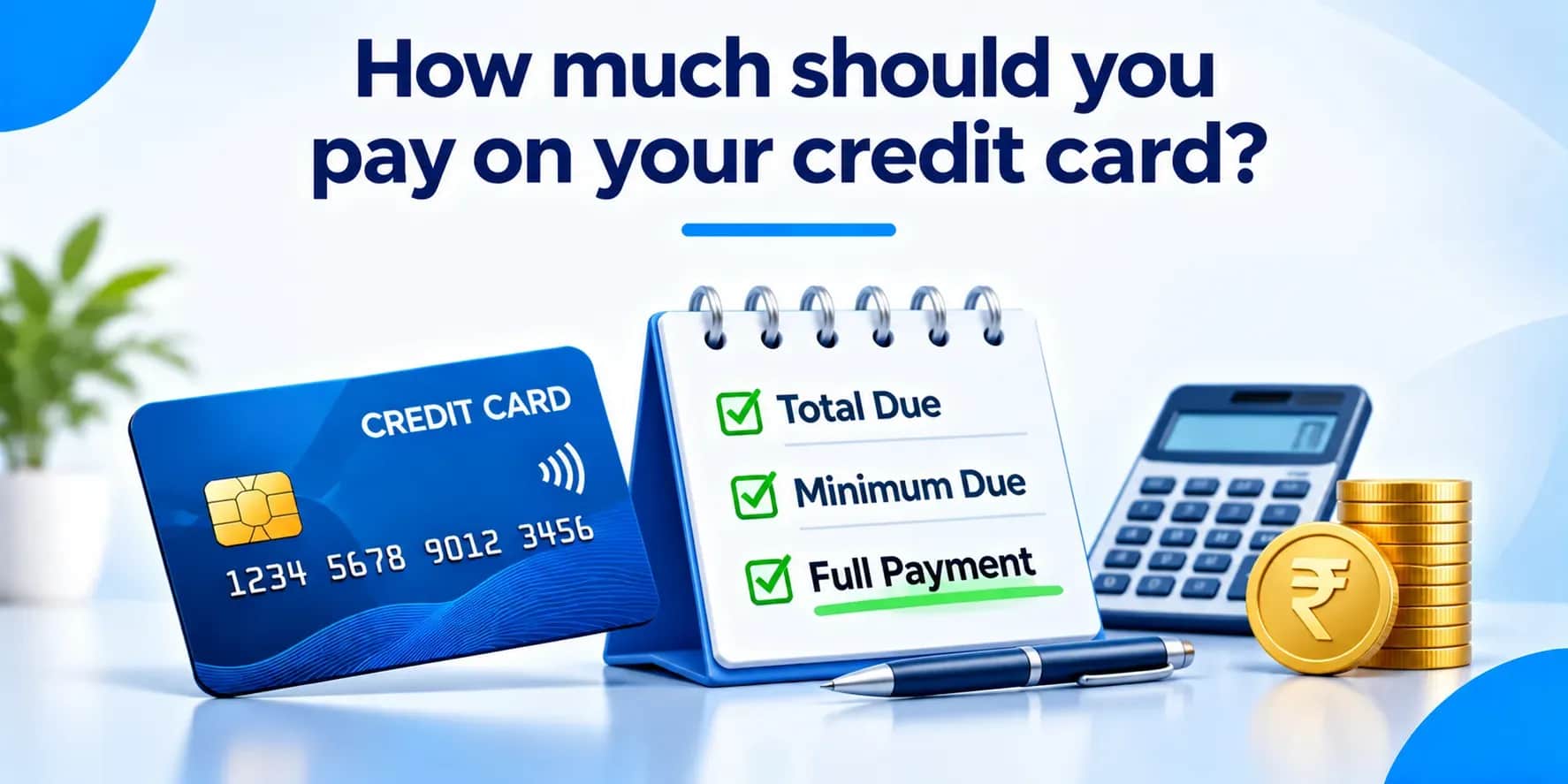
Credit cards are an efficient transactional tool for purchasing something or paying your bill without using your own money. This is money a cardholder needs to repay to the credit card issuer. Cardholders can repay the outstanding balance by paying either the total amount due or the minimum amount due. The choice may depend on their financial situation. Moreover, it also depends on the credit card issuer’s policies. In this blog, we will discuss the payment methods you can choose for your credit cards.
Key takeaways
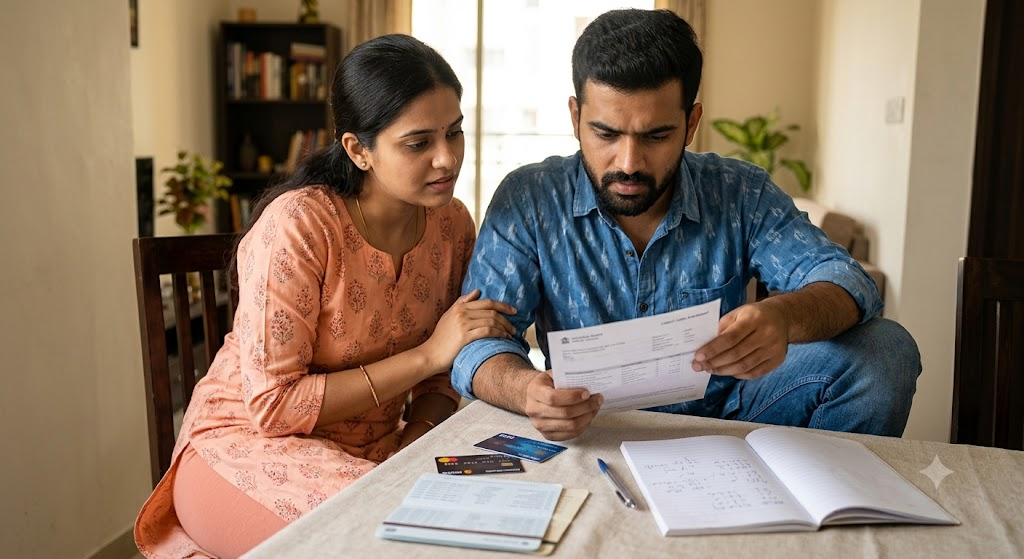
From a cardholder's point of view, the financial situation is unpredictable. Your ability to pay depends on whether you can pay the total amount due or the minimum amount due. However, the available payment options are also subject to the credit card issuer's terms and conditions.
Paying the total due is when a cardholder pays the complete outstanding amount due to the credit card issuer. In this case, the interest rate may not apply, and late payment charges may also not apply, depending on the credit card issuer’s terms.
For example, if you purchase an item worth ₹4,000, you can repay the full amount to the credit card issuer by the payment due date. This means you have not paid the amount late, nor will any charges be applied to you according to the issuer’s terms.
'Minimum amount due (MAD)' refers to the minimum due amount or amount you will be paying to the issuer by the due date to keep the account in good standing. However, it may not be ideal for long-term financial health. The major reason for this is that interest may accrue on the outstanding balance.
For example, suppose you make a purchase worth ₹5,000 using your credit card. If the minimum amount due shown on your statement is ₹1,500, you can pay ₹1,500 by the due date instead of paying the full ₹5,000. The remaining ₹3,500 will continue as an outstanding balance and may attract interest and other applicable charges.
Cardholders can choose between two payment options when deciding how much to pay towards their credit card bill. The choice depends on the issuer's terms and their financial circumstances.

The benefits of paying the total amount due and the minimum amount due are very different. On one hand, paying the total amount due can help to keep your credit profile clean because of complete payment. Whereas paying the minimum amount due may save you from late payment charges, as per the issuer’s terms and conditions.
Hence, these are the major benefits provided by the total amount due and minimum amount due payment options.
The way you repay your credit card bill can affect your interest costs and monthly budget. Understanding the risks of each payment option can help you manage your dues more carefully.
Paying the total amount due on time generally helps avoid interest on purchases. This is especially true when the interest-free period conditions are met. However, consistently clearing the full balance may create a false sense of financial flexibility and encourage higher spending. Large purchases may strain a cardholder's budget. This can happen if their financial circumstances change or repayment becomes difficult.
Hence, these are some of the major risks associated with paying only the minimum amount due and managing the total credit card balance.
The most optimal credit card payment option depends on the user’s financial situation. If possible, pay the full statement balance by the due date. This may help avoid interest on purchases, subject to the card's terms. This is true provided the interest-free period conditions are met.
If you cannot pay the full amount, try to pay at least the minimum amount due by the due date. This may help avoid late payment charges (subject to the issuer's terms). In either case, the cardholder should consider their financial situation before making a payment. Ideally, the cardholder should always pay the total amount due if they are able to do so.
A cardholder can pay the total amount due or the minimum amount due on their credit card, subject to the issuer’s payment terms. Both options have some advantages and disadvantages that should be considered by the cardholder. The choice depends on the cardholder's financial situation. Paying the total amount due may help avoid interest on purchases if the interest-free period conditions are met.
'Total due amount' is the term used for the full amount that a cardholder needs to pay on their payment due date.
Whether paying the total amount due can avoid interest charges depends on the credit card issuer’s terms and conditions.
Late payment charges and interest may apply if you fail to pay your credit card bill by the due date, depending on the issuer’s terms and conditions.
Making timely repayments can impact the cardholder’s spending pattern psychology. This is because having no outstanding dues can make them feel like spending more. Sometimes this could lead to overspending.
'Minimum due amount’ refers to the credit card payment where a cardholder pays the minimum amount to the issuer as per their policies to avoid any charges. However, interest may still be charged on the remaining unpaid balance, increasing the overall cost of using the credit card.
The choice depends on the cardholder’s finances. Paying the minimum due may help avoid late payment charges, subject to the issuer’s terms, but paying the total amount due is generally preferable.
Paying only the minimum amount due may lead to interest charges on the remaining balance, increase borrowing costs, and extend the time needed to repay the outstanding debt.
Some credit cards may allow the cardholder to convert their credit card bill into EMIs depending on the issuer’s terms and conditions.
The charges on a credit card differ from issuer to issuer depending on the type of card and the issuer’s terms.
An interest-free period is the time during which eligible credit card purchases may not attract interest. This usually requires payment of the full statement balance by the due date, subject to the issuer's terms.
Start your journey today
Apply Now*T&C apply