By continuing, you agree to LoansJagat's Credit Report Terms of Use, Terms and Conditions, Privacy Policy, and authorize contact via Call, SMS, Email, or WhatsApp
Disclaimer: The information published on LoansJagat is intended for general informational and educational purposes only and should not be considered financial, legal, or investment advice. Interest rates, loan terms, statistics, and other data may change over time and may vary by lender or source. Please verify the latest information and consult a qualified financial advisor or the respective Bank/NBFC before making any financial decisions.
Subscribe Now
About the author

Darshana Patel
Darshana Patel is a finance and tech writer with a strong background in journalism, financial economics, and political science, working with Loans Jagat. She has immense experience writing content through her previous work in fintech and edtech companies. Her contribution at Loans Jagat is to simplify finance-backed content and academically powered content for the readers.
Related Blog Post
Simplify All Your Loans Into One Affordable EMI

Customers Served

Debt Consolidated

1200+ Reviews

Locations in India
Club all Loans & Credit Card Bills into Single EMI

Quick Apply Loan
Consolidate your debts into one easy EMI.

Takes less than 2 minutes. No paperwork.

10 Lakhs+
Trusted Customers

2000 Cr+
Loans Disbursed

4.7/5
Google Reviews

50+
Banks & NBFCs Offers
Other services mentioned in this article
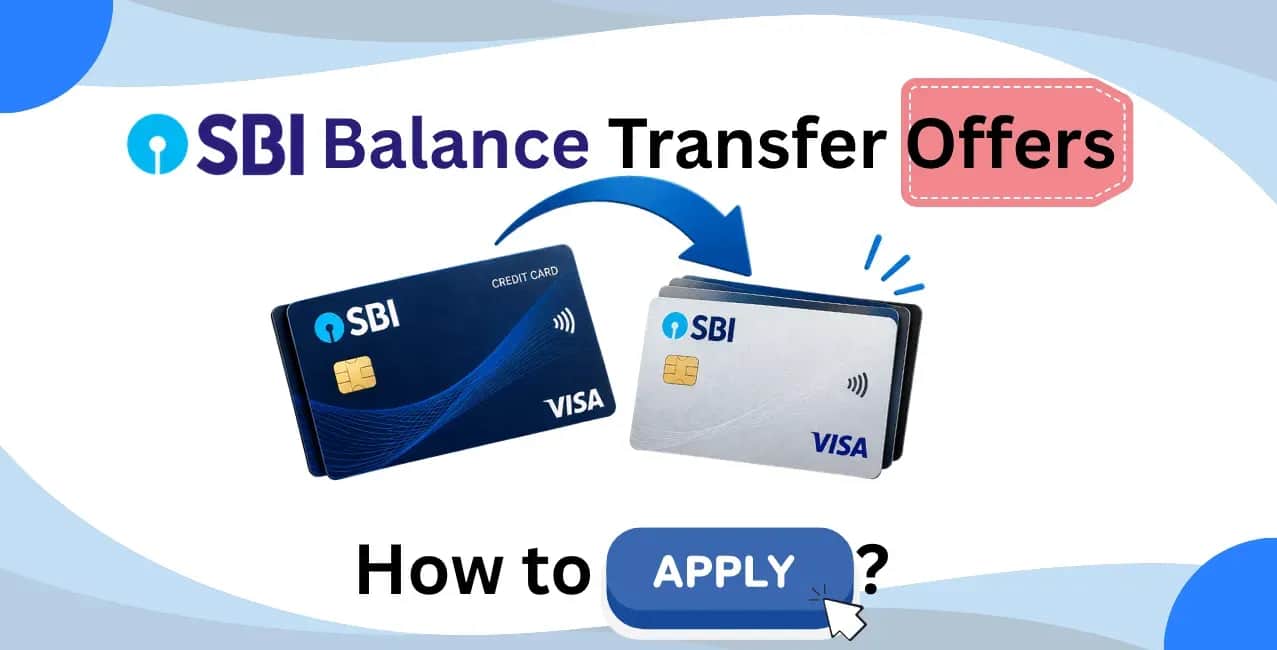
A balance transfer allows you to move an unpaid amount from one account to another. It can be used to manage existing dues and repay the transferred amount based on the terms offered. The interest rate, repayment period, and other charges may vary depending on the transfer terms. SBI also provides a balance transfer facility for eligible credit cardholders, subject to its applicable terms and conditions. In this blog, we will learn about the SBI card balance transfer in detail.
Key takeaways:
The SBI Credit Card Balance Transfer facility allows eligible primary SBI cardholders to transfer outstanding credit card dues from other banks to their SBI credit cards. This can bring the dues under one card and may make them easier to manage. The transferred amount can be repaid as per the terms of the balance transfer. The interest rate and repayment period may vary based on the offer available to the cardholder. Other charges may also apply depending on the terms. Before applying, it is useful to check the details of the balance transfer facility and understand the applicable terms.
SBI card balance transfer provides multiple benefits that one can consider. This can be in terms of interest rate, financial management, etc.
A balance transfer may come with better terms and conditions with another lender. This may affect your interest payable, which can reduce the financial burden in comparison to your older credit card.
Balance transfer makes it easier for people to keep track of their payments, especially if you have multiple dues from multiple credit cards. So, transferring them to one credit card can help you with better payment management.
Before taking a balance transfer, you can check your dues, fees, credit limit, and repayment terms. Looking at these details can help you know how much you may need to pay and plan your payments better.
Hence, these are the major benefits provided by the SBI balance transfer facility.
SBI has provided certain ways to contact them for a balance transfer, such as through the website, SMS, mobile app, etc.
Hence, these are the multiple channels SBI Bank provides for the balance transfer.
There are multiple features provided by the SBI balance transfer, including repayment, interest rates, etc.
Hence, these are the major features of the SBI balance transfer.
The balance transfer facility may be available with different interest rates, repayment periods, and processing fees. The applicable option can depend on the offer available to the cardholder.
*T&C Apply
Before choosing an option, it is useful to check the applicable terms, fees, and repayment period. This can help you understand the cost of the balance transfer and choose an option that suits your repayment plan.
A balance transfer can be useful for handling credit card dues, but there are a few things you should keep in mind before taking one. The actual terms may differ based on the offer available to you.
1. Extra Charges
A balance transfer may come with a processing fee or other charges. These costs are added to the amount you need to pay, so checking them beforehand can help you understand the total cost.
2. Interest Rate May Change
SBI Bank applies the standard finance charges if the balance transfer amount is not repaid with in tenure. It is better to check what rate may apply after the offer ends.
3. Credit Report May Be Affected
A balance transfer application may involve a credit check. Such a check can have an impact on your credit report, depending on your credit history and other factors.
4. More Spending on the Old Card
After moving the balance, you may have some credit available on your old card again. If you start using that card for new purchases, your total credit card dues may increase.
So, before taking a balance transfer, check the fees, interest rate, repayment period, and other terms that apply to the offer.
SBI provides the facility of balance transfer to manage credit card dues. Hence, it is important to read all the terms and conditions provided by SBI Bank for the balance transfer before proceeding with it.
The balance transfer refers to moving an outstanding balance due from one banking account to another banking account. This can be done for credit cards, certain loans, etc.
Yes, SBI supports credit card balance transfers with certain terms and conditions with eligible primary SBI cardholders as per the eligibility conditions.
No, one cannot transfer the outstanding balance of an existing SBI credit card to another SBI credit card.
Yes, both are different. Balance transfer shifts the outstanding balance to another account, and balance settlement is when the borrower pays the reduced lump-sum amount to the lender on mutual agreement due to financial hardship.
Yes, both are different. Balance transfer shifts the outstanding balance to another account, and balance settlement is when the borrower pays the reduced lump-sum amount to the lender on mutual agreement due to financial hardship.
The major drawback of the SBI balance transfer process is that there could be an extra charge you might need to pay for the balance transfer.
No, the Balance Transfer facility can only be used for cards owned by the primary cardholder in their own name; another SBI Credit Card cannot be used for the transfer.
You can book a balance transfer for a minimum of ₹5,000, up to 75% of the available credit limit on your primary SBI credit card. The maximum amount you can transfer will be shown when you book the balance transfer.
Yes, SBI allows you to do a balance transfer on all types of credit cards. Further acceptance may depend on the lender's assessment.
SBI balance transfers may provide you with lower interest rates as per the assessment and help to lower the financial burden caused by huge credit card debts.
The SMS number for the SBI balance transfer is 56767.