By continuing, you agree to LoansJagat's Credit Report Terms of Use, Terms and Conditions, Privacy Policy, and authorize contact via Call, SMS, Email, or WhatsApp
Disclaimer: The information published on LoansJagat is intended for general informational and educational purposes only and should not be considered financial, legal, or investment advice. Interest rates, loan terms, statistics, and other data may change over time and may vary by lender or source. Please verify the latest information and consult a qualified financial advisor or the respective Bank/NBFC before making any financial decisions.
Apply for Loans Fast and Hassle-Free
Subscribe Now
About the author

LoansJagat Team
‘Simplify Finance for Everyone.’ This is the common goal of our team, as we try to explain any topic with relatable examples. From personal to business finance, managing EMIs to becoming debt-free, we do extensive research on each and every parameter, so you don’t have to. Scroll up and have a look at what 15+ years of experience in the BFSI sector looks like.
Related Blog Post
Simplify All Your Loans Into One Affordable EMI

Customers Served

Debt Consolidated

1200+ Reviews

Locations in India
Club all Loans & Credit Card Bills into Single EMI

Quick Apply Loan
Consolidate your debts into one easy EMI.

Takes less than 2 minutes. No paperwork.

10 Lakhs+
Trusted Customers

2000 Cr+
Loans Disbursed

4.7/5
Google Reviews

50+
Banks & NBFCs Offers
Other services mentioned in this article
Key Takeaways
Bonus Point: A critical illness policy does not cover every disease. It only covers specific illnesses that are clearly listed in the policy document, so always review the terms, inclusions, and exclusions before buying the policy.
Imagine getting a financial lifeline right when life throws its toughest curveball. That’s exactly what a critical illness rider in health insurance does. It sounds useful, right? Let’s break it down in a simple, no-confusion way.
A critical illness rider is like a backup superhero for your insurance plan. When a serious illness strikes, it jumps in with a lump sum payout. Think of it as a power bank; when your main battery (health insurance) drains, this keeps you going.
Picture this: you’re diagnosed with a major illness like cancer, and recovery takes months. Hospital bills are covered, but your income pauses and expenses don’t. That’s where a critical illness rider steps in, giving you cash to handle EMIs, bills, and daily life stress-free.
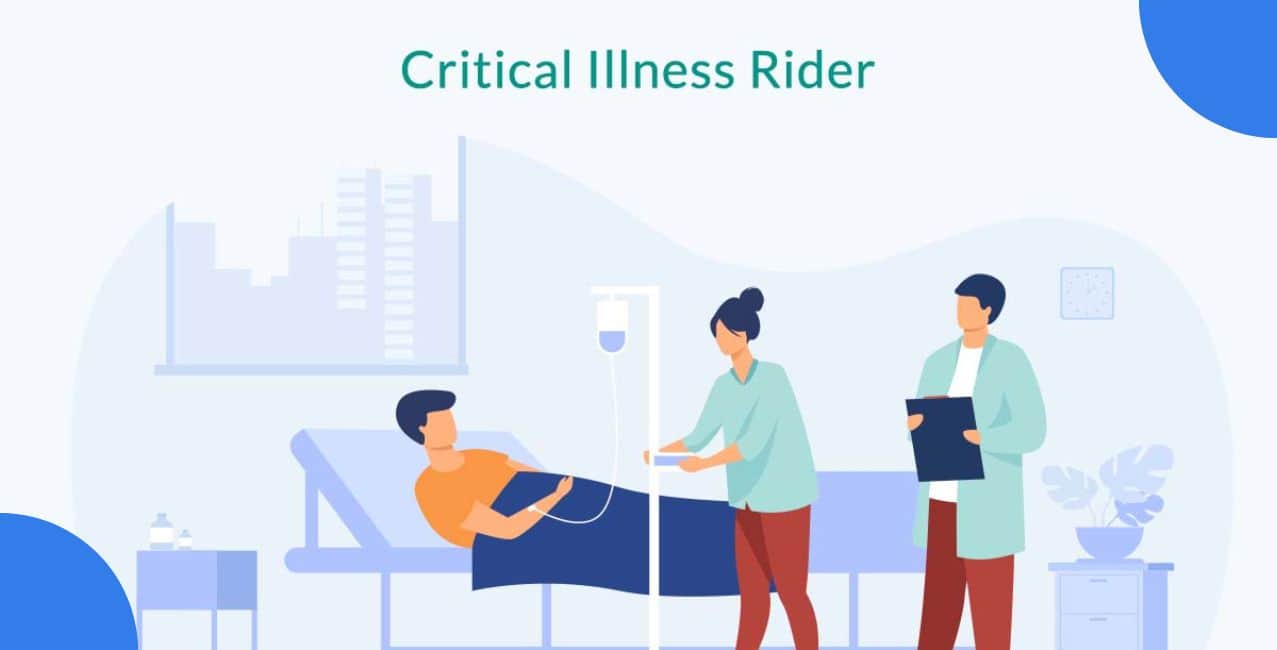
A critical illness rider is an add-on cover that you can attach to your existing health or life insurance policy. It provides a lump sum payout if you’re diagnosed with a listed critical illness such as cancer, kidney failure, heart attack, or stroke.
Unlike regular health insurance, which reimburses hospital bills, this rider gives you flexible cash. You can use it for:
That’s why the critical illness rider in health insurance is not just helpful—it’s often essential.
Many people assume their base health insurance is sufficient. But here’s the reality:
A critical illness can force you to take months (or years) off work. The lump sum from a rider helps bridge that financial gap.
Let’s simplify it:
This structure makes term life insurance with a critical illness rider especially valuable, as it combines life cover with living benefits.
A term life insurance with a critical illness rider offers the best of both worlds:
This combination ensures that your family remains financially secure even if you survive a major illness but cannot earn a living.
The right insurer feels like an IPL team; many shine on paper, but few truly deliver:
*T&C Apply
Both options offer value; choose reliability or flexibility wisely, and your future self will thank you.
Before you jump in and add a critical illness rider in health insurance, here are a few things you definitely don’t want to ignore:
A quick check now can save you from big headaches (and expenses) later, so don’t skip the details!
While coverage varies by insurer, most riders include:
Always check the policy document for the exact list.
Health emergencies are unpredictable, but financial preparedness doesn’t have to be. A critical illness rider in health insurance can make a huge difference when life takes an unexpected turn.
Whether you explore options like the critical illness rider HDFC ERGO or the critical illness rider Bajaj Allianz, choose wisely. The goal is simple: protect your savings, income, and peace of mind for a secure future.
If you’re already considering term life insurance with critical illness rider, you’re on the right track toward complete financial security.
Q1: What is a critical illness rider?
A critical illness rider is an add-on to an insurance policy that provides a lump-sum payment if the policyholder is diagnosed with a serious illness.
Q2: How does a critical illness policy work?
A critical illness policy pays a lump-sum cash benefit if the insured person is diagnosed with a covered serious illness. These illnesses may include cancer, heart attack, or stroke.
Q3: Do I need critical illness insurance at 21?
At 21, critical illness insurance may not always be necessary for everyone. Adding a critical illness rider to a life insurance policy can provide early financial protection at a lower premium.
Q4: Can you buy a critical illness policy separately from health or term insurance?
Yes, a critical illness policy can be purchased separately as a standalone plan, apart from health insurance or term life insurance.
Q5: Can a critical illness rider be denied due to PCOD?
Yes, insurers may deny a critical illness rider if certain medical conditions, like PCOD, are considered higher risk during underwriting.