By continuing, you agree to LoansJagat's Credit Report Terms of Use, Terms and Conditions, Privacy Policy, and authorize contact via Call, SMS, Email, or WhatsApp
Disclaimer: The information published on LoansJagat is intended for general informational and educational purposes only and should not be considered financial, legal, or investment advice. Interest rates, loan terms, statistics, and other data may change over time and may vary by lender or source. Please verify the latest information and consult a qualified financial advisor or the respective Bank/NBFC before making any financial decisions.
Subscribe Now
About the author

Vidhi Chauhan
Vidhi Chauhan is a copywriter and content writer with extensive experience creating high-quality, SEO-driven content across multiple industries, with a strong focus on fintech. She has written extensively on GST, banking, personal loans, business loans, credit cards, income tax, insurance, and other financial topics, helping Indian readers understand complex concepts through clear, accurate, and engaging content.
Related Blog Post
Simplify All Your Loans Into One Affordable EMI

Customers Served

Debt Consolidated

1200+ Reviews

Locations in India
Club all Loans & Credit Card Bills into Single EMI

Quick Apply Loan
Consolidate your debts into one easy EMI.

Takes less than 2 minutes. No paperwork.

10 Lakhs+
Trusted Customers

2000 Cr+
Loans Disbursed

4.7/5
Google Reviews

50+
Banks & NBFCs Offers
Other services mentioned in this article
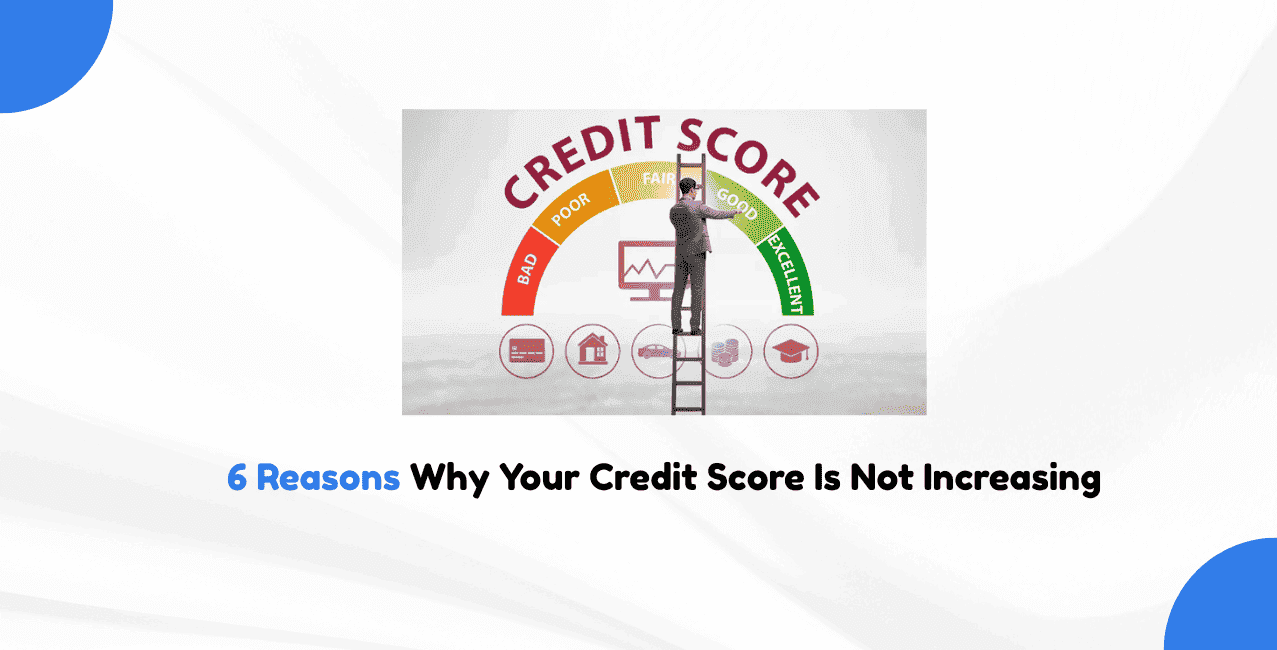
A credit score is not automatically improved just by paying bills on time. On the contrary, there are many different explanations as to why a credit score does not change despite your efforts to manage your finances responsibly. The following factors, including payment history, credit utilisation rate, duration of credit history, credit inquiries, and accuracy of information in a credit report, affect the credit score.
Most of the time, many people believe that paying the minimum amount required from the credit card will be sufficient for maintaining good credit history. But when it comes to analysing your debt management skills, lenders will have a broader perspective. Even making small errors like missing a payment or high credit utilisation can take time.
An insight into all these aspects will allow you to recognise any issues beforehand and take proper actions to enhance your creditworthiness. In this article, six different aspects that cause low growth in credit score will be discussed.
Key Takeaways
Consumers usually think that making payments on time would automatically enhance their credit score; however, getting stuck with your credit score can be more common than you realise. According to TransUnion CIBIL, a credit score is made up of many things, such as payment behaviour, credit usage, etc.
Moreover, CIBIL explains that credit repair takes some time and does not just happen instantly. Regular payments, reduced debt amounts, and regular checks on the credit report will slowly improve your credit score.
Also Read: Which option affects the CIBIL score more?
There is an assumption among many individuals that it is sufficient to pay their EMIs and credit card bills regularly to get a higher credit score. In reality, the credit score calculation involves many factors considered by the credit bureaus, such as TransUnion CIBIL.
The following are the six most common reasons for not getting a higher credit score.
One of the leading causes of an unchanging credit score is when people make only the minimum payment. Most credit card holders pay only the minimum required each month, believing that paying on time is enough to ensure a good score. However, although it prevents you from incurring any late fees, it does not lower your debt.
Credit utilisation is how much of your credit limit you are using. If you have a high outstanding balance, it means you are using more of your credit. This shows lenders that you are stressed financially, and this might affect your credit score negatively and stop it from improving.
Solution
Your credit score may be affected in a negative way by high credit utilisation even if you pay off all your bills on time. For instance, if your credit card limit is ₹1,00,000 and you use up to ₹70,000, then your credit utilisation ratio is 70%.
Lenders tend to like borrowers who make good use of their credit and have enough available credit. If your ratio is consistently high, it could suggest that you rely on credit and will be hesitant to extend more credit to you.
This situation gets even more troublesome when you find yourself maxing out your credit or having multiple cards with high balances.
How to Solve It
It is one of the significant factors in computing your credit score. Even a single missed EMI or overdue credit card bill can stay on your credit report for years to come.
A late payment means high risk for the lender because it indicates bad financial planning. Even if you make a late payment for only a few days, it will have an impact on your creditworthiness if you continue to be late beyond the reporting period.
Consistent late payments can lead to a sharp decline in your score, and you may find it difficult to take any loan in the future.
Solution to this problem
For every application you make, a hard inquiry is done by the lending institution to evaluate your financial standing. While a few inquiries will not hurt your score, too many inquiries within a short period may affect your score.
A lender sees several applications from an individual as an indicator of the fact that he or she is experiencing some financial problems.
Such people are regarded as being risky borrowers. When you apply to various lenders at once, it creates an impression that you depend too much on credit.
How to Correct This Situation
*T&C Apply
Your credit history is also an important parameter for calculating your credit score. The credit agencies assess how long you have used credit and how well you have managed it throughout the period.
If you just received your first credit card or loan, there is not sufficient data for establishing a robust credit profile. If you close your oldest credit card account, you could lower the average age of your accounts.
Credit histories that span a longer period tend to instil more trust in a borrower’s ability to pay back the loan.
How to resolve it
Even when you have managed to handle your finances in a responsible manner, mistakes in your credit report will ensure that your score does not improve. Any mistakes made in your personal details, duplicates, wrong details on payments made, and loan closures will all have an adverse impact on your credit score.
Fraudulent transactions and identity theft can be a problem too. Given that lenders use the details from your credit report, any mistakes can have major ramifications.
It will assist you in finding solutions to these problems.
How to fix it
Also Read: How to Improve Your Credit Score?
Credit scoring is a process that takes time and entails discipline. Timely bill payments are a priority, but it is equally crucial to ensure minimal credit utilisation, refrain from making numerous credit applications and periodically check your credit history. Through the identification of such commonly experienced problems, one can slowly but surely develop a good credit history.
The period needed to raise my credit score depends on the level of my financial behaviour as well as how serious the past problems were. Usually, it might take several months since there are periodic updates of the credit history by banks and credit bureaus.
When I check my own credit score, it will not change my credit score because it will be regarded as a soft inquiry. It is safe for me to check my report as often as I want to.
Closing my credit card will not necessarily help me raise my credit score. A smaller credit limit will increase my credit utilisation ratio.
Sometimes lenders take into account the past performance of a guarantor when reviewing an application for a loan. In case of default by the borrower, the guarantor will also have to face repercussions.
Yes, credit cards are just one of many ways of creating a credit history. Other types of loans, such as personal, home, and educational loans, can create your credit score too.
Yes, since loan settlements mean that the full amount was not paid back as agreed initially, these factors may affect the credit score.
There is no direct influence of increased income on credit scores. The credit bureaus are more interested in your spending pattern and repayments than your salary.
A good combination of different kinds of credits (secured/unsecured) can be helpful for improving your credit rating since it shows that you know how to handle different kinds of liabilities.
An unused credit card cannot directly harm your score, but if the inactivity of the card lasts too long, the creditor can close it. This might decrease your overall credit limit.
You have to examine your credit record and see whether there are any mistakes, fraud, or recent defaults. You should inform the credit institution and the credit bureau about them and start the process of correction.