By continuing, you agree to LoansJagat's Credit Report Terms of Use, Terms and Conditions, Privacy Policy, and authorize contact via Call, SMS, Email, or WhatsApp
Disclaimer: The information published on LoansJagat is intended for general informational and educational purposes only and should not be considered financial, legal, or investment advice. Interest rates, loan terms, statistics, and other data may change over time and may vary by lender or source. Please verify the latest information and consult a qualified financial advisor or the respective Bank/NBFC before making any financial decisions.
Apply for Loans Fast and Hassle-Free
Subscribe Now
About the author

LoansJagat Team
‘Simplify Finance for Everyone.’ This is the common goal of our team, as we try to explain any topic with relatable examples. From personal to business finance, managing EMIs to becoming debt-free, we do extensive research on each and every parameter, so you don’t have to. Scroll up and have a look at what 15+ years of experience in the BFSI sector looks like.
Related Blog Post
Simplify All Your Loans Into One Affordable EMI

Customers Served

Debt Consolidated

1200+ Reviews

Locations in India
Club all Loans & Credit Card Bills into Single EMI

Quick Apply Loan
Consolidate your debts into one easy EMI.

Takes less than 2 minutes. No paperwork.

10 Lakhs+
Trusted Customers

2000 Cr+
Loans Disbursed

4.7/5
Google Reviews

50+
Banks & NBFCs Offers
Other services mentioned in this article
Key takeaways
Bonus tip - UPI usage is growing very fast, with about 240 billion transactions expected in FY26.
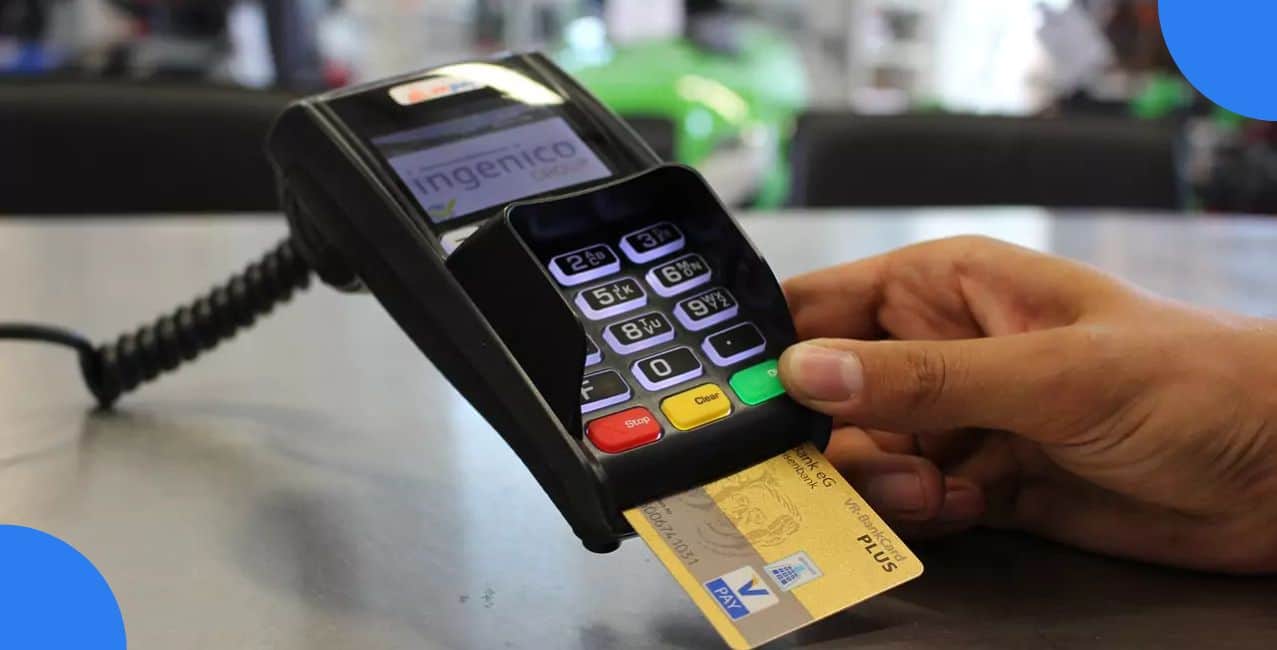
In business, transactions are a must. When customers or any other business wants to send money to a merchant it needs a specific method. Merchants have to set up an account with a payment processing company for the payment via debit or credit card. In this transaction, the payment processor company charges some fees, and this fee is known as MDR.
One day, I was sitting alone and just scrolling through the reels. I landed on a page where the advertisement for public speaking was displayed. I thought of giving it a try and signed up there. After getting to know all the details, I decided to roll into it. They were charging ₹7,800 for 12 sessions. I logged into the website and paid this amount. I paid this amount through a debit card, but the invoice of ₹70 was deducted. Then I realised it was a platform fee.
Merchant discount rate is the fee that online payment service companies charge on each debit or credit card transaction. Normally, this fee is 1% to 3% of the total amount of the transaction. Companies like Razorpay facilitate merchants to receive money from customers, and in return, they charge some fees on transactions.
For example, if you have a grocery store and a customer bought 1kg of peanuts for ₹100 and paid online. The merchant will not receive a total of ₹100. The processing company will charge some fees, ₹10 to ₹30, and the merchant will get the rest in their bank.
This 1% to 3% charging fee includes processing fees for the platform, interchange fees if you are transacting through a card, and an assessment fee. It also includes a markup fee and some additional fees.
When customers go for digital transformation instead of cash, the merchant discount rate works sequentially. Merchant Discount Rate (MDR) in India is the fee that a merchant pays to a bank or payment provider when a customer makes a digital payment.
1. Customer initiates a transaction via a Point-of-Sale (POS) terminal or an online payment gateway.
2. The payment processor automatically sends all the transaction details to the card network, such as Mastercard or Visa. Then this card network verifies funds in the transactor’s bank.
3. Transactors can approve or decline this request. It depends on the balance in the bank account.
4. If a Bank-approved transaction, the payment processor transfers funds, and at the same time, MDR is deducted.
5. This deducted fee is automatically distributed into the issuing bank, the card network, and the payment processor.
This is how the merchant discount rate works. Use a merchant discount rate calculator to quickly estimate transaction fees on digital payments.
Merchant discount rate is the fee that fund transferring companies charge on online transactions. It depends on card type, transaction value, and payment network.
1. Debit Card MDR
The Government of India is launching many initiatives for the promotion of digital payments. Under this motive, the debit card MDR is lower than the credit card MDR. Debit card MDR depends on card networks like Visa, Mastercard, RuPay, and merchants’ annual turnover.
Debit card MDR in India depends on the network and merchant turnover, so charges can vary.
2. Credit Card MDR
Credit card MDR is higher than debit card MDR in India. Credit card MDR is normally 1% and 3%. This is not regulated by the RBI. Its rates are determined by the agreement between the merchant and the payment processing companies.
1.8-2.5%
*T&C Apply
1.55-2.9%
In India, credit card MDR is higher and market-driven.
3. UPI MDR
According to the regulations, from March 2026, if you use bank-to-bank UPI transactions below ₹2,000, there are no fees for merchants. Zero merchant discount rate allows merchants to receive full payment without any transaction charges. For transactions above ₹2,000, the fee is 0.5%.
4. Prepaid Cards or Wallets
Prepaid Payment Instruments like Paytm, Amazon Pay, and MobiKwik charge some interchange fees. If the transaction is less than ₹2,000, there are 0% fees; for transactions more than ₹2,000, fees are 0.5% to 1.1%.
Marchant fees are determined by the following factors.
So basically, MDR depends on how you pay, your business type and volume.
MDR is a fee that businesses pay for the transaction via debit or credit card. Generally, this fee is 1% to 3% of the total transaction. MDR supports payment infrastructure, promotes digital payments, and encourages innovation.
Which one of the following best describes the term merchant discount rate?
Merchant Discount Rate is the fee that merchants pay to payment processor companies for the transaction. Merchants pay this for a secure payment infrastructure.
Is MDR applicable to UPI transactions in India?
The Government of India is promoting digital transactions, so there are no fees on UPI transactions in India.
Why do small businesses complain about MDR charges?
Merchant Discount Rate charges on every transaction made by customers, so it reduces the profit margin of small businesses. Hence, they complain about it.
Can merchants pass MDR charges to customers?
According to the RBI guidelines MDR charges can not be passed to the customers but some businesses do it indirectly by adjusting price.