By continuing, you agree to LoansJagat's Credit Report Terms of Use, Terms and Conditions, Privacy Policy, and authorize contact via Call, SMS, Email, or WhatsApp
The information published on LoansJagat is intended for general informational and educational purposes only and should not be considered financial, legal, or investment advice. Interest rates, loan terms, statistics, and other data may change over time and may vary by lender or source. Please verify the latest information and consult a qualified financial advisor or the respective Bank/NBFC before making any financial decisions.
Subscribe Now
About the author

Anishka Bhadly
Anishka Bhadly is a content writer with a finance and business background. She has completed her bachelor's degree with a specialisation in finance and is currently pursuing an MBA in the finance field too. The knowledge she has gained from her studies and experience working with EdTech companies helped her combine theoretical knowledge with practical industry insight. Her expertise lies in creating well-researched, informative, and reader-friendly content in various banking, personal finance, loans, insurance, and investment-related topics.
Related Blog Post
Simplify All Your Loans Into One Affordable EMI

Customers Served

Debt Consolidated

1200+ Reviews

Locations in India
Club all Loans & Credit Card Bills into Single EMI

Quick Apply Loan
Consolidate your debts into one easy EMI.

Takes less than 2 minutes. No paperwork.

10 Lakhs+
Trusted Customers

2000 Cr+
Loans Disbursed

4.7/5
Google Reviews

50+
Banks & NBFCs Offers
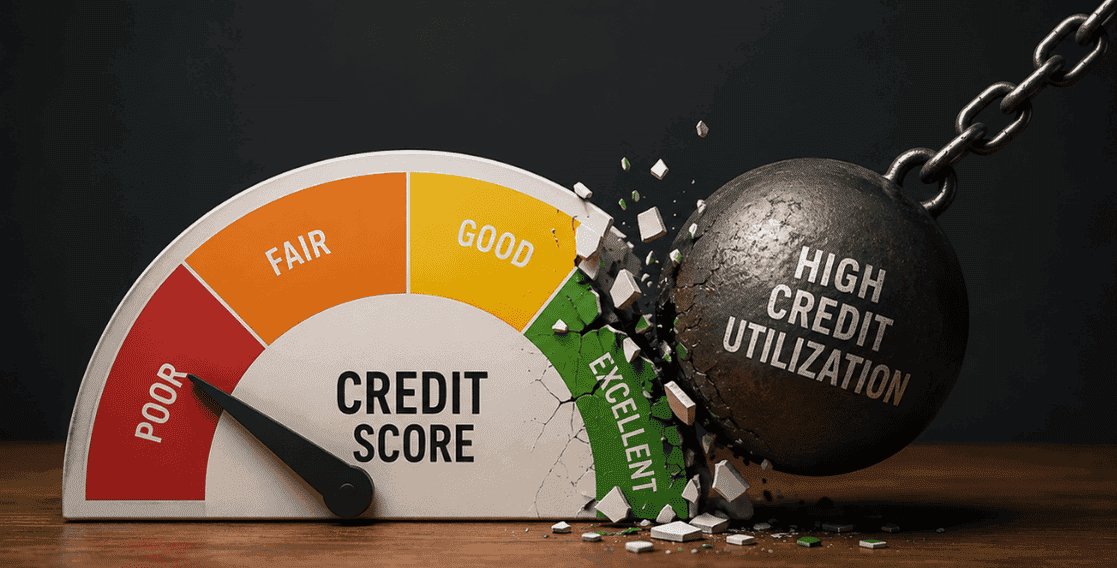
The major reason that affects credit scores negatively is delayed or missed payments on loans and credit cards. A single missed payment lowers the credit score and remains visible on the credit report for a long time, thereby affecting the scope of credit and increasing interest rates. Other factors include high credit utilisation, frequent applications for credit, and defaulting on EMIs, among others. The best method to prevent a drop in credit scores is by ensuring timely payments of all dues and maintaining a low credit utilisation ratio. LoansJagat helps compare and choose the best-suited loan options
Key Takeaways:
A credit score is a three-digit number that represents your credit history. It represents your ability to meet your financial obligations. This score helps banks and lenders decide whether to give you a loan or not. Having a good credit score is important if you want to take a loan or buy something on credit. A credit score is determined by various factors like repayment records, quantum of loans, credit utilisation, and many more. Credit scores in India range between 300 and 900, with a normal credit score being 700 and above. The higher the credit score, the better your credit history.
Here is how a credit score works in the Indian financial market:
A good credit score allows you to get a loan with ease as well as at a lower rate of interest. By regularly paying off your EMIs and credit card dues on time, you can build up a good credit history and boost your credit score, enabling you to take advantage of the various benefits associated with a strong credit history.
Your credit score indicates your ability to manage debts. Some of the common activities and behaviours are listed below, which may damage your credit score:
Credit scores are hard to build but easy to lose. It is essential to maintain a good credit score to help you get approved for various types of credit. A high credit score also assists you in obtaining better credit terms and interest rates.
Maintaining healthy credit score is important. Here are some credit practices which Indian borrowers must adhere to to avoid any defaults or credit problems.
Closing credit accounts
*T&C Apply
By following these simple steps, you can ensure that you have a healthy credit profile that will let you borrow money whenever you want. As suggested by the RBI and other credit rating agencies such as TransUnion CIBIL, you must review your credit reports and raise any disputes in order to ensure that your credit history is maintained.
Your credit score indicates your ability to make payments on time. Although several factors contribute to this score, the timely repayment of your dues has the most significant impact on it since it suggests to lenders your willingness to pay back what you borrow. However, the situation is not as daunting as it may seem. To maintain a healthy credit score, one must simply begin paying their EMIs and credit card bills on time, reduce their credit utilisation ratio, apply for credit only when necessary, and check their credit report regularly. A high credit score helps one stay ahead in terms of loan approvals and also assists in securing lower interest rates on such loans.
A credit score is a 3-digit number that represents your creditworthiness to lenders. Creditors use your credit score to determine whether they should approve you for a loan application.
A credit score is a generic term, whereas a CIBIL score is a type of credit score issued by TransUnion CIBIL. Some of the other credit rating agencies are Equifax, Experian, and CRIF High Mark.
The most common reasons for a low credit score are late payment of EMI or credit card dues, defaulting on a loan, having a large amount of outstanding credit card dues, frequent applications for credit, and high credit utilisation.
The late payment or non-payment of dues affects the repayment history adversely, which is a significant factor in calculating the credit score.
The best way to increase a credit score is to make all your payments on time, clear your credit card dues, avoid taking multiple loans, and ensure that there are no discrepancies in your credit report.
With good maintenance of credit behaviour, one’s credit score can increase within a few months to a year.
Having a high outstanding balance, defaulting on a loan, late payment of dues, and settlement of a loan can bring down your credit score.
There is no specific answer to which is better between CIBIL and Equifax. Both are credit bureaus that are popular among lenders.
A safe credit score is 750 and above in India. With this credit score, one can get approved for most of their loan applications.
Yes, one can get a loan with a bad credit score. However, the request for a loan might be denied, or lenders may apply higher interest rates.