By continuing, you agree to LoansJagat's Credit Report Terms of Use, Terms and Conditions, Privacy Policy, and authorize contact via Call, SMS, Email, or WhatsApp
Disclaimer: The information published on LoansJagat is intended for general informational and educational purposes only and should not be considered financial, legal, or investment advice. Interest rates, loan terms, statistics, and other data may change over time and may vary by lender or source. Please verify the latest information and consult a qualified financial advisor or the respective Bank/NBFC before making any financial decisions.
Subscribe Now
About the author

Vidhi Chauhan
Vidhi Chauhan is a copywriter and content writer with extensive experience creating high-quality, SEO-driven content across multiple industries, with a strong focus on fintech. She has written extensively on GST, banking, personal loans, business loans, credit cards, income tax, insurance, and other financial topics, helping Indian readers understand complex concepts through clear, accurate, and engaging content.
Related Blog Post
Simplify All Your Loans Into One Affordable EMI

Customers Served

Debt Consolidated

1200+ Reviews

Locations in India
Club all Loans & Credit Card Bills into Single EMI

Quick Apply Loan
Consolidate your debts into one easy EMI.

Takes less than 2 minutes. No paperwork.

10 Lakhs+
Trusted Customers

2000 Cr+
Loans Disbursed

4.7/5
Google Reviews

50+
Banks & NBFCs Offers
Other services mentioned in this article
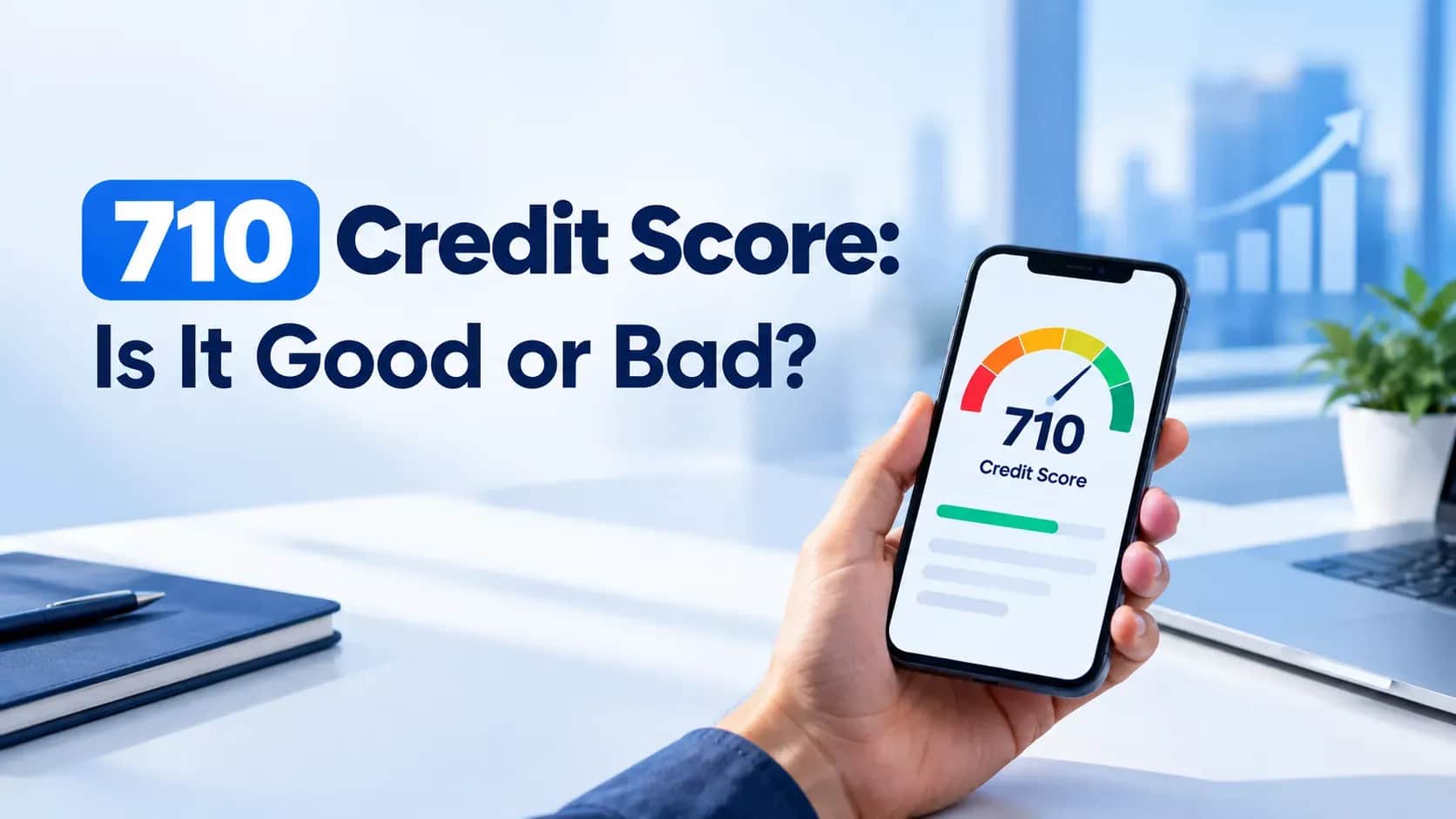
A 710 credit score is usually regarded as a good credit score. This shows that you have decent creditworthiness; however, it does not ensure loan and credit card approvals. There are other factors that may be taken into consideration, including salary, total debts, credit history, credit utilisation ratio, and many others. It is important for you to understand what it means to have a 710 credit score so that you can evaluate your ability to obtain financial products and services. This article will help you to learn what a 710 credit score means, what benefits it gives you, and how it impacts loan and credit card applications.
Key Takeaways
Yes, a 710 credit score is generally viewed as a good score by many credit-scoring frameworks. However, there is no single score threshold that all lenders use to define a “good” credit score. A 710 score may indicate a relatively positive credit profile, but it does not guarantee approval for a loan or credit card.
Lenders may consider several factors when assessing an application, including income, existing debt, repayment history, credit history, and their own eligibility criteria. Therefore, a 710 credit score can place you in a reasonable position when applying for credit, but the final decision depends on the lender’s assessment and applicable criteria.
A credit score of 710 normally means that one has been able to handle their credit pretty well. The credit score could be attributed to the following:
There could be differences in terms of what determines one’s credit score since credit scores are derived from one’s credit history. This would normally be followed by scrutiny of the credit report of the lender.
A 710 CIBIL Score is generally considered a good score and may support your credit application. However, there are other considerations that lenders make apart from CIBIL Score, such as the ability to pay back the loan, level of income, outstanding debts, among others.
A 710 CIBIL Score does not automatically mean one will be given a loan, a certain interest rate, or even a certain amount of money.
For instance, if one applies for a personal loan from IDFC FIRST Bank, the application will be judged according to the criteria for eligibility and the total creditworthiness of the applicant.
The advantages of keeping a 710 credit score include:
It is usually seen that a 710 CIBIL Score is good enough. However, practicing certain things can further improve your overall credit health. Some of them are as follows:
The credit score of an individual is determined by looking at their credit history. Some of the factors that may affect your credit profile include:
Income may not be directly reflected in the credit score itself, but lenders can consider income and other financial details separately when assessing a credit application.
*T&C Apply
A credit score of 710 may be considered when you apply for a personal loan, depending on the lender’s eligibility criteria. However, a credit score alone does not determine loan approval, as lenders may assess other information relevant to the application, such as income, existing obligations, and repayment history.
A good repayment history and manageable existing debt may be considered by lenders when assessing a personal loan application, along with other applicable eligibility criteria.
A score of 710 might help you apply for a home loan, but there are some more aspects that the lender considers before granting approval. These might include income, financial responsibilities, the amount of the loan, repayment ability, property details, and the policy of the lender itself.
A credit score of 710 could make you eligible for many credit cards. But the banks will also take into account your income, job details, and credit relationships. That is why, even with the same credit score, different applicants can be eligible for different credit cards.
There is no set duration that would be required for increasing one’s credit score to an extent that may be decided beforehand. It depends upon different variables like repayment behavior, amount due, credit utilisation, etc.
Repaying dues on time and keeping one’s balances under control is the way out here.
A CIBIL Score ranges from 300 to 900. Generally, a score above 700 is considered good, while a higher score may indicate a stronger credit profile. The following table explains the broad meaning of different score ranges:
A score of 700 or above is generally considered good. However, there is no single CIBIL Score that guarantees loan or credit card approval. Lenders may consider the applicant’s income, existing debt, repayment history, employment or business profile, and other eligibility criteria before making a decision.
A credit score of 710 may generally be viewed as a good score within some credit-scoring frameworks. It reflects aspects of your credit history and repayment behaviour, but it should not be treated as a measure of your overall financial stability. This credit score does not necessarily mean that you will receive the loan or credit card because the lender will review many other factors as well.
Yes, the credit score may be altered because of the addition of new information on the credit report. New changes in the balance of accounts, payment records, and other credit information can affect the credit score.
A credit score can change when new or updated information is reflected in your credit report. The timing of any change may depend on when the relevant information is received and recorded in the credit report.
Personal verification of your credit score is not considered a hard inquiry on the credit report and thus cannot decrease your credit score.
If any error is noted in the credit report, then it can impact the credit information used to calculate the score. In this case, one can put forward a dispute against the relevant credit bureau and the lender to correct the mistake.
Closing a credit card does not necessarily improve your credit score. Its effect, if any, may depend on factors in your credit profile and the information reflected in your credit report. It may either improve or harm the credit score depending on the account information along with other credit information.
In case there are no loans, it does not guarantee an improved credit score. Credit score calculation depends upon the credit information present in the credit report.
Credit scores may differ across credit bureaus, depending on the information reflected in the respective credit reports and the scoring models used. This could happen because of differences in the credit information found on credit reports.
Check your credit report carefully to find unknown accounts, inaccuracies in the personal data provided, duplicate entries or wrong information about your accounts.
Owning several credit cards does not necessarily make your credit score go up or down. Whether it goes up or down will depend on things like how those accounts are maintained and how they are being reported.
It is possible for the credit score to be affected even if there are no new loans taken. It might be influenced by the information that has been updated about the existing accounts.