By continuing, you agree to LoansJagat's Credit Report Terms of Use, Terms and Conditions, Privacy Policy, and authorize contact via Call, SMS, Email, or WhatsApp
Disclaimer: The information published on LoansJagat is intended for general informational and educational purposes only and should not be considered financial, legal, or investment advice. Interest rates, loan terms, statistics, and other data may change over time and may vary by lender or source. Please verify the latest information and consult a qualified financial advisor or the respective Bank/NBFC before making any financial decisions.
Apply for Loans Fast and Hassle-Free
Subscribe Now
About the author

‘Simplify Finance for Everyone.’ This is the common goal of our team, as we try to explain any topic with relatable examples. From personal to business finance, managing EMIs to becoming debt-free, we do extensive research on each and every parameter, so you don’t have to. Scroll up and have a look at what 15+ years of experience in the BFSI sector looks like.
Related Blog Post
Simplify All Your Loans Into One Affordable EMI

Customers Served

Debt Consolidated

1200+ Reviews

Locations in India
Club all Loans & Credit Card Bills into Single EMI

Quick Apply Loan
Consolidate your debts into one easy EMI.

Takes less than 2 minutes. No paperwork.

10 Lakhs+
Trusted Customers

2000 Cr+
Loans Disbursed

4.7/5
Google Reviews

50+
Banks & NBFCs Offers
Other services mentioned in this article
Key takeaways
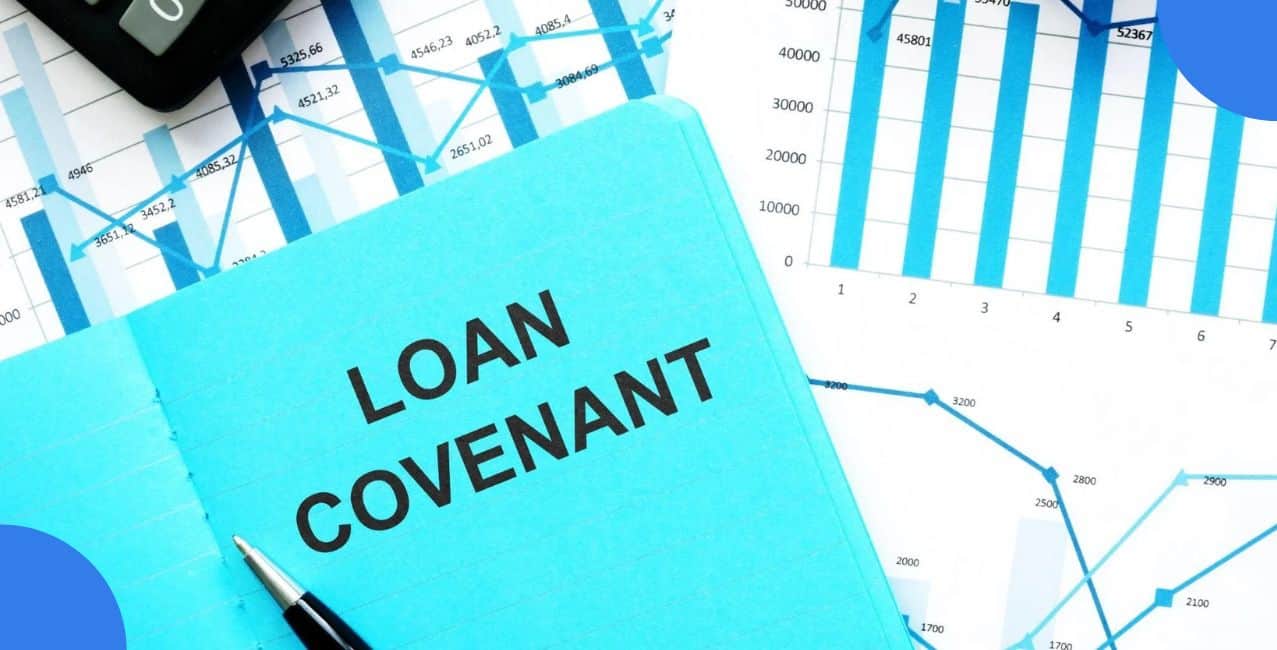
Many people ask what isloan covenant's definition?" The loan covenants definition is very simple. It refers to a condition or rule that is written in a loan agreement that tells the borrower what they can do and what they cannot do. In simple words, what is a banking covenant? Basically, it is a promise that a borrower makes to the bank while they are taking a loan.
Let's say, if a company takes a loan, the bank may ask it not to take more debt without permission. This is known as loan covenant.
What are financial covenants? Financial covenants refer to the rules that are based on financial performance. These rules check if the borrower is financially healthy or not.
For example,
These things are checked regularly, usually every quarter. So financial covenants are the financial rules that make sure the borrower stays stable.
There are different types of loan covenants. We have mentioned these types of covenants in the below table:
With the help of these types of loan covenants, banks can control the risk.
Loan covenant ratios are very important. These ratios measure financial health.
Things borrower cannot do
*T&C Apply
EBIT ÷ Interest
These are common loan covenant ratios that are used by banks.
To understand this concept more clearly, let's understand loan covenant calculation with a simple example.
Debt-to-EBITDA = 100,000 ÷ 25,000 = 4
If the bank limit is 5, then only the company is safe. This is exactly how a loan covenant calculation works.
Example
Let's say a company takes a loan from a bank. The bank will set a rule that its interest coverage must be at least 2 times.
If the company earns £20,000 and interest is £10,000:
A ratio of 2 means safe
If earnings drop to £15,000:
Ratio = 1.5 means Problem
This shows how loan covenant ratios protect lenders.
Bonus Tip
Around 60 to 70% of loan default happens because of poor financial ratio management. That is why you should always monitor your key ratios regularly to stay within the convenient limits. Even a small mistake today can lead to big financial trouble tomorrow.
In conclusion, we can say that a loan covenant is a very important part of any loan agreement. It protects both the borrower and the lender. By understanding what are financial covenants, types of loan covenants, and loan covenant ratio, you can manage the loans even better. Make sure that you always track your financial performance to avoid breaking any rules.
1. What is a banking covenant?
A banking covenant is a rule set by a bank in a loan agreement that the borrower must follow.
2. What happens if you break a loan covenant?
If you will break a loan covenant, the bank will charge penalties, increase the interest rate, or demand early repayment of the loan.
3. What studies have been conducted on the effectiveness of loan covenant choice by lenders?
According to the studies, lenders use covenants to reduce the risk and monitor the borrowers, and stricter covenants help prevent financial problems early.
4. How would my bank handle my mortgage loan while a cosigner had filed for Chapter7Bankruptcy?
The bank may still expect a payment from you. The cosigner bankruptcy will not remove your responsibility.
5. What motivations may lenders have to help companies they lent to evade a breach of covenants?
Lenders may want to avoid losses, maintain long-term relationships, and prevent the borrower from defaulting.