By continuing, you agree to LoansJagat's Credit Report Terms of Use, Terms and Conditions, Privacy Policy, and authorize contact via Call, SMS, Email, or WhatsApp
Disclaimer: The information published on LoansJagat is intended for general informational and educational purposes only and should not be considered financial, legal, or investment advice. Interest rates, loan terms, statistics, and other data may change over time and may vary by lender or source. Please verify the latest information and consult a qualified financial advisor or the respective Bank/NBFC before making any financial decisions.
Subscribe Now
About the author

Vidhi Chauhan is a copywriter and content writer with extensive experience creating high-quality, SEO-driven content across multiple industries, with a strong focus on fintech. She has written extensively on GST, banking, personal loans, business loans, credit cards, income tax, insurance, and other financial topics, helping Indian readers understand complex concepts through clear, accurate, and engaging content.
Related Blog Post
Simplify All Your Loans Into One Affordable EMI

Customers Served

Debt Consolidated

1200+ Reviews

Locations in India
Club all Loans & Credit Card Bills into Single EMI

Quick Apply Loan
Consolidate your debts into one easy EMI.

Takes less than 2 minutes. No paperwork.

10 Lakhs+
Trusted Customers

2000 Cr+
Loans Disbursed

4.7/5
Google Reviews

50+
Banks & NBFCs Offers
Other services mentioned in this article
If you're wondering who is eligible for a debt consolidation loan, the answer is simple: borrowers with a stable income, a good repayment history, an acceptable credit score, and the ability to comfortably repay the loan generally qualify. Each lender sets its own debt consolidation loan eligibility criteria in India. Factors such as age, employment, existing debt obligations, and overall financial profile determine whether your application is approved. Knowledge of these requirements allows you to assess your loan eligibility, strengthen your financial profile, and improve your chances of approval. Since most debt consolidation loans are offered as personal loans, your personal loan eligibility also plays a crucial role. Eligibility criteria help you choose better loan terms and simplify debt management. Let's explore the key factors that determine eligibility in detail.
Key Takeaways
A debt consolidation loan is a financial solution that allows borrowers to combine multiple outstanding debts into a single loan. Instead of managing several EMIs, interest rates, and repayment dates, you make one monthly payment to a single lender. It simplifies debt management, reduces financial stress, and may lower EMIs through reduced interest rates or extended repayment tenure.
Lenders assess loan eligibility to ensure borrowers can repay the debt consolidation loan on time. Income, credit score, employment stability, existing debts, and repayment history significantly influence approval.
Strong personal loan eligibility improves your chances of securing favourable debt consolidation loan terms. A strong eligibility profile may also help you negotiate a lower interest rate, making debt repayment more affordable.
The table below summarises the key features of a debt consolidation loan.
Read More - Debt Settlement vs Debt Consolidation
Review these factors before applying to improve your approval chances significantly.
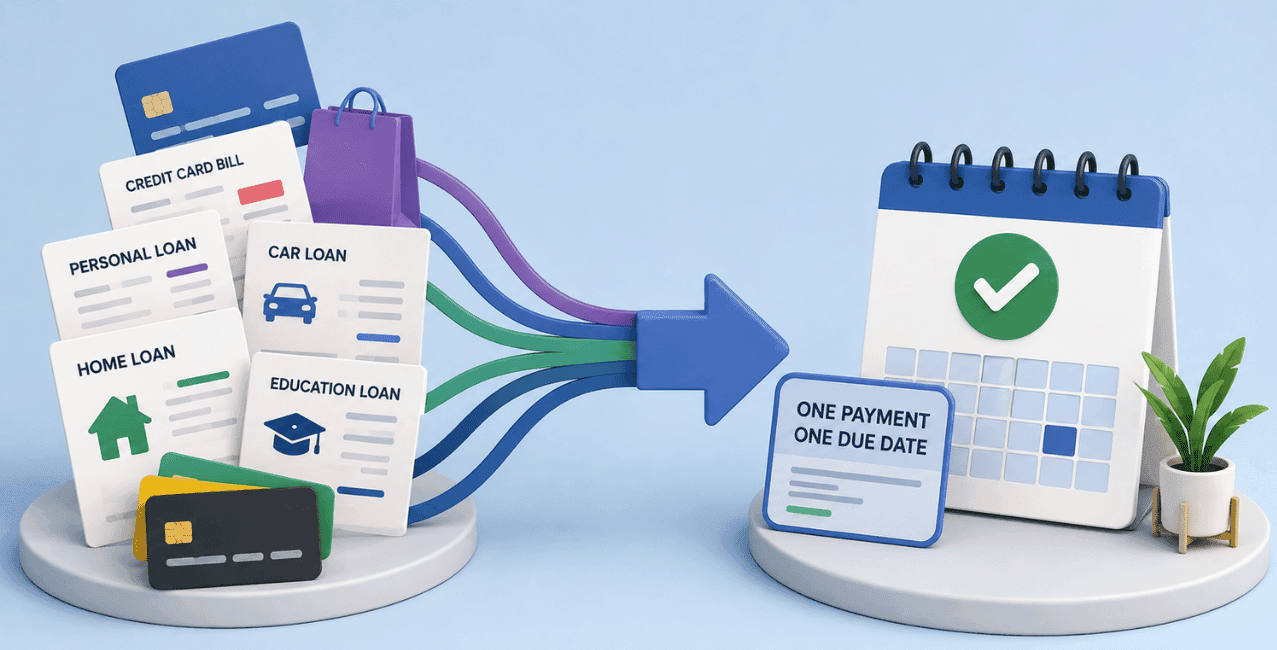
A debt consolidation loan combines multiple debts into a single loan. It clears outstanding dues, leaving you with one monthly EMI to repay. This simplifies debt management, reduces missed payment risks, and makes budgeting easier through a single repayment schedule.
A lower interest rate can reduce overall borrowing costs. Longer tenure lowers monthly EMIs. It may improve cash flow. Compare the total interest before choosing extended repayment.
A debt consolidation loan can be particularly useful in situations such as:
A debt consolidation loan promotes better financial control through a structured and manageable repayment plan.
Lenders assess loan eligibility before approving a debt consolidation loan. This ensures borrowers can comfortably repay the new loan after clearing their existing debts.
Repayment capacity is a key eligibility factor. Lenders review income, employment stability, and existing financial obligations. A stable, higher income improves your chances of loan approval.
Lenders also perform a detailed risk assessment by reviewing your credit history. Your repayment record, credit score, and previous borrowing behaviour help them estimate the likelihood of timely repayments. Applicants with a strong repayment history are often considered lower-risk borrowers and may receive better loan terms.
Your personal loan eligibility plays a significant role in debt consolidation loan approval because most debt consolidation products are offered as personal loans. A strong eligibility profile improves access to favourable interest rates, flexible tenures, and higher loan amounts.
Common factors lenders evaluate include:
Eligibility awareness improves approval chances and supports effective long-term debt management through debt consolidation.
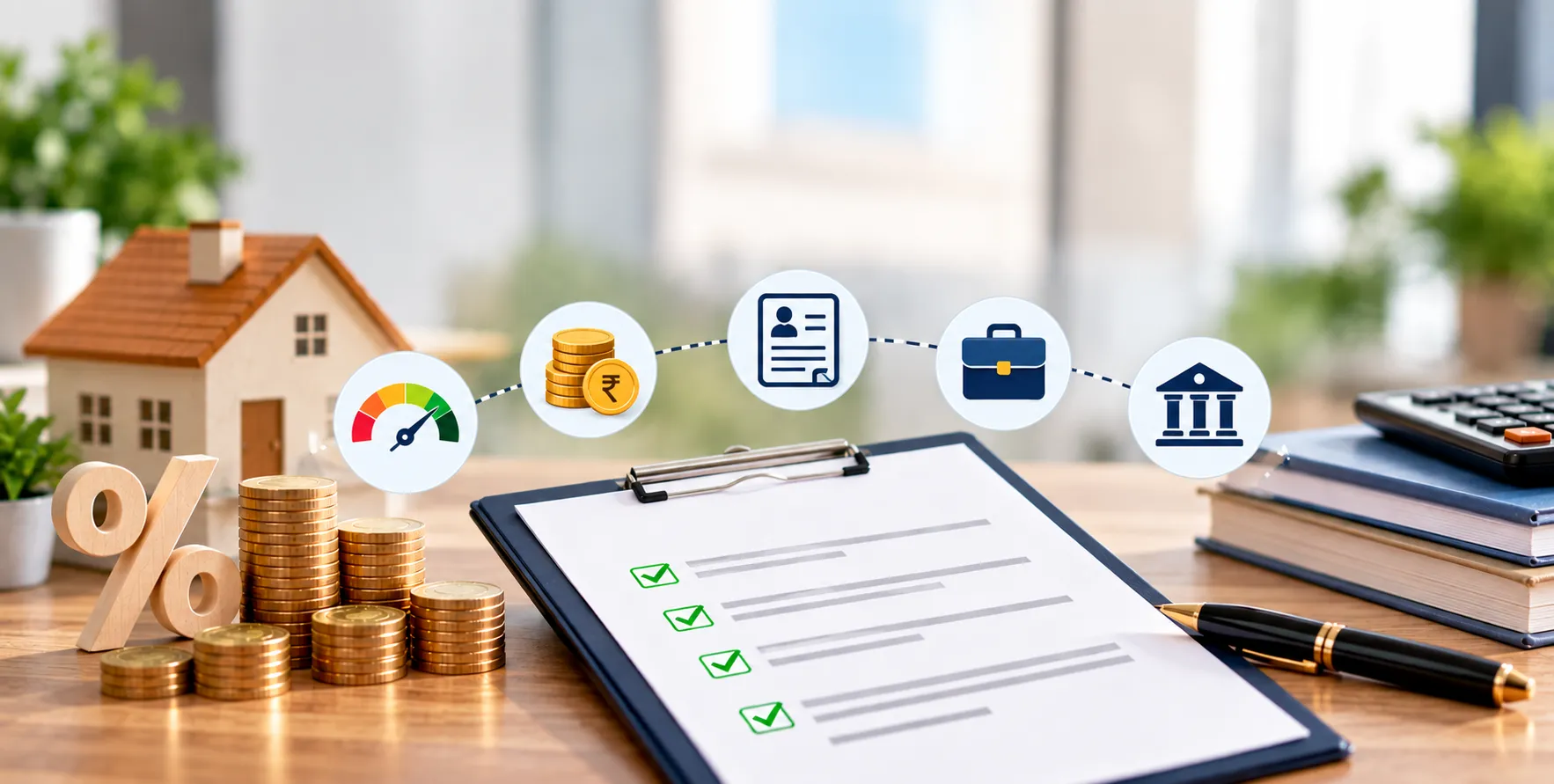
Who is eligible for a debt consolidation loan depends on financial and personal factors. Most lenders evaluate repayment capacity and creditworthiness before approving the application. Debt consolidation loan eligibility in India helps applicants prepare better and improve approval chances.
The following factors play a significant role in determining your loan eligibility for a debt consolidation loan:
*T&C Apply
Maintain a healthy credit score and pay EMIs on time. Reduce outstanding debts and avoid frequent loan applications. These steps improve debt consolidation loan eligibility in India and increase the chances of approval.
Debt consolidation loans can simplify repayments and support better debt management when used responsibly. Lender eligibility criteria directly influence your approval chances and loan terms. A strong credit profile, stable income, and disciplined repayment history strengthen your personal loan eligibility. Compare lenders carefully before applying to choose the most suitable debt consolidation loan.
Yes, many banks, NBFCs, and fintech lenders in India offer debt consolidation loans to combine multiple debts into a single loan with one EMI.
Banks, NBFCs, and fintech lenders in India offer debt consolidation loans, subject to their eligibility criteria and approval policies.
Debt consolidation combines multiple eligible debts into a single loan, but not all types of debt may qualify, depending on the lender's policies.
Compare lenders, check your credit score, calculate the total borrowing cost, and ensure the new EMI fits comfortably within your budget.
Maintain a good credit score, stable income, and strong repayment history, then compare lenders and apply with the one that best matches your eligibility.
Yes, you may qualify if you have a good credit score, stable income, manageable debt, and meet the lender's eligibility criteria.
Yes, a debt consolidation loan can simplify repayments and reduce your monthly EMI if you qualify for better loan terms.
Common reasons include a low credit score, high existing debt, insufficient repayment capacity, or not meeting the lender's eligibility criteria.
Yes, but approval depends on your credit profile, repayment capacity, and the lender's assessment of your existing debt obligations.
If formal lenders decline your application, you can try improving your credit profile, reducing existing debts, or exploring smaller restructuring options with your current lenders.
You need PAN, Aadhaar, income proof, bank statements, and details of your existing loan outstanding. The process is fully digital with minimal paperwork.
Yes. PAN is mandatory for all lenders. It is used to verify your identity and pull your credit report before processing the loan.
Yes. Aadhaar is required as address and identity proof. It is one of the standard KYC documents needed by all banks and NBFCs.
Yes. Your recent salary slips help the lender verify your monthly income and assess how much loan you can comfortably repay.
Yes. Bank statements show your income credits, spending pattern, and EMI outflows, which lenders use to evaluate your repayment capacity.
Most lenders ask for the last 3 to 6 months of bank statements. Some may ask for up to 12 months depending on their internal policy.
It helps the lender verify that your salary is being credited regularly and that your existing EMIs are being paid on time every month.
You can start the eligibility check first and submit documents at a later stage. However, the loan cannot be processed or approved until all required documents are submitted and verified.
The LoansJagat team will confirm once your documents are verified. You will be updated at each step of the process, from submission to final lender approval.